CPJ is honored to present its 2026 International Press Freedom Award to the Eritrea 16.
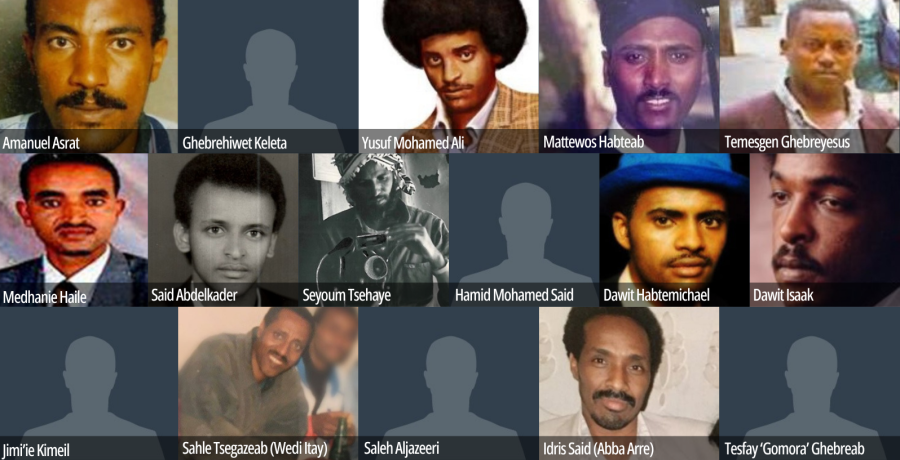
This year marks the 25th anniversary of the silencing of independent Eritrean media and the arrest of some of the world’s longest-detained journalists.
At around 7:30 a.m. on September 18, 2001, a radio presenter in Eritrea announced that the Eritrean government had shut down all the country’s privately owned newspapers. Known as “Black Tuesday,” a wave of arrests in the five months that followed saw a number of pro-reform politicians and members of the press thrown behind bars.
In the intervening decades, the Eritrea 16 have been held without trial, and only glimpses of unverifiable information about their whereabouts and well-being have surfaced over the years.
Eritrea’s media environment has never recovered from the 2001 crackdown, and an entire generation of Eritreans has grown up knowing only state-controlled information, in a country widely regarded as one of the world’s most-censored nations. The 2001 crackdown also marked a blow to democracy in a country that had fought a 30-year war of liberation from Ethiopia that ended in 1991, with a 1993 referendum affirming independence.
Several of the journalists behind bars had themselves fought in that war and later helped build media outlets during the hopeful years after independence. The repressive environment has forced other journalists to seek safety in exile in the years since the crackdown, risking dangerous journeys to escape the country rather than endure its stifling media environment.
Those still imprisoned include:
- Amanuel Asrat, poet and editor-in-chief of Zemen newspaper, whose writing condemned the “scourge of war.”
- Dawit Habtemichael, editor of Meqaleh newspaper.
- Dawit Isaak, a dual Eritrean-Swedish citizen who co-owned Setit newspaper. He was briefly released for two days in 2005.
- Ghebrehiwet Keleta, a reporter with Tsigenay newspaper, who was arrested in July 2000 and is considered the world’s longest-detained journalist.
- Hamid Mohamed Said, editor of the Arabic-language service of the state broadcaster, who was arrested in February 2002.
- Idris Said, also known as Abba Arre, is a former civil servant and columnist who was severely disabled at the time of his arrest in October 2001.
- Jimi’ie Kimeil, a sports journalist who criticized the government’s display of religious symbols. He was detained in November 2005.
- Mattewos Habteab, founder of Meqaleh newspaper, who wrote to the government alongside other journalists to question the 2001 press shutdown days before he was taken into custody.
- Medhanie Haile, editor of Keste Debana newspaper and a state-employed lawyer, who was known for critical articles calling for the rule of law.
- Said Abdelkader, editor of Admas newspaper.
- Saleh Aljazeeri, a journalist with state media, was taken into custody in February 2002.
- Sahle Tsegazeab, also known as Wedi Itay, whose columns on “Eritrea’s deferred national dreams” were censored even before his detention.
- Seyoum Tsehaye, a former war photographer who was the founding director of Eritrea’s state broadcaster. At the time of his arrest, he worked as a freelance photojournalist and contributor to Setit newspaper.
- Temesgen Ghebreyesus, sports editor at Keste Debena newspaper.
- Tesfay Ghebreab, also known as Gomora, a civil servant who contributed on a freelance basis to Setit newspaper.
- Yusuf Mohamed Ali, editor-in-chief of Tsigenay newspaper and among the journalists who wrote to the Ministry of Information to protest the September 2001 shutdown.