
Ethnic violence renews information clampdown in China
Two months into 2012, all-too-familiar stories are emerging from China’s troubled minority regions, Tibet and Xinjiang. Following riots against Chinese rule in 2008 and 2009, violence and its corollaries–increased security and censorship–have become commonplace. Independent bloggers and journalists who cover the unrest pay a high price: Over half the 27 journalists documented by CPJ in…
No joke: Malaysian cartoonist stands up to government
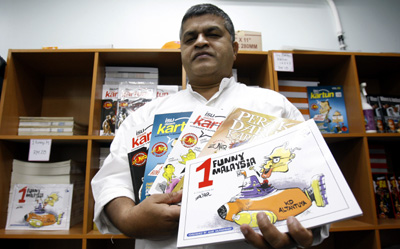
Tuesday marks the next step in a legal faceoff between Malaysian authorities and the well-known political cartoonist Zulkiflee Anwar Haque, also known as Zunar. Hearings will resume in civil lawsuit filed by Zunar that challenges the legality of his arrest and detention in September 2010. Malaysian police arrested him hours ahead of the scheduled launch…
Kyrgyz government blocks access to news website
New York, February 23, 2012–The Kyrgyz government’s decision to block access to the independent news website Ferghana News contradicts the country’s declared commitment to press freedom and should be overturned immediately, the Committee to Protect Journalists said today.
At Attacks launch, a look at Cairo’s post-revolution press
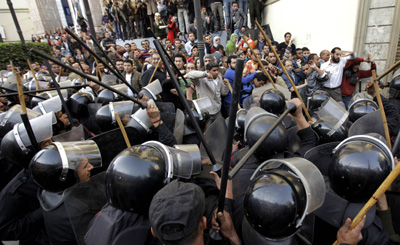
What a difference a year makes. In January 2011, we had to scrap plans for our regular Middle East launch of Attacks on the Press at the headquarters of the Egyptian Journalists Syndicate in downtown Cairo. Just a few blocks away, in Tahrir Square, journalists were busy fending off their own attackers as pro-regime thugs…
Attacks on the Press in 2011
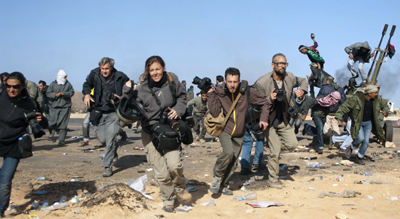
Trade and the Internet are turning us into global citizens, but the news we need to ensure accountability is often stopped at national borders. China is ramping up censorship, Iran is jailing dozens of journalists, and Turkey is using nationalist laws to stifle critical reporting. In Mexico criminals are dictating the news, while in Pakistan…
Attacks on the Press in 2011: Preface
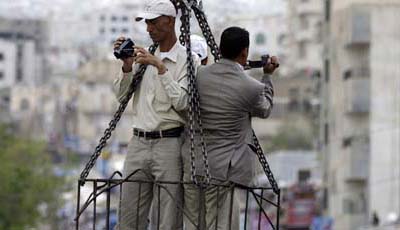
Technology has democratized news publishing, rattling regimes that see their survival dependent on control of information. Video footage of repression from Burma to Syria to Egypt dramatically illustrates the benefits of Internet platforms and social media. Yet the Arab uprisings of 2011 also demonstrate the urgent need for providers and users of digital tools to…
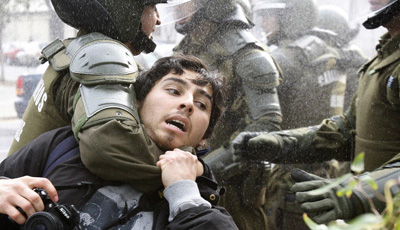
Attacks on the Press in 2011: Abolishing Censorship
Even as trade and new systems of communication turn us into global citizens, the information we need to ensure accountability often stops at national borders. New platforms like social media are valuable tools, but the battle against censorship is hardly over. By Joel Simon
Attacks on the Press in 2011: Regulating the Internet
Legislation for Internet security can quickly turn into a weapon against the free press. Cybercrime laws are intended to extend existing penal codes to the online world, but they can easily be broadened to criminalize standard journalistic practices. By Danny O’Brien
Attacks on the Press in 2011: Profiles in Freedom
How does one negotiate the choice to stay and report potentially dangerous news, rather than take a less risky assignment, leave the profession, or flee the country? The recipients of the 2011 International Press Freedom Awards explain. By Kristin Jones