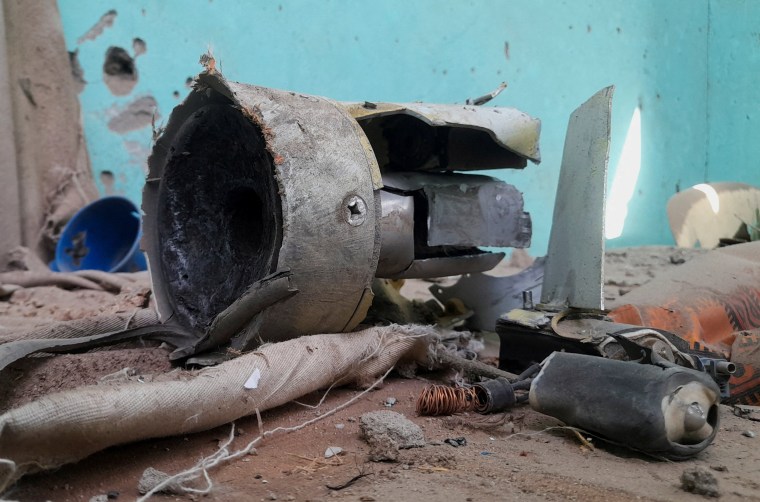
As paramilitary forces seized control of Sudan’s El-Fasher in late October, its journalists have become both witnesses and victims of the unfolding horrors.
The Committee to Protect Journalists has received reports from several rights groups that 13 journalists and media workers in the North Darfur capital — among the last sources of independent information from the besieged city— have gone missing under a communication blackout. At least two of them have been abducted by the Rapid Support Forces (RSF), and five have resurfaced after fleeing the city.
On October 26, the RSF, a paramilitary group born from the Janjaweed militias and accused by the European Union of ethnically-motivated crimes, claimed full control of El-Fasher. The city, besieged by the RSF for 18 months, was the group’s final barrier to controlling all of Darfur and establishing a parallel government in the region.
Over just two days, the RSF have been accused by the Sudanese government of killing up to 2,000 civilians, abducting those attempting to flee, and committing grave human rights violations – marking one of the deadliest escalations since the group began fighting the Sudanese army for power in April 2023.
Journalists missing
“We’re reporting in the dark,” a Sudanese journalist who managed to flee El-Fasher told CPJ, speaking on condition of anonymity for fear of reprisal. “Every hour, we lose another voice.”
Freelance journalist Muammar Ibrahim, who most recently contributed to Al Jazeera, disappeared on October 26. Later that day, he appeared in a short video circulated by RSF-linked Telegram channels, identifying himself to the camera while surrounded by armed men believed to be RSF fighters.
The following day, the RSF spokesperson told Al-Jazeera that he had no knowledge of Ibrahim’s whereabouts, but if the journalist was not affiliated with any warring party, he saw “no reason” for him to have stayed in El-Fasher, ignoring the nature of his work as a journalist. In a subsequent video published on November 3, the RSF spokesperson claimed Muammar was being investigated for “bias” after describing the RSF as a “militia” and “Janjaweed,” adding that he would be released once the investigation concluded.
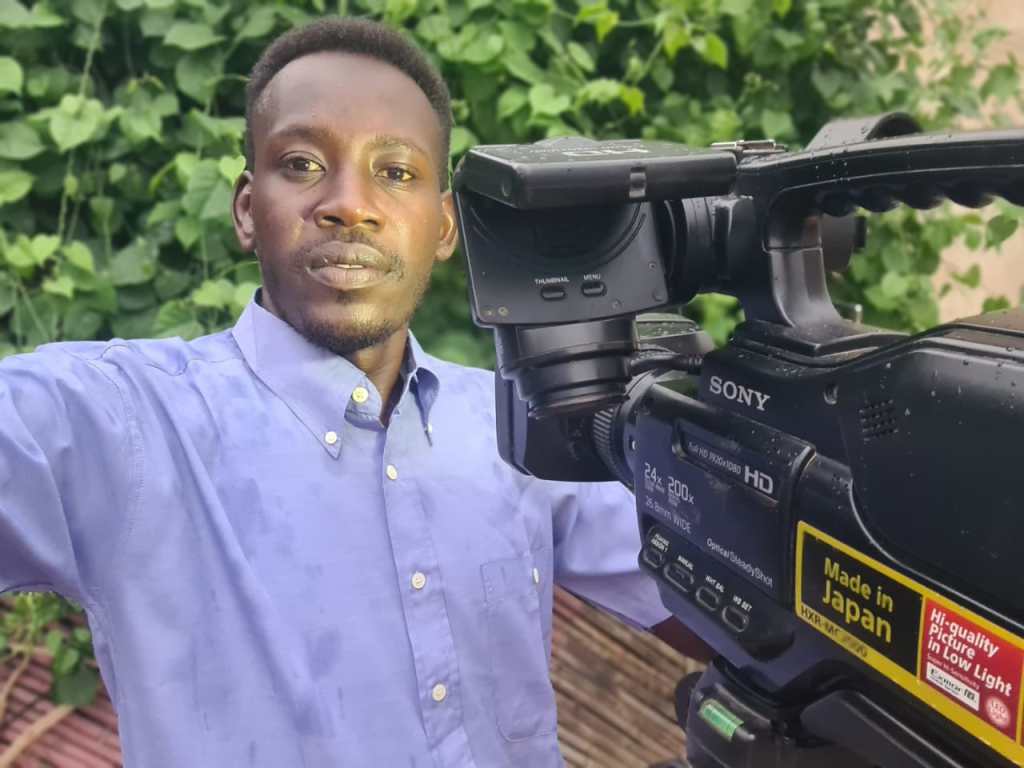
Ibrahim Gibril Abkar, also known as Babu, a camera operator for Sudan TV Network, appeared in a video circulating on social media that showed a group of detainees held by the RSF after going missing on October 26, according to two local journalists who spoke to CPJ on condition of anonymity for fear of reprisal. In a statement, the Sudanese Journalists’ Union held the RSF responsible for Abkar’s safety and demanded his immediate release.
CPJ has been able to verify that journalist Abdelmajeed Al-Ahnaf (reporter for El-Fasher TV and Radio), freelance journalist Mohamed Ahmed Nazar, Mohamed Suleiman Taher Shuaib (Director of Salateen News Network), Fayhaa Mohamed el-Helw (freelance reporter that contributes to El-Fasher TV and Radio), and Mohy Eldin Al-Sahhaf (freelance reporter for Khartoum TV and Sudan Radio) managed to escape the El-Fasher and relocate to a safer location.
The fate of the rest of the missing press – Taj Al-Sir Ahmed Suleiman (Sudan News Agency), Atta Mohamed (camera operator at El-Fasher TV and Radio), Jar al-Nabi Hassan al-Haj (Alzarga TV) Mohamed Hussein Shalabi (camera operator for state networks Sudan TV and El-Fasher TV and Radio), Magdi Youssef (correspondent for local radio station Beladi FM), Ismail Mohamed Ahmed (reporter for local news outlet Al-Mawakib) – remains uncertain.
With internet and phone networks cut off in El-Fasher, colleagues and families have no way to confirm whether the journalists are in RSF custody, or even alive. Local reporters say the only updates now come from social media pages controlled by the militant group or displaced civilians fleeing the city.
In the immediate aftermath of the fall of El-Fasher, the Darfur Women Journalists Forum told CPJ at least three female journalists were raped by RSF fighters during their latest assault on the city. The organization has since said in a statement that it did not verify that these individuals were journalists, and have withdrawn the claims. CPJ is investigating the incidents.
Proof without consequence
What sets this war apart from most is the RSF’s brazen documentation of its own crimes, with fighters filming, sharing, and celebrating their war crimes online with complete impunity.
Since the beginning of the war, CPJ has documented a trail of abuses by the RSF across Sudan: at least 14 journalists and media workers killed, female journalists raped, media offices turned into detention centers, homes seized, and journalists abducted and held for ransom – many of which were filmed and circulated by the perpetrators themselves.
In El-Fasher, RSF blockades have starved the city and silenced what remained of local media. Already only tenuously connected to the outside world through RSF-managed Starlink connections, communications with the city were cut off ahead of last week’s RSF advance. What has emerged from the blackout is a stream of videos filmed by RSF fighters and posted online, showing them hunting down and executing civilians, and trenches full of bodies.
Responding to global outrage, the RSF announced it had arrested a number of people accused of committing crimes in El-Fasher, but no one has yet to be held accountable for Ibrahim’s abduction or any of the previous crimes against journalists.
“The video of Muammar Ibrahim’s abduction – filmed and shared as RSF propaganda – shows the absolute collapse of accountability in Sudan,” said CPJ Regional Director Sara Qudah. “Journalists can be kidnapped and their suffering broadcast to the world, and still no action is taken.”
CPJ contacted the RSF through its website to request comment but received no response. The Sudanese army has also been accused of committing grave human rights violations, including indiscriminate airstrikes, arbitrary detention of journalists, and the killing of journalists.
CPJ has called for the protection of all journalists in El-Fasher and the immediate release of those detained.
Editor’s note: This article has been updated in the second paragraph to clarify that the 13 missing people were both journalists and media workers; the names of Ibrahim Gibril Abkar and Jar al-Nabi Hassan al-Haj were added to the list; and two names were removed after CPJ determined that they were not currently working as journalists. The twelfth paragraph was updated to include the Darfur Women Journalists Forum’s withdrawal of their earlier comments.