Attacks on the Press 2010: Asia Analysis
Partisan Journalism and the Cycle of Repression by Bob Dietz and Shawn W. Crispin Lal Wickramatunga’s family and publishing house, Leader Publications, have paid dearly in Sri Lanka’s highly charged political climate. While Leader’s newspapers, including the weekly Sunday Leader, are widely known for tough, independent reporting, they have been caught up in a partisan…
Attacks on the Press 2010: Europe and Central Asia Analysis
On the Runet, Old-School Repression Meets New By Nina Ognianova and Danny O’Brien Russian President Dmitry Medvedev has often talked about the importance of a free press and free Internet, telling reporters before his election that the Web “guarantees the independence of mass media.” He explicitly tied the two together in his first State of…
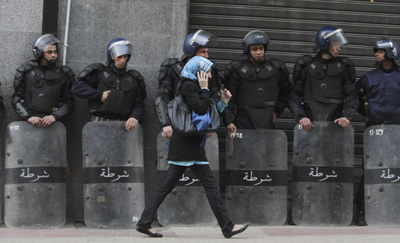

Is Chávez promoting free expression? Check the facts
Venezuelan Information Minister Andrés Izarra declared on the state television channel VTV last week that “never has so much been done to guarantee, promote, and drive freedom of expression than in the government of President Hugo Chávez.” Izarra needs to hire a fact-checker.
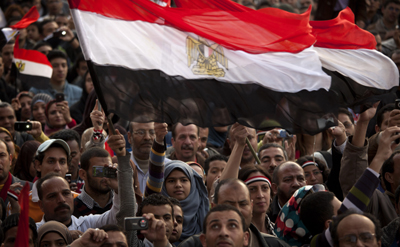
Government obstruction, intimidation continues in Cairo
New York, February 9, 2011–Egyptian authorities are obstructing international news coverage of the country’s political crisis by withholding press credentials and, in one instance, invading the home of a foreign journalist, the Committee to Protect Journalists said today. A well-known Egyptian blogger also remains unaccounted for after being seized by suspected government agents earlier this…
In Jordan, website hacked after running sensitive statement
New York, February 9, 2011–A Jordanian news website was hacked on Sunday after it refused to comply with demands from security agents to remove a critical statement from Jordanian tribesmen, the outlet said. The Committee to Protect Journalists calls on Jordanian authorities to immediately investigate the attack on Ammon News, one of the most popular…
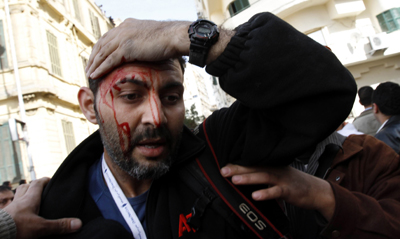
Cairo attacks continue; reporter dies from earlier shooting
New York, February 4, 2011–Journalists in Cairo faced assaults, detentions, and threats again today as supporters of President Hosni Mubarak continued their efforts to obstruct news coverage of protests demanding the Egyptian leader’s ouster. While the extent of attacks lessened after a peak on Thursday, ongoing anti-press activities remain at an alarming level that must…
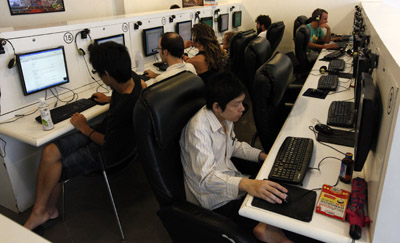
Internet freedom on trial in Thailand
Hearings commenced today in the trial of Chiranuch Premchaiporn, executive director of the Thailand-based independent news website Prachatai. She stands accused of 10 different violations of the country’s draconian 2007 Computer Crime Act (CCA), each of which carries a maximum penalty of five years in prison.
Russian media combats false piracy prosecutions
Some good news out of Samara. As we’ve reported previously, trumped-up piracy accusations have been frequently used in Russia to intimidate independent media. Sergei Kurt-Adzhiyev, a Russian editor, has spent years fighting piracy prosecutions against himself and his publications in the region. This week, he was declared not guilty. Russia’s Finance Ministry was ordered to…
Egypt rejoins the Net
Internet connectivity has been restored to Egypt, though it’s hard to tell from the outside just how reliable that connection is. Monitoring organizations Renesys and BGPMon provide technical details on their blogs. For a more dynamic display, RIPE, the community which helps co-ordinate the European Internet, has a live graph of the numbers of Internet…