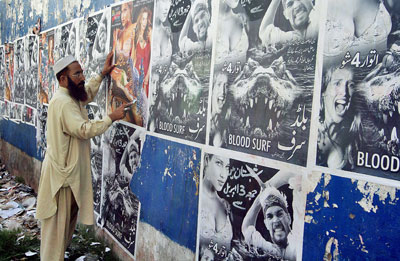
Pakistan’s excessive Internet censorship plans
Last month, Pakistan’s government put out requests for proposals for a massive, centralized, Internet censorship system. Explaining that “ISPs and backbone providers have expressed their inability to block millions of undesirable web sites using current manual blocking systems,” the state-run National Information Communications Technology Research and Development Fund said it therefore requires “a national URL…

Ethnic violence renews information clampdown in China
Two months into 2012, all-too-familiar stories are emerging from China’s troubled minority regions, Tibet and Xinjiang. Following riots against Chinese rule in 2008 and 2009, violence and its corollaries–increased security and censorship–have become commonplace. Independent bloggers and journalists who cover the unrest pay a high price: Over half the 27 journalists documented by CPJ in…
Ahead of elections, Iran cracks down on press freedom
New York, February 28, 2012–The Iranian regime continued its persistent campaign against press freedom days ahead of its parliamentary elections on March 2 by sentencing two journalists to prison and periodically blocking millions of users from accessing the Internet, according to news reports. In addition, two journalists are suffering from deteriorating health conditions in prison,…
Caveat utilitor: Satellite phones can always be tracked
The Telegraph in London was the first to report that Syrian government forces could have “locked on” to satellite phone signals to launch the rocket attacks that killed journalists Marie Colvin and Rémi Ochlik, as well as many Syrian civilians, besides wounding dozens more including two more international journalists. Working out of a makeshift press…
High-tech security information needs better dissemination
After the London launch of CPJ’s Attacks on the Press at the Frontline Club this week, I had an opportunity to talk to a number of young journalists setting out to regions where reporters are frequently at risk. As CPJ Executive Director Joel Simon noted, these discussions took on an extra poignancy the next day,…

As live streaming expands, challenges intensify
The world lost one of the only direct windows into the carnage in Homs, Syria, when Rami al-Sayed’s video live stream went dark Tuesday. A citizen journalist, al-Sayed was live streaming the Assad regime’s bombardment of Baba Amr and the brutal after-effects when he was struck by shrapnel and bled to death soon after, according…
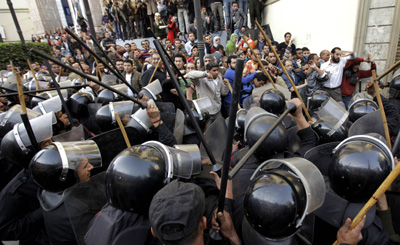
At Attacks launch, a look at Cairo’s post-revolution press
What a difference a year makes. In January 2011, we had to scrap plans for our regular Middle East launch of Attacks on the Press at the headquarters of the Egyptian Journalists Syndicate in downtown Cairo. Just a few blocks away, in Tahrir Square, journalists were busy fending off their own attackers as pro-regime thugs…
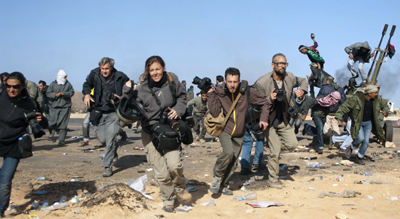
Attacks on the Press in 2011
Trade and the Internet are turning us into global citizens, but the news we need to ensure accountability is often stopped at national borders. China is ramping up censorship, Iran is jailing dozens of journalists, and Turkey is using nationalist laws to stifle critical reporting. In Mexico criminals are dictating the news, while in Pakistan…
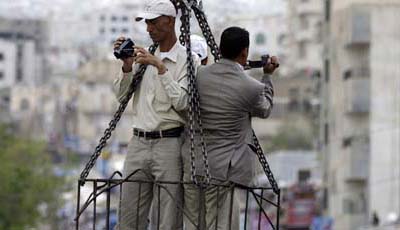
Attacks on the Press in 2011: Preface
Technology has democratized news publishing, rattling regimes that see their survival dependent on control of information. Video footage of repression from Burma to Syria to Egypt dramatically illustrates the benefits of Internet platforms and social media. Yet the Arab uprisings of 2011 also demonstrate the urgent need for providers and users of digital tools to…
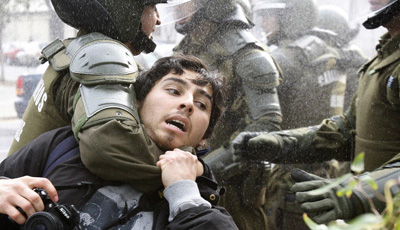
Attacks on the Press in 2011: Abolishing Censorship
Even as trade and new systems of communication turn us into global citizens, the information we need to ensure accountability often stops at national borders. New platforms like social media are valuable tools, but the battle against censorship is hardly over. By Joel Simon