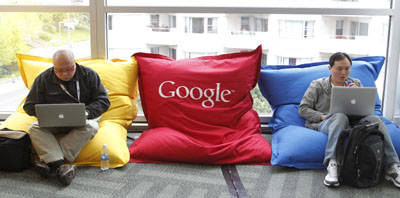
Google+ for journalists at risk
When they’re creating new features, software designers talk in terms of “use cases.” A use case describes steps that future customers might perform with a website. “Starting a group with friends,” would be a use case for Facebook. “Buying a book” would be case for Amazon’s designers.
Syrian Facebook users develop strategies against online threats
Jennifer Preston in the New York Times reports on some stories that we also have been hearing from Syrian Internet use. She documents incidents of passwords extracted by force, and the deliberate defacing of social networking pages by security forces, apparently in order to sabotage reports of unrest from that country. A man in his…
Syrian Facebook: Low-tech threats and high-tech scrutiny
Journalists and online news-gatherers have been struggling to collect and distribute high-quality information about recent events in Syria. Foreign journalists have been turned away at the border; local online reporters have been detained. The quality of Internet and mobile phone connectivity has been extremely variable, with reports of Net and phone connections being cut off…
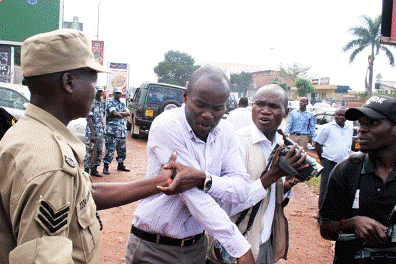
Ugandan media censored over Walk to Work protests
Freedom of the press in Uganda hit a new low late last week when the government, in response to a decision by opposition figures to demonstrate against the escalating price of food and fuel by walking to work, banned live coverage of the protests and issued a directive to Internet providers to block two popular…
Guides for Journalists using Facebook
Facebook has just rolled out a series of meetups and resources for news organizations and individual journalists using its services. As Mashable mentions, the social networking company has been taking the increased use of its service as a news publishing and sourcing tool increasingly seriously over the last year. The page itself has some good…

Michael Anti’s exile from Facebook over ‘real-name policy’
The Chinese journalist Michael Anti had his Facebook account deleted in January. The reason Facebook gave was that Michael Anti isn’t his real, government-recorded, name–which is true. Instead, Anti is the name that he has written under for almost a decade, on his own personal blogs, and in his writing for the New York Times…
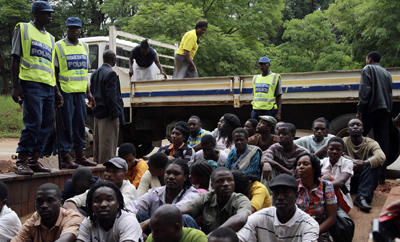
Zimbabwe charges 45 with treason for viewing Egypt footage
The right to receive and impart information is a fundamental human right enshrined in the United Nations’ Universal Declaration of Human Rights, but in Zimbabwe, watching news of North African and Middle East protests apparently amounts to treason.
Journalists targeted in Bahrain, Yemen, and Libya
New York, February 18, 2011–The Committee to Protect Journalists called on authorities today in Bahrain, Yemen, Libya to cease their attempts to prevent media from reporting on anti-government demonstrations. Bahraini authorities used live ammunition–including fire from a helicopter–against peaceful protesters and journalists, according to news reports. Pro-government thugs attacked at least two journalists in Yemen, and…
Attacks on the Press 2010: Preface
by Riz Khan It’s a double-edged sword. Technology has made the life of journalists so much easier and yet so much more difficult. Even in the least-developed countries, where simple infrastructure such as paved road is a luxury, access to mobile phones, the portability of satellite broadcasting systems, the growth of delivery platforms, and the…
Attacks on the Press 2010: Internet Analysis
Exposing the Internet’s shadowy assailants by Danny O’Brien For the past decade, those who used the Internet to report the news might have assumed that the technological edge was in their favor. But online journalists now face more than just the standard risks to those working in dangerous conditions. They find themselves victims of new…