Two Russian journalists jailed after opposition rally
New York, April 27, 2005—A court in the Belarusian capital, Minsk, handed brief jail sentences today to two Russian journalists arrested while covering an opposition rally, according to local and international press reports. The Committee to Protect Journalists said it was alarmed by the action and called for the release of the two reporters. The…
Attacker: I will teach you how to write’
New York, April 26, 2005—Independent Uzbek journalist Ulugbek Haydarov remained hospitalized today after a severe weekend beating at the doorstep of his home by an assailant who shouted, “I will teach you how to write,” according to local and international press reports. Haydarov suffered a broken collarbone and multiple bruises in the assault reported at…
Exiled editor of Kazakh opposition weekly detained for two days
New York, April 25, 2005—Police in the Russian city of Volokolamsk detained Irina Petrushova, editor of the Kazakh opposition weekly Respublika Delovoye Obozreniye, for two days at the request of Kazakh authorities, she told the Committee to Protect Journalists shortly after her release today. Petrushova, a 2002 winner of CPJ’s International Press Freedom Award, said…
RUSSIA
APRIL 23, 2005 Posted: May 3, 2005 Irina Petrushova, Respublika Delovoye Obozreniye HARASSED, IMPRISONED Police in the Russian city of Volokolamsk detained Petrushova, editor of the Kazakh opposition weekly Respublika Delovoye Obozreniye, for two days at the request of Kazakh authorities, the journalist told CPJ.
Journalist held on charges of “anti-constitutional activity”
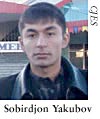
New York, April 18, 2005—An Uzbek reporter for the state-run weekly newspaper Hurriyat (Liberty) has been criminally charged with “undermining the constitutional order” and faces up to 20 years in prison, according to local and international press reports. Sobirdjon Yakubov, 22, a Muslim, was detained in the capital, Tashkent, on April 11 on suspicions of…
UZBEKISTAN
APRIL 11, 2005 Posted: May 3, 2005 Sobirdjon Yakubov, Hurriyat LEGAL ACTION, IMPRISONED Yakubov, a reporter for the state-run weekly newspaper Hurriyat (Liberty), was criminally charged with “undermining the constitutional order” and faced up to 20 years in prison, according to local and international press reports.
Arrests in the murder of opposition editor met with suspicion
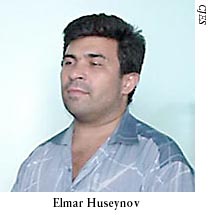
New York, April 8, 2005—Investigators in the capital, Baku, announced late yesterday that they had detained six suspects in the March 2 murder of Elmar Huseynov, founder and editor of the opposition weekly news magazine Monitor, according to local and international press reports.
Prosecutors reopen case of abducted journalist
New York, April 8, 2005—Prosecutors in capital of Minsk, have reopened the inquiry into the July 2000 abduction of Dmitry Zavadsky, a 29-year-old cameraman for the Russian public network ORT, according to the Minsk-based human rights group Charter 97. Olga Zavadskaya, whose son is presumed dead after disappearing nearly five years ago, received a letter…