Authorities launch criminal inquiry of Internews
New York, April 6, 2005—The prosecutor-general’s office in Uzbekistan said yesterday it was investigating the Tashkent bureau of the media training and advocacy group Internews Network on criminal charges of operating without a license, according to international reports. Witnesses have been questioned, “but at this stage nobody has been arrested,” the prosecutor’s spokeswoman, Svetlana Artikova…
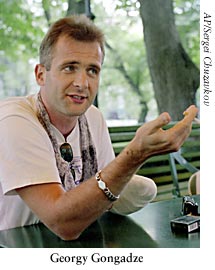
Ukrainian prosecutor claims confessions in Gongadze case
New York, April 5, 2005—Ukraine’s prosecutor-general said yesterday that two former police officers arrested in March as suspects in the 2000 murder of Internet journalist Georgy Gongadze have confessed to the killing, according to local and international press reports. Vyacheslav Astapov, a spokesman for the prosecutor’s office, said the officers were cooperating with investigators in…
Supreme Court rejects editor’s appeal
New York, March 31, 2005—Azerbaijan’s Supreme Court has upheld the October 2004 conviction of Rauf Arifoglu, editor-in-chief of the opposition newspaper Yeni Musavat, on charges of organizing anti-government riots, according to local and international press reports. The criminal conviction was widely considered to have been politically motivated. “The many irregularities in Rauf Arifoglu’s 2004 trial,…
European Court faults investigation in case of murdered journalist
New York, March 31, 2005—The European Court for Human Rights ruled today that Turkish authorities did not conduct an effective investigation into the July 1996 murder of journalist Kutlu Adali in Cyprus and ordered the government to pay 20,000 euros (US $26,000) in damages to his wife. Ilkay Adali sought damages in 1997 from the…
Foreign Ministry accuses Swedish media of fomenting violence
New York, March 24, 2005—The Russian Foreign Ministry has strongly criticized Swedish authorities and media for independent news reporting on the conflict in Chechnya, claiming the information was fomenting violence, according to local and international press reports. The Russian embassy in Stockholm criticized the independent Swedish news agency TT on Wednesday for publishing an interview…
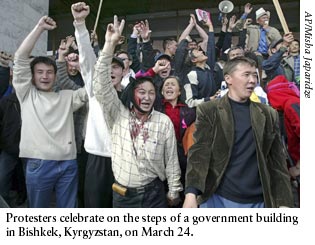
President flees amid unrest, fraud, censorship
New York, March 25, 2005—At least one Kyrgyz journalist was hospitalized with injuries and another arrested as police tried to break up the escalating unrest that prompted President Askar Akayev to flee the country this week. The demonstrations, which toppled yet another authoritarian regime in Central Asia, came amid widespread anger over fraud-marred parliamentary elections—and…
Court reduces financial penalty against independent daily
New York, March 24, 2005—An appeals court yesterday reduced the massive damages levied against the independent Moscow daily Kommersant in what a newspaper lawyer called a “tactical victory” in its ongoing legal battle over its reporting on last summer’s banking crisis. Moscow’s Federal Arbitration Court upheld the finding of liability but reduced the damages to…
After outcry, president pardons imprisoned opposition editor
New York, March 21, 2005—Facing international pressure, President Ilham Aliyev pardoned the imprisoned editor of an opposition newspaper yesterday as part of a decree ordering the release of dozens of political prisoners, according to local and international press reports. Rauf Arifoglu, editor-in-chief of Yeni Musavat, had been jailed for 17 months after his arrest during…
Russian correspondent forced to leave Ashgabat
New York, March 18, 2005—One of the few foreign journalists in Turkmenistan, the Ashgabat correspondent for the Russian state news agency RIA Novosti, has been forced to leave the country under circumstances that remain unclear. Viktor Panov was seen in handcuffs at Ashgabat’s airport accompanied by several men in civilian cloths who led him to…