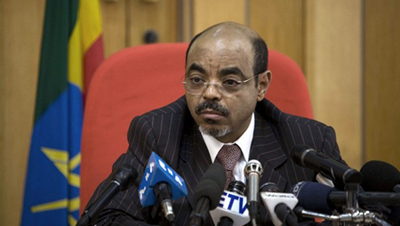
In Ethiopia, prime minister’s words, actions not in step
This week, in an exclusive interview with the Financial Times, Ethiopian Prime Minister Meles Zenawi suggested that the press in his country freely expresses dissent. In fact, that is hardly the case. The Horn of Africa nation remains one of the world’s worst backsliders of press freedom.
Attacks on the Press in 2008: Ethiopia
The small vanguard of independent media that emerged from a brutal 2005 crackdown struggled in the face of continuing government harassment. Although authorities issued licenses allowing a handful of independent political newspapers to operate, they continued to use imprisonment, threats, and legal and administrative restrictions to suppress coverage of sensitive issues.
CPJ urges Obama to assert U.S. leadership on press freedom
Dear President-elect Obama: I am writing as chairman of the Committee to Protect Journalists to seek your leadership in reaffirming America’s role as a staunch defender of press freedom throughout the world. Journalists in many countries who risk their lives and liberty upholding the values of free expression look to the United States for support.
Faces of Exile
Since 2001, CPJ has documented the cases of 340 journalists forced into exile after their reporting exposed them to harassment, violence, or imprisonment. They face many difficulties in their new homes, from language and cultural adjustments to emotional and economic hardships. Here are five snapshots of journalists in exile.
Press freedom in the news 11/05/08
The Web site EurasiaNet has an article today looking at concerns surrounding the shutdown of foreign radio broadcasts in Azerbaijan. We released an alert on this troubling development on November 3, expressing concern at plans by President Ilham Aliyev’s administration to discontinue the broadcasts of the BBC, Radio Free Europe/Radio Liberty, and the Voice of America.
Ethiopian journalists detained over misidentification
New York, October 23, 2008–An Ethiopian editor is facing criminal charges today because she accidentally misidentified a judge in a high-profile trial, according to local journalists. Two other journalists have been in police custody since Monday because of the same story.