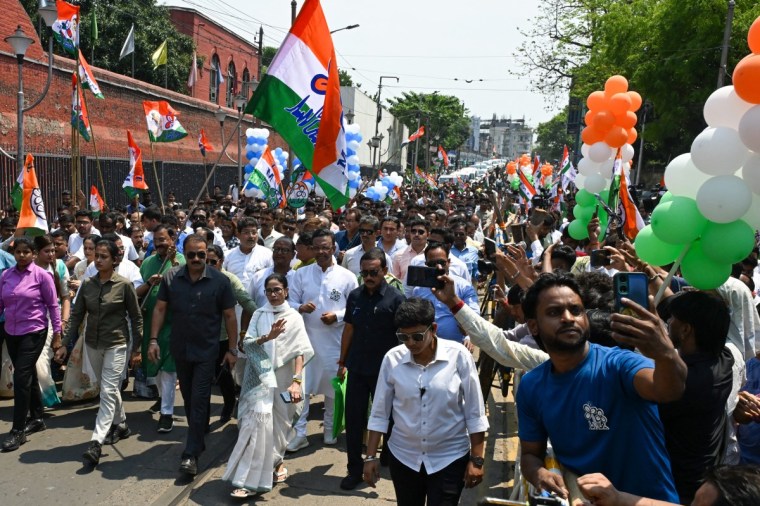
Indian journalists Soma Maity and Ranjit Mahato had been at the protest for a matter of minutes before they were attacked by a mob on January 16.
Maity said she was grabbed and lifted by two men, who pulled her hair, restrained her legs, and tore at her clothes while others touched her body. She suffered injuries to her arm and ankle from which she has not fully recovered. Mahato, a cameraman, was hospitalized with head injuries after the crowd beat him with blunt objects.
The two journalists from Bengali-language broadcaster Zee 24 Ghanta were assaulted in Murshidabad district in the eastern state of West Bengal, one of India’s most politically violent regions and one of the most dangerous to be a journalist.
At least four journalists were assaulted over 48 hours while covering the unrest, which was ignited by the death of a local Bengali-Muslim migrant worker in the neighboring state of Jharkhand.
Far from isolated incidents, the attacks were part of a pattern of violence against journalists in West Bengal — home to more than 90 million people — where political polarization and sectarian tensions have been intensifying ahead of two-phase state elections scheduled for April 23 and 29.
Election-related violence has become commonplace between supporters of the ruling Trinamool Congress (TMC), a regional party anchored in welfare populism and minority inclusion, and the main opposition Bharatiya Janata Party, which has dominated federal politics with a Hindu-nationalist agenda for more than a decade.
The environment for journalists covering these events has become increasingly dangerous in recent years, particularly in border districts prone to communal violence. Attacks on journalists and the unwillingness of authorities to condemn them have created a culture of impunity, journalists say, compromising independent coverage of state politics.
“Something may begin as a simple protest but will soon be taken over by mob — journalists then become immediate targets,” said Palash Singh, a reporter for KTV Bangla in Murshidabad. “The mobs break our phones while the police and the government tell us to stay away from covering these issues for security reasons. We’re squeezed from both sides.”
‘Targeted for recording the truth’
In interviews, six West Bengal journalists told CPJ that violence, intimidation, harassment, and seizure of equipment was worsening in the state, particularly in sensitive areas like Murshidabad. In most cases, they said, police provided no help during mob violence and authorities have consistently failed to act on violations of press freedom, leading to a climate of fear and self-censorship.
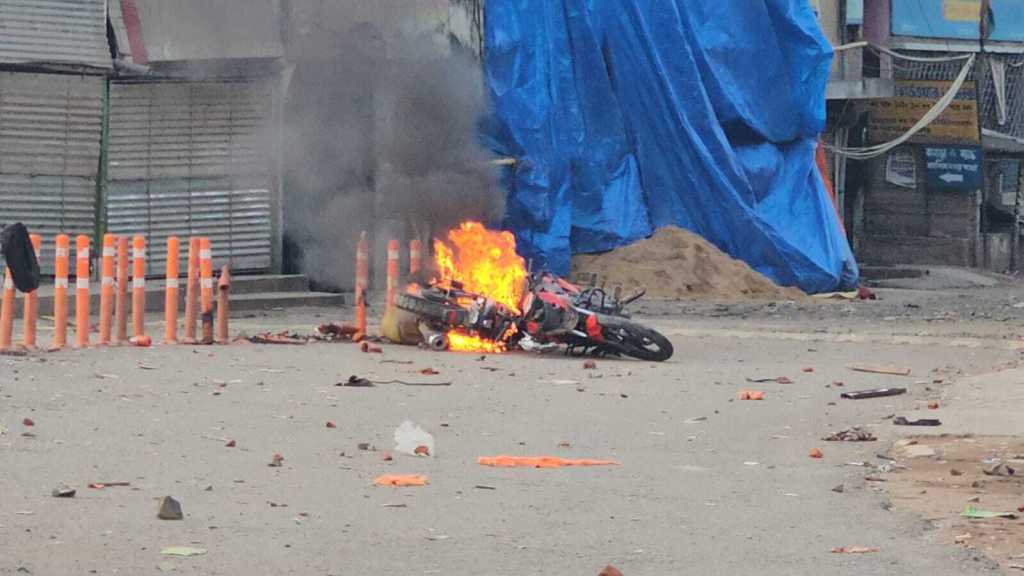
Maidul Islam, a journalist with the Bengali daily newspaper Dindorpon, said police stood by as his clearly marked press motorcycle was torched in April 2025 by protesters angered by a new law on land use perceived as discriminatory against Muslims.
“[Mobs] target us because they know that if we record the truth, that footage becomes evidence,” he said. “To date, no case has been registered in my instance. The mobs now openly shout that anyone seen with a camera should be attacked.”
Another veteran journalist who spoke with CPJ on the condition of anonymity, for fear of reprisal, said violence that was once associated with criminal networks is now used by political actors.
“During the last local body elections in Raninagar, Murshidabad, we saw ruling party supporters engage in assaults while the police stood by as mute spectators,” he said. “When journalists tried to document voting irregularities, they were met with retaliatory violence.”
For others, the threat of being attacked has made it too dangerous to report from the field.
“Many of us stay in the city. We have stopped reporting from the interior because anything can happen,” said a journalist in Murshidabad, who did not want to be named for safety reasons.
Official silence
West Bengal has a long history of political violence and data from the Armed Conflict Location & Event Data Project shows consistent spikes around elections. During previous election periods, including the 2024 general elections, West Bengal recorded some of the highest levels of political violence in the country, including attacks against journalists.
Despite repeated attacks on the press, rarely have they been condemned by the state government or comprehensively investigated by police.
Instead of denouncing the violence on January 16, West Bengal Chief Minister Mamata Banerjee, who leads the TMC, suggested that journalists should avoid entering volatile crowds, saying the situation was “beyond her control.”
Monideepa Banerjie, a veteran broadcast journalist based in West Bengal’s capital Kolkata, said the chief minister should have immediately sent a strong, zero-tolerance signal that violence against reporters was unacceptable.
“In moments like these, political leadership and messaging really matter,” Banerjie told CPJ.
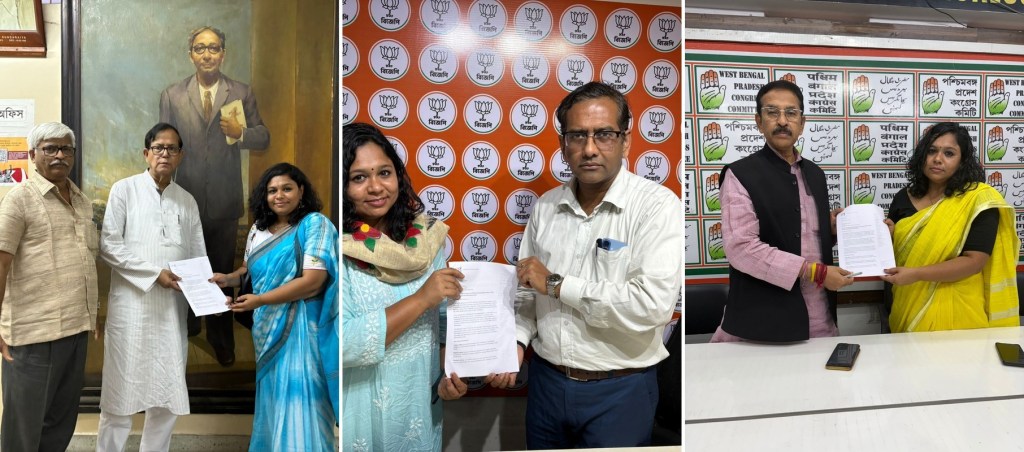
In March, CPJ met with political parties contesting the West Bengal elections and urged them to make public commitments to journalist safety and press freedom.
Opposition parties including the BJP, Indian National Congress, and Communist Party of India (Marxist), indicated a willingness to include commitments in their manifestos. The ruling TMC emphasised that the media must act ethically, adding the party was open to discussing specific protections for journalists, but it would not make commitments ahead of the election.
Caught in the sectarian crossfire
The government’s refusal to meaningfully address journalist safety has contributed to an environment in which brazen partisan attacks are not uncommon.
On February 25, Mayukh Thakur Chakraborty, a correspondent with Bengali-language broadcaster ABP Ananda, was assaulted on camera by a mob in Howrah city after he questioned a local TMC lawmaker about his alleged links to a murder suspect.
In 2024, Santu Pan, a former journalist with Bengali-language news channel Republic Bangla — which critics say is aligned with the BJP — was arrested live on air while reporting on protests over allegations of abuse by TMC officials. Pan has now quit journalism and works for the BJP.
Journalists in West Bengal say the challenges of reporting have multiplied as religious sectarianism has intensified and become the dominant feature in local politics.
Tensions between the TMC and BJP have been fueled by competing narratives around immigration and religious identity in the state, which was a communist stronghold for decades until the TMC took power in 2011.
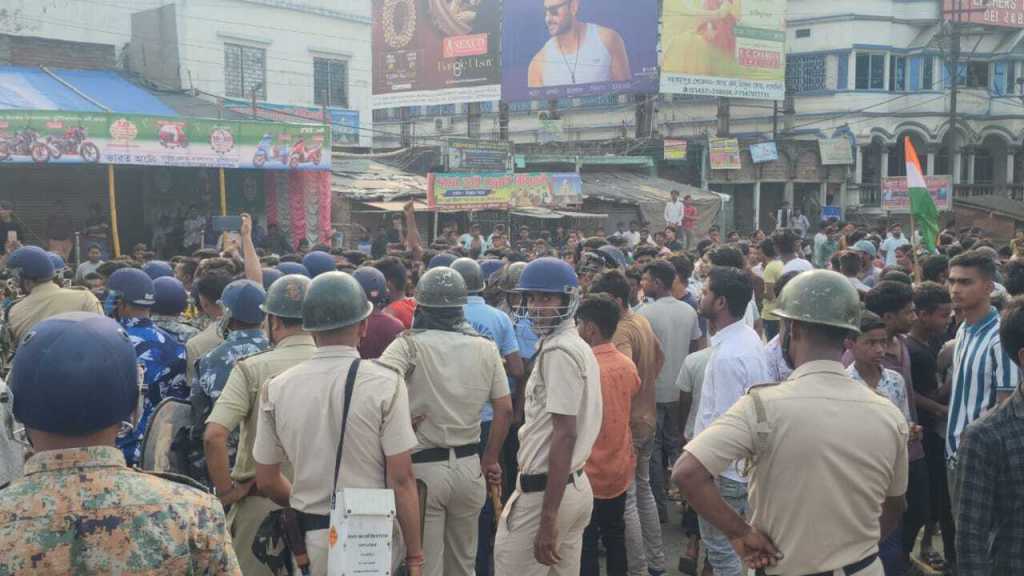
The BJP has alleged the government has facilitated illegal immigration from neighboring Muslim-majority Bangladesh, framing it as a demographic and security threat. The TMC, which positions itself as a secular defender of Bengal’s pluralistic identity, has refuted the claims and accused the BJP of targeting Bangla-speaking Bengali-Muslims as part of a divisive, Hindu-majoritarian agenda.
“What makes it complicated now is that the violence is no longer purely political. It has a sectarian texture that did not exist before,” said Jayanta Ghoshal, a senior journalist and political analyst with New Delhi-based broadcaster NDTV.
“There is a religious bias mindset operating in some of those spaces that makes any journalist with a camera a target, regardless of which outlet they work for.”
When his reporters are in the field, Ghoshal tells them to take precautions in hostile crowds and to remember that their safety comes first. However, he added, “When the issue is law and order, the onus lies with the government.”
Breaking the cycle of impunity
As political violence in West Bengal increasingly merges with sectarian tensions and mob impunity, the space for independent journalism is narrowing.
Some of the most acute press freedom challenges are playing out not just in Kolkata’s newsrooms but at the district level, where stringers and neighborhood-level correspondents operate without institutional protection, formal credentials, or legal recourse.
Local journalists interviewed by CPJ said news outlets could help by issuing official press IDs to every stringer and district correspondent working in the field. They said press clubs should be more active in defending journalists, including through collective action such as work stoppages, street protests, and sustained public pressure on the district governments.
Finally, efforts must be taken to break the cycle of impunity, journalists said. They recommended that every assault or detention of a journalist should be designated for fast-track judicial processing. The chief minister’s office and home department should also be held to a standing protocol of issuing formal public statements following every documented attack on a working journalist.
TMC State Vice President Jay Prakash Majumdar said the government was committed to press freedom “in principle.”
“However, media must be ethical — we expect a level playing field and neutral reporting, not coverage submerged in biased opinion,” he told CPJ in an interview. “When reporting is perceived as partisan, it can create tensions on the ground.”
The Chief Minister’s Office, the home department secretary, the director general of police, West Bengal, and the superintendent of police, Murshidabad, did not respond to CPJ’s request for comment.