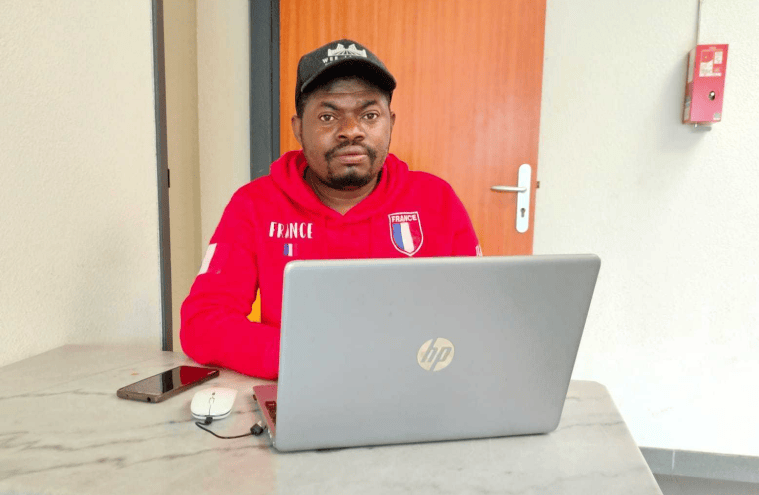
In 2025, Angolan journalist Daniel Frederico fled his home country for fear that he would be jailed for defamation for an article that he did not write.
His fears were realized on October 2, 2026, when he was given a 14-month sentence, despite his absence, for a 2022 report written and published by another media outlet. Frederico, editor of the Reporter Angola news site, told CPJ from exile that his only ‘crime’ was to meet the prosecutor mentioned in Angola Online’s article to hear his response to the allegations made against him.
“We are appealing this unjust conviction,” Frederico’s lawyer Antonio Martins told CPJ. “He went to get commentary from the complainant about a story that was already circulating, and got sued for it.”
Frederico’s legal headaches are far from over. In July, an Angolan Criminal Investigation Service (SIC) agent phoned and asked him to attend a hearing into “a matter of interest,” while refusing to identify himself or provide any further information.
Frederico soon found out that he and his website administrator were under investigation for defamation over a five-year-old article that criticized transport minister Ricardo Abreu. Frederico believes this latest case was opened to intimidate him ahead of next year’s elections. Angolans are due to vote in a new president as João Lourenço is constitutionally barred from seeking a third term.
“They [Angolan authorities] know that the largest websites are run by the diaspora and they want to instill fear, especially during elections,” Frederico told CPJ, adding that such vexatious cases are used by “those with political and economic power to defend themselves against what’s in the constitution in Articles 40 and 44 — freedom of the press and freedom of expression.”
Abreu replied to CPJ’s September 23 text message with a request for additional details about CPJ’s report, which CPJ provided, and said he would respond. He had not done so by the time of publication.
Journalists face constant threat
Frederico is one of 38 Angolan journalists interviewed by CPJ who have been investigated for defamation since 2015, which makes Angola one of Africa’s worst offenders in criminalizing journalism in this way.
At least 11 African countries have abolished criminal defamation laws that clashed with constitutional guarantees of press freedom: Gambia (2018), Ghana (2001), Kenya (2017), Lesotho (2018), Liberia (2019), Malawi (2025), Seychelles (2021), Sierra Leone (2020), South Africa (2024), Uganda (2026), and Zimbabwe (2014). However, some like Sierra Leone and Zimbabwe have reintroduced criminal defamation through the back door by passing cybercrime and data protection laws.
In Angola, criminal defamation is the preferred route for those seeking redress, with the state bearing the cost of a prosecution, rather than complainants seeking recourse via media regulators or damages through the civil code for offenses against an individual’s honor or reputation. This leaves journalists under constant threat of prison sentences of up to 18 months for investigating allegations of wrongdoing.
There are no official figures into the number of journalists under investigation for criminal defamation in Angola.
“The goal of the system is to intimidate,” said Escrivão José, editor of the online news journal Hora H, adding that he has spent “immeasurable hours and funds” dealing with 32 defamation investigations over the last 16 years.
The 38 Angolan journalists that CPJ interviewed have collectively faced more than 200 different criminal defamation investigations. One, William Tonet, said he had lost count but the cases against him exceeded 100.
Only one of the 38, Carlos Alberto, editor of the investigative site Portal A Denúncia, has served jail time in the last decade. Six were acquitted or had their cases dismissed in court. The remaining 31 have ongoing cases, many of which have dragged on for years.
“We have a breakdown by type of offense. It does not break down by profession or sector,” said Marty Kanando, spokesperson for the Prosecutor General’s (PGR) office, which carries out the second stage of investigations, with a view to bringing charges, after the SIC has conducted initial investigations.
Keeping powerful names out of the news
Most of the journalists told CPJ that they came under investigation for reporting on alleged misconduct involving the police or government officials. They said litigation was used to keep sensitive stories out of the news, undermining both journalists’ right to report under the Press Law and the public’s constitutional right to information.
“This is a tool used by those in power or in high-level positions to ensure their names are off limits,” Teixeira Cândido, a journalist, lawyer, and former head of the Angolan Journalists Syndicate, told CPJ. “[It can] be used any time that is convenient for authorities to call in journalists and intimidate and harass them.”
The African Commission on Human and Peoples’ Rights has called for states to amend criminal laws on defamation in favor of civil sanctions, but Cândido said Angolan authorities are not interested in reform.
“They want to keep the power to intimidate the press,” he told CPJ, adding that there is no time limit for authorities to investigate a case or on the number of times someone can be questioned.
In many other countries, legal action must be initiated within one to three years of publication.
Most of the 38 journalists were made a formal suspect, or arguido — a Portuguese legal status that restricts a suspect’s movements and often precedes arrest or charge.
Police spokesperson Superintendent Manuel Halaiwa, who is also responsible for queries about the SIC, asked CPJ via messaging app in March for more detail about all the journalists’ complaints involving the police and the SIC in this article, which CPJ provided. He did not respond to subsequent messages.
Interior ministry spokesperson Wilson dos Santos, whose ministry is responsible for the police, sent CPJ a statement which he said was on behalf of the SIC.
“It is important to note that these are standard legal proceedings, as any person who feels wronged regarding a matter that concerns them may assert their rights,” the September 11 text message said. “It should be noted that all proceedings are overseen by the Public Prosecutor’s Office, as the entity responsible for criminal prosecution.”
The PGR’s Kanando told CPJ that his office had no choice about criminalizing journalists for defamation because it is mandatory to investigate all cases passed on to them by the SIC.
“This is a matter of criminal policy. It is up to the legislature to define the circumstances of a dispute of this type, and if it determines that it is a crime, the prosecutor’s office has no alternative but to proceed with the investigation and pursue criminal accountability,” he said via phone on September 8.
CPJ warned of ‘legal action against your institution’
One of the most disturbing aspects of Angolan authorities’ misuse of the law is that journalists are punished for following best practices and giving those adversely mentioned the chance to comment on allegations prior to publication. This makes it dangerous for journalists to pursue fair and balanced reporting.
On October 6, 2025, Hora H editor Ana Filho was questioned by the SIC over her 2024 call to national police commander Francisco Ribas before her outlet published a report alleging his involvement in corrupt land deals, which included his rejection of the claims. The case is ongoing.
When CPJ made its own request for comment, Ribas said that he did not have anything against journalism as a profession but “reporting needs to be able to prove what is alleged.”
CPJ experienced such intimidation firsthand in seeking to report fairly on one of José’s cases. Lenilton Jordão, human resources director at Dubai-based DP World, a logistics company that manages the capital Luanda’s port, filed a complaint against José over a 2024 report accusing Jordão of breaching migration and labor laws.
José told CPJ that Jordão refused to comment pre-publication but “was quick to file the complaint” afterwards, and he was summoned for questioning by the PGR in February 2025. The report’s author, Angelino Canhango, told CPJ that he was also questioned by the SIC in May 2025.
After phoning Jordão to request comment, CPJ was called by a PR firm and then exchanged text messages with Jordão’s lawyer, Noé Eduardo, who said his client had a right to take legal action against CPJ but would not comment as the matter was in court.
“If I see any name in the newspapers, whether it be my client’s or mine as a lawyer, in the terms that you are now presenting to me, I will take legal action against your institution,” Eduardo told CPJ via messaging app on December 15, 2025.
‘Exhausting and taxing’
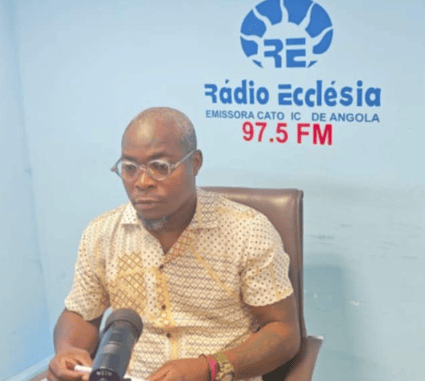
Journalists told CPJ that defamation investigations can exact a heavy toll, even if they do not proceed to trial, draining time and money that would otherwise be dedicated to journalism.
“It’s exhausting and taxing on many levels, to put it mildly,” said Osvaldo Nascimento, editor of the crime reporting site Na Mira do Crime, who is facing eight defamation investigations.
These include:
- On May 28, 2025, the PGR summoned Nascimento over a complaint by Angola’s ambassador to Equatorial Guinea, Potássio Nngana, about a January 2025 report alleging embezzlement by the embassy. Nngana told CPJ in May 2025 the allegations were “fabricated” and he used the “avenues available in the Angolan justice system to get justice.” Preliminary hearings took place in March and May 2026, the journalist’s lawyer, Osvaldo Salupupa, said.
- In June and July 2025, Nascimento also appeared in a Luanda court on defamation charges related to his 2023 report on allegations that a presidential employee accused of abducting and raping a 13-year-old girl was using his influence to avoid court. On February 2, 2026, the government official was convicted but the sentence was suspended on appeal. The case against Nascimento has not been formally closed.
- On November 28, 2025, Nascimento was questioned by the PGR after Luis Lélis, executive director of Angolan Investment Bank (BAI), complained about reports that the PGR was investigating him over an irregular $13 million loan to a foreign businessman, who fled Angola after being charged. Lélis has previously filed defamation complaints against multiple news outlets.
BAI’s legal and litigation department told CPJ via email that Lélis’ complaint against Na Mira do Crime’s article about the “alleged loan” was among “a series of attacks on the reputation of individuals and institutions, carried out anonymously or under pseudonyms and disseminated through ‘platforms’ lacking any editorial oversight or accountability.”
“I don’t give up because it is my profession,” Nascimento told CPJ. “It is with it that I put food on my family’s table.”
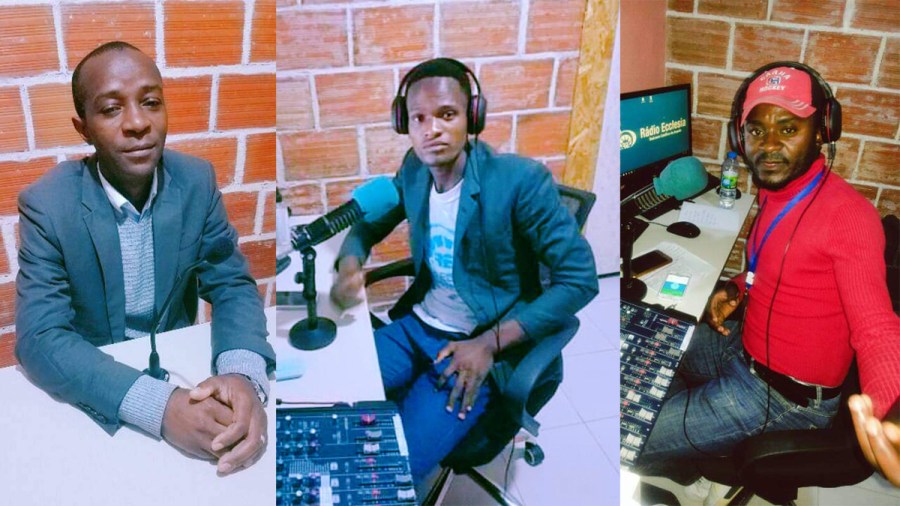
CPJ previously documented 12 criminal defamation investigations involving the following journalists: Mariano Brás, Fernando Caetano, Óscar Constantino, Liberato Furtado Pereira, Capita Inga, José Kalembe, Rafael Marques de Morais, Coque Mukuta, Jorge Neto, Lucas Pedro, Diamantino Sangueve, and Alberto Java.
Two of CPJ’s 38 interviewees declined to have their accounts published, citing fear of reprisals.
Here are the stories of the remaining 17 journalists:
- On September 25, 2026, Isidro Kangandjo, editor of Factos Diários news site, and his camera operator Victor Capeio, were detained at an SIC police station in the town of Zango, about 35 kilometers southwest of Luanda. The journalists were on their way to Calumbo municipal administration office to interview deputy administrator Joelson Joaquim da Costa Gomes about Factos Diários’ September 24 video allegations that he had illegally acquired land. Kangandjo told CPJ he had asked Gomes for comment multiple times prior to publication but did not receive any response. Kangandjo said administration spokesperson Miguel Madeira phoned him on September 25 with an invitation to interview Gomes.
“Victor has high blood pressure and fainted from the smell in the cell. I called for help and no one came,” Kangandjo told CPJ, adding that he could see Gomes chatting amicably with the police officers who had detained them. “This is the type of abuse journalists are exposed to and the reason why so many leave the country,” he said, adding that he and Capeio were released without charge the following day.
Madeira referred CPJ to the administration’s September 29 statement, which said Factos Diários’ report was false and the journalists were detained after Gomes filed a complaint with the SIC. “The Municipal Administration regrets what happened, as it believes institutionally that dialogue and the search for consensus should have preceded any criminal proceedings,” it said.
Kangandjo told CPJ that he was facing several other defamation investigations. In March 2025, the PGR questioned him about a defamation complaint by the chief inspector of police in southern Cunene Province, Ana Mbala, over a February 2025 report implicating her in corruption. Cunene police spokesperson, Inspector Lino Chipalanga, asked CPJ to request comment in writing on March 19, 2026, which CPJ provided, but received no response.
- On July 23, 2026, Francisco Rasgado, founder of Chela Press newspaper, was questioned by the PGR in Benguela in connection to his reporting on the alleged diversion of donations for people hit by April’s floods in the southern region, the journalist and his lawyer, José Faria, told CPJ. Rasgado was previously acquitted of defamation.
- In May 2026, Matias Miguel, editor of the Na Lente do Crime site, was called for an SIC hearing in connection with a 2025 report alleging that SIC officers were involved in the killing of a motorcycle taxi driver, the journalist told CPJ, adding that he had two other ongoing defamation cases.
- On December 18, 2025, the PGR charged José Costa, also known as José Samakaka, editor of Radio Cuquema in central Bié province, with defamation following a complaint from Angela Chicomo Ukueianga, municipal administrator of Cuito, about his critical reporting on the lack of electricity and sanitation in the provincial capital. Cuito administration’s spokesperson, Stanislau Silva, told CPJ via messaging app that he could not comment on an ongoing judicial case.
- In mid-2025, brothers Francisco Luquino and Frederico Luquino, editors of social media-based Luanda Sul Line, appeared several times at the SIC and PGR offices in Belas municipality in Luanda province to respond to a criminal defamation complaint by a businessman over their reports about his ill treatment of workers. The brothers told CPJ that they took the content down after the SIC hearings but the matter proceeded to trial. On November 26, 2025, the businessman withdrew his complaint, according to a court document, reviewed by CPJ.
- On March 7, 2025, Domingos Figueiredo, editor of the news site O Flagrante, was questioned at the SIC headquarters following a defamation complaint by Adão Sebastião, municipal police commander of the city’s Cazenga neighborhood, over a 2024 editorial about rising crime in the area, the journalist told CPJ. Sebastião did not answer CPJ’s calls to request comment.
- In February 2025, Na Mira do Crime reporter Alfredo Talamaku was questioned by SIC officers about a December 2024 report about a stolen police car. He was also re-questioned about his sources for a May 2024 report alleging that police failed to collect evidence from a murder scene. The initial December 2024 questioning on that case lasted six hours, he said, with officers threatening him.
“They would put their guns on the table near me, and tell me that I would not leave, and that they would take me to their prison dungeons,” he told CPJ.
The interior ministry’s dos Santos rejected the allegation and told CPJ via messaging app on September 11 that journalists were “interviewed in accordance with the principles of professional ethics; no situations occurred that could be construed as threats. SIC affirms its commitment to truth and justice, ensuring that the conduct of its staff is always exemplary and professional.”
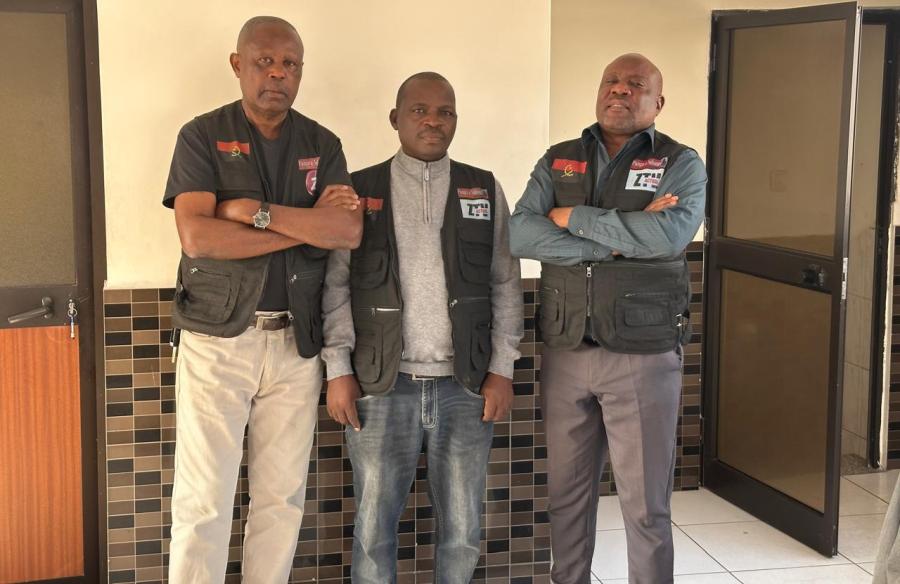
- In August 2024, Pungo a Ndongo newspaper’s editor Irineu Mujoco was questioned by the SIC and told that he, the outlet’s director Felipe Eduardo, and reporter Julio Gomes were being sued by the then-interior minister Eugénio Laborinho, over allegations that he had been using the police to support one faction in a leadership dispute within the Brazil-based Universal Church of the Kingdom of God. Eduardo told CPJ on September 23, 2026, that he had not received any further official updates on the case. Laborinho did not respond to CPJ’s September 25 calls and messages requesting comment.
- In April 2024, Na Mira do Crime reporter Adão Manuel was questioned over a SIC defamation complaint from the Universal Church of the Kingdom of God over a 2023 report alleging its staff broke into someone’s home, the journalist told CPJ. Alberto Segunda, the church’s general presbyter in Angola, told CPJ via phone that it “had to make complaints when it was being defamed” but he was not in a position to comment on the case.
- In 2022, prominent journalist Graça Campos was sued for an article on his Facebook page which accused TV commentator Bali Chionga of inciting violence. Campos went into exile because he feared arrest but returned to Angola later that year, his lawyer Sergio Raimundo told CPJ at the time. On September 24, 2026, Campos told CPJ that he was heard by PGR in 2024 but there had been no further action. Campos was previously jailed in 2007.
- On September 9, 2021, the PGR summoned Wizi-Kongo reporter Jeremias Kaboco for questioning and made him an arguido, over his report alleging a senior military officer was involved in corruption and money laundering, according to the journalist and the summons, reviewed by CPJ. Kaboco, who is also a teacher, told CPJ on September 11, 2026, that the case was ongoing and he still had to notify the PGR if he wanted to leave northwestern Uige Province.
- On August 19, 2021, Hora H reporter Pedro Vicente was questioned by the SIC after a senior official in the Attorney General’s office sued him and José for alleging that he was corrupt, Vicente told CPJ. The complainant dropped the case in September 2024.
- In 2021, Rádio Ecclesia commentator Óscar Ventura Lourenço was prosecuted for defamation for his critical comments on air about a local governor who was using state funds to repair a family property, Lourenço and the then-editor Óscar Constantino told CPJ on September 21, 2026, adding that the case was dismissed by the judge.