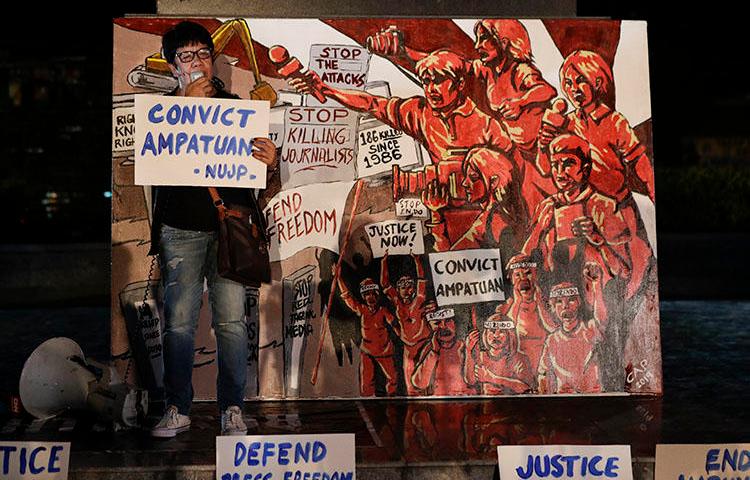
Ten years for justice in Maguindanao case is too long: We can do better
Never Forget. This became the rallying cry among journalists, freedom of expression activists and human rights defenders as they demanded justice following the massacre on November 23, 2009 of 58 people in Maguindanao. The attack, in which 32 journalists and media workers were killed, was the single deadliest event for the press that CPJ has…
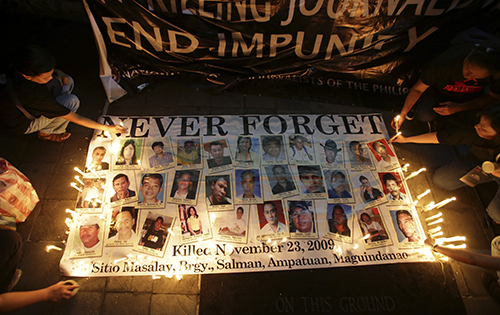
Justice delayed is justice denied in Philippines’ Maguindanao massacre
During his final State of the Nation Address this week, President Benigno Aquino III made only a passing mention of the 2009 Maguindanao massacre that killed 57 people, including 32 journalists and media workers. He did not detail any plans for action on the case, despite his vow to deliver justice before his term ends…
Radio journalist shot dead in the Philippines
New York, December 2, 2013–Philippine authorities must identify the perpetrators behind the fatal shooting of radio journalist Joas Dignos on Friday, the Committee to Protect Journalists said today. Dignos was a local radio commentator, according to news reports.
Interactive Timeline: 12 months of impunity at a glance
In December 2012, the Committee to Protect Journalists and 27 partner organizations launched Speak Justice: Voices against Impunity as part of an international effort to seek justice for the hundreds of journalists who have been murdered around the world. Today, on International Day to End Impunity, we are taking a look back at what has…
Training can help journalists survive captivity
Two murdered journalists for the Africa service of Radio France Internationale, Ghislaine Dupont, 51, and Claude Verlon, 58, might have had a chance. They were abducted on November 2 in Kidal in northern Mali, but the vehicle their captors were driving suddenly broke down, according to news reports.
Attacks on the Press: Killed in 2012: A Worldwide Roundup
Killed in 2012: A Worldwide Roundup The number of journalists killed in the line of duty rose sharply in 2012, as the war in Syria, a record number of shootings in Somalia, continued violence in Pakistan, and a worrying increase in Brazilian murders contributed to a 49 percent increase in deaths from the previous…
To fight impunity, cycle of fear, silence must be broken
Three years ago, on November 23, 2009, 30 journalists and two media workers were brutally killed in the southern Philippine city of Maguindanao while travelling in a convoy with the family and supporters of a local politician. To this day, not a single suspect has been convicted, though local authorities have identified close to 200.…
Twenty-three days to take action against impunity
Approximately 30 journalists are targeted and murdered every year, and on average, in only three of these crimes are the killers ever brought to justice. Other attacks on freedom of expression occur daily: bloggers are threatened, photographers beaten, writers kidnapped. And in those instances, justice is even more rare. Today, the Committee to Protect Journalists…