Syrian violence contributed to a sharp rise in the number of journalists killed for their work in 2012, as did a series of murders in Somalia. The dead include a record proportion of journalists who worked online. A CPJ special report

Syrian violence contributed to a sharp rise in the number of journalists killed for their work in 2012, as did a series of murders in Somalia. The dead include a record proportion of journalists who worked online. A CPJ special report
New York, December 7, 2012--CPJ condemns a series of attacks on journalists covering protests in Cairo over the proposed constitution and calls on authorities to investigate the assaults and bring an immediate end to the anti-press violence. At least five journalists were struck by rubber bullets, leaving one in critical condition, and several others were assaulted, according to news reports.
New York, December 4, 2012--The proposed Egyptian constitution would impose several new restrictions on press freedom--including the creation of a new government regulator and new governmental authority to shut media outlets--while doing nothing to halt the criminal prosecution of journalists, which was a hallmark of the Hosni Mubarak regime, the Committee to Protect Journalists said today. CPJ supports the Egyptian Journalists Syndicate's call to President Mohamed Morsi to withdraw the proposal from the referendum scheduled for December 15.
New York, October 25, 2012--An Egyptian appellate court should strike down the criminal defamation conviction and prison term handed down this week against a television commentator, the Committee to Protect Journalists said today.
Two Egyptian journalists were assaulted on September 14, 2012, in two separate episodes while covering protests against an anti-Islam film, according to news reports.
New York, August 23, 2012--Egyptian leader Mohamed Morsi banned pre-trial detention of journalists charged with press-related offenses today in a decree issued just hours after a Cairo criminal court jailed an editor pending trial on charges of insulting the president, according to news reports.
New York, August 16, 2012--President Mohamed Morsi's government and allies are pushing back against critical news coverage, suppressing critical journalists and state-run newspapers, putting a journalist on trial, and attacking three journalists on the street, according to news reports.
The first test for the future of press freedom in Egypt since President Mohamed Morsi took office is not going well.

The story sounds hideously like another--one of a chaotic,
predatory attack on a woman journalist in Cairo's Tahrir Square. Clothes torn
from her body, hundreds of men surging to grab her breasts and claw at her. A
woman wondering, "Maybe this is how I go, how I die." It has been almost a year
and a half since CBS correspondent and CPJ board member Lara Logan endured an attack
like this. Now, an independent journalist and student named Natasha Smith
reports that it has happened to her.
Cairo, June 18, 2012--The Committee to Protect Journalists condemns the legal action taken against an Egyptian journalist who was fined for defamation, and calls on the appeals court to reverse the ruling. In an unrelated incident, authorities briefly detained on Saturday an Egyptian journalist covering the run-off to the presidential election.
New York, May 16, 2012--The Committee to Protect Journalists condemns Sunday's raid on the Cairo offices of Al-Alam, an Iranian Arabic-language satellite broadcaster, which effectively shut down the station's news gathering in Egypt. CPJ calls on authorities to immediately return the station's confiscated equipment and allow staff members to resume their work.
New York, May 7, 2012--Egypt's Supreme Council of the Armed Forces must immediately investigate reports that two journalists were brutalized in military custody and bring the perpetrators to full account, the Committee to Protect Journalists said today.
New York, May 4, 2012--At least 18 journalists have been assaulted, injured, or arrested in the past three days while covering clashes between protesters and thugs and uniformed military personnel in front of the defense ministry in the neighborhood of Abbasiya in Cairo, according to news reports.

As the Internet and mobile communications become more integrated into reporters' work, the digital threats to journalists' work and safety have increased as well. While many press reports have documented Internet surveillance and censorship--and the efforts to combat them--mobile communications are the new frontline for journalist security.
After the Salvadoran online newsmagazine El Faro exposed a secret government deal with criminal gangs last month, its staff faced repercussions that illustrate the new and complicated risks facing journalists worldwide. El Faro's report, which said the government provided more lenient treatment of imprisoned gangsters in exchange for the groups' agreement to slow down their murderous practices, addressed one of the most sensitive topics facing journalists today--crime and its many interconnections with government.
New York, April 26, 2012--Supporters of the Muslim Brotherhood assaulted two Egyptian journalists seeking to cover a public conference held on Tuesday in Alexandria by a presidential candidate of the brotherhood's political party, according to news reports.
New York, March 9, 2012--Egyptian authorities should immediately dismiss a baseless complaint of antistate activities that has been lodged against several journalists, the Committee to Protect Journalists said today. The case has been referred to military prosecutors as part of a broader practice that has raised constitutional and international concerns.
For a few weeks after the overthrow of President Hosni Mubarak, it looked as if Egypt might do the unthinkable and do away with the ministry of information. New publications and TV stations sprouted up, newspaper circulation soared, and a new breed of citizen journalists and bloggers opened a space for reporting and comment that a year earlier would have led to a jail sentence.
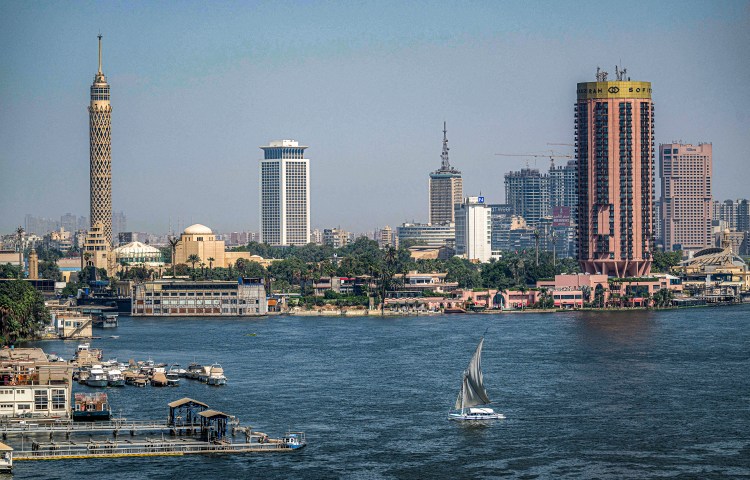
For a growing number of independent journalists and bloggers, the memory of that press freedom euphoria is as hazy as the Cairo skyline.
Not since the worst period of the Iraq war, or in the Balkans the decade before, have so many storied journalists been killed or seriously injured in such a short period of time. Inevitably, the spate of deaths leaves many journalists asking questions about whether and how much they are willing to risk their own lives, and possibly the lives of others. Many experienced journalists might agree on one thing: the decisions one makes about risk are among the most intimate decisions they will ever make.
What a difference a year makes. In January 2011, we had to scrap plans for our regular Middle East launch of Attacks on the Press at the headquarters of the Egyptian Journalists Syndicate in downtown Cairo. Just a few blocks away, in Tahrir Square, journalists were busy fending off their own attackers as pro-regime thugs tried to thwart young Egyptians' ultimately successful attempt to topple Hosni Mubarak.
Even as trade and new systems of communication turn us into global citizens, the information we need to ensure accountability often stops at national borders. New platforms like social media are valuable tools, but the battle against censorship is hardly over. By Joel Simon
The much-publicized assault on Lara Logan put the danger of sexual violence for journalists into the spotlight for the first time. As a result, there is more open discussion between reporters and news managers, but still too few preventative steps. By Lauren Wolfe
The Middle East's political shifts changed conditions for journalists dramatically. The emerging trends favor free expression, but are filled with ambiguity and depend on the political configurations to emerge after the revolutionary dust has settled. By Mohamed Abdel Dayem
Murders decline, but fatalities rise during coverage of protests. Photographers and freelancers pay an especially high price. Pakistan is the world's most dangerous nation.
During the 18-day uprising that led to Hosni Mubarak's ouster, the government unleashed a systematic campaign to intimidate journalists and obstruct news coverage. Dozens of serious press freedom violations were recorded between January 25 and February 11, as police and government supporters assaulted journalists in the streets. One journalist was killed by sniper fire while covering the demonstrations. Authorities also detained scores of journalists, instituted a six-day Internet blackout, suspended mobile phone service, blocked satellite transmissions, revoked accreditations, erected bureaucratic obstacles for foreign reporters, confiscated equipment, and stormed newsrooms. After Mubarak's fall, the ruling Supreme Council of the Armed Forces showed its own hostility to critical news coverage. The council established a new censorship regime in March, telling editors they must obtain approval for coverage involving the armed forces. In July, the council reinstated the historically repressive Information Ministry; in September, it announced it would enforce the Mubarak-era Emergency Law that allows indefinite detention of civilians. Authorities raided broadcasters in September, October, and December, censored newspapers, and arrested critical bloggers. In October, a fatal confrontation between the military and civilians in front of the Television and Radio Union left dozens dead, including a journalist. The next month, at least 35 journalists were detained or assaulted while covering a week of demonstrations demanding the military hand over power to civilians. As the year ended, the first two rounds of parliamentary voting gave Islamist parties a significant lead over secular competitors.
New York, February 13, 2012--Egyptian authorities should immediately release detained Australian journalist Austin Mackell, his translator, and an American student traveling with them, the Committee to Protect Journalists said today.
New York, February 8, 2012--Journalists covering political unrest in the Egyptian port city of Suez have been subjected to at least 10 attacks over a four-day period, according to news reports. One journalist was chased, fired upon, and threatened in four separate incidents, CPJ research shows.
New York, February 6, 2012--The Committee to Protect Journalists condemns official attacks on journalists covering political unrest in Egypt this weekend. At least two journalists were shot by security forces in the past three days, and a third journalist was assaulted in police custody, according to news reports.