
Why governments don’t need RIM to crack the BlackBerry
The United Arab Emirates’ Telecommunications Regulation Authority (TRA) announced on Sunday that it would be suspending BlackBerry “messenger, e-mail and Web-browsing services” in the country from October 11, until these “applications were in full compliance with UAE regulations.” Given the popularity of the BlackBerry platform in the country (an estimated 500,000 users from a population of 4.5 million) one…
UAE to suspend BlackBerry functionality
New York, August 2, 2010—The Committee to Protect Journalists is alarmed by the United Arab Emirates’ decision to suspend BlackBerry services for e-mail, instant messaging, and browsing the Web. The communications authority in the UAE announced on Sunday that it would suspend the data applications as of October 11. CPJ calls on the authorities to…
China sets prison terms for 3 Uighur Web managers
New York, August 2, 2010—Three Uighur-language website managers were sentenced Friday to prison terms of three to 10 years after being found guilty under broad charges of “endangering state security.” The men had been jailed after ethnic rioting in July 2009 in Urumqi, capital of the far-western, predominantly Muslim, Xinjiang Uighur Autonomous Region.
Using https to secure the Web for journalism
From today, you now have an alternative web address to visit the CPJ website. As well as our usual http://cpj.org/ address, you can visit our site securely at https://cpj.org/. We’ve turned on this feature to help protect our readers who are at risk of surveillance and censorship, and as part of a wider advocacy mission…

CPJ Impact
News from the Committee to Protect Journalists, July 2010Cuba begins releasing journalists For weeks, CPJ staff had been getting hints that Cuba, under a deal brokered by the Catholic Church and Spanish government, would release imprisoned journalists and political dissidents. Some families had been told to buy suits for their jailed loved ones, a sure…
OSCE summit should address Kazakhstan press record
New York, July 19, 2010—The Committee to Protect Journalists calls on the Organization for Security and Co-operation in Europe (OSCE) to place Kazakhstan’s poor press freedom record on the agenda for its summit planned for later this year. Kazakhstan, the OSCE chair, is scheduled to host the summit in its capital, Astana.
50 years on, Francophone Africa strives for media freedom
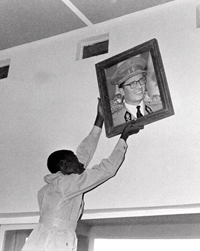
CPJ has joined with African press freedom groups to urge African leaders to end repression of the media as they celebrate 50 years since the end of colonial rule. We will publish a series of blogs this week by African journalists reflecting on the checkered history of press freedom over that period.This year is the 50th anniversary of…
Lebanon’s parliament must revise repressive tech bill
New York, June 28, 2010—The Committee to Protect Journalists is alarmed by repressive aspects of a new technology bill that is pending in the Lebanese parliament. CPJ urges parliament to remove several provisions that would restrict press freedom and free expression.
Editor of censored Rwandan paper is assassinated
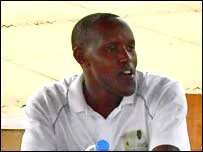
New York, June 25, 2010—A top editor of an independent Rwandan newspaper that was recently banned by the government was assassinated in front of his home late Thursday, according to local journalists and news reports. An assailant shot Jean-Léonard Rugambage, left, acting editor of Umuvugizi as he drove through the gate of his home in the capital, Kigali,…