
The press silenced, Nuevo Laredo tries to find voice
You don’t notice it at first. Not with the people seemingly moving as normal on the sidewalks and the happy recorded music blaring across the plaza in front of city hall to announce the annual cowboy parade. No, at first Nuevo Laredo looks like a regular border town, until the military armored car goes by…
Policing the Internet in India
Amid a raging debate on Internet freedom and censorship in India, members of the government met last week with a clutch of website operators, including representatives of Yahoo, Google, Facebook and Microsoft. In a meeting scheduled to address a wider plan to leverage social media to empower the government, it’s unclear whether the touchy subject…
In China, real people vs. Internet minders
In the next three months, users of China’s microblog weibo.com — “weibo” is the generic Chinese term for Twitter-like platforms — run by the huge sina.com (the English site is here) news portal, entertainment and blogging site, will have to start providing their real-world identities to the site, instead of simply being able to register.…
Ríodoce attack shows need for denial-of-service defenses
A founder of Mexican news weekly Ríodoce, Javier Valdez Cárdenas, traveled to New York in November to receive CPJ’s International Press Freedom Award at our annual benefit dinner. No sooner had he returned to Mexico than Ríodoce’s website was thrown offline by a denial of service (DOS) attack, in which multiple computers are used to…
Syria detains blogger, press freedom advocate
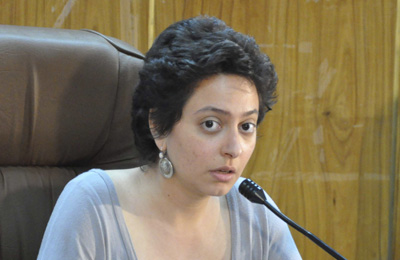
New York, December 5, 2011–The Committee to Protect Journalists condemns the detention of journalist and press freedom campaigner Razan Ghazzawi and calls on Syrian authorities to immediately release her. CPJ also urges the government to end the routine harassment and detention of journalists and to make public the names of all detained journalists and any…
Mexican weekly goes offline after cyberattack
New York, November 28, 2011–The Committee to Protect Journalists is concerned by reports of a cyberattack on Mexican weekly Ríodoce that forced its website offline on Friday. Ríodoce is one of the few publications to cover crime and drug trafficking in Mexico.
Syrian cameraman killed; last seen being arrested
New York, November 21, 2011–A Syrian cameraman was found dead Sunday with his eyes gouged out in the town of al-Qasir, according to several news reports. Ferzat Jarban, who was last seen being arrested, is the first journalist to be killed in Syria since CPJ started documenting journalist fatalities in 1992.
Defending the middle ground of online journalism
It’s easy to use polarizing descriptions of online news-gathering. It’s the domain of citizen journalists, blogging without pay and institutional support, or it’s a sector filled with the digital works of “mainstream media” facing financial worries and struggling to offer employees the protection they once provided. But there is a growing middle ground: trained reporters…
At Occupy protests, U.S. journalists arrested, assaulted
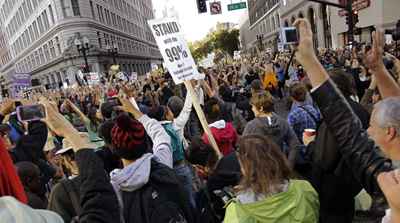
As the Occupy movement has spread beyond Wall Street, at least seven U.S. journalists have been detained and one television crew attacked by U.S. law enforcement officers during turbulent encounters between police and protesters. Occupy demonstrators have attacked journalists in two other instances, including an assault this week in Oakland, Calif., that left a cameraman with…