TV crews allege targeting by Israeli warplanes in the south
New York, July 27, 2006—The Committee to Protect Journalists expressed concern today over allegations by several television crews that Israeli warplanes had attacked them, effectively shutting down live television coverage from southeast Lebanon. Crews from four Arab television stations told CPJ that Israeli aircraft fired missiles within 80 yards (75 meters) of them on July…
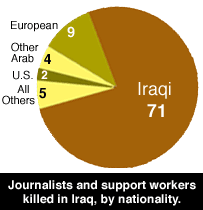
Local journalists increasingly targeted, CPJ finds In Iraq, murder top cause of journalist deaths
New York, March 17, 2006—Murder has overtaken crossfire and other acts of war as the leading cause of work-related deaths among journalists and media support workers in Iraq, and local journalists are far and away the most vulnerable to attack, a new analysis by the Committee to Protect Journalists has found. CPJ research, compiled for…
Three Iraqi journalists slain near Samarra
New York, February 23, 2006—The Committee to Protect Journalists condemns in the strongest terms the murder of three journalists on assignment in Samarra for the Dubai-based satellite news channel Al-Arabiya. The bodies of correspondent Atwar Bahjat, cameraman Khaled Mahmoud al-Falahi, and engineer Adnan Khairallah were found today near Samarra, a day after the station lost…
Attacks on the Press 2005: Countries That Have Jailed Journalists (Follow Links for More Details)
AFGHANISTAN: 1 Ali Mohaqqiq Nasab, Haqooq-i-Zan (Women’s Rights) Imprisoned: October 1, 2005 The attorney general ordered editor Nasab’s arrest on blasphemy charges after the religious adviser to President Hamid Karzai, Mohaiuddin Baluch, filed a complaint about his magazine. “I took the two magazines and spoke to the Supreme Court chief, who wrote to the attorney…
Attacks on the Press 2005: Algeria
ALGERIA Authorities continued to use legal harassment as the primary means of intimidating the private press, wielding a penal code that criminalizes defaming the president, the judiciary, Parliament, and the military. Emboldened by his re-election in 2004, President Abdelaziz Bouteflika, together with his political and business allies, registered hundreds of legal complaints against private newspapers…
Attacks on the Press 2005: Iraq
IRAQ Iraq was an assignment of unending danger for the hundreds of journalists covering the world’s biggest news story. Journalist murders, deaths in crossfire, abductions, and detentions continued apace, reinforcing Iraq’s distinction as the most dangerous place in the world to work as a journalist and as one of the deadliest conflicts for media in…
Attacks on the Press 2005: Lebanon
LEBANON n the popular uproar that followed the assassination of former Prime Minister Rafiq al-Hariri in February 2005, Lebanon’s press, already among the most vibrant in the Arab world, hoped for greater freedom. But a series of bomb attacks on journalists who dared criticize Syria and its Lebanese allies quickly demonstrated that the old order…
Attacks on the Press 2005: Yemen
YEMEN Yemen’s press found itself on the defensive as a string of chilling attacks occurred against a backdrop of armed conflict, economic upheaval, and public protests. The release of imprisoned editor Abdel Kareem al-Khawaini was a bright spot in an otherwise troubled year that saw harassment and violent attacks against journalists on the rise. President…
CPJ delegation alarmed by worsening press situation in Yemen
Sana’a, Yemen, January 26, 2006—A delegation from the Committee to Protect Journalists expressed alarm today at the deterioration of press freedom in Yemen. Over the last several months, a growing number of Yemeni journalists have been the victims of brutal assaults, arrests, intimidation, and government-sanctioned newspaper closures. They now also face the prospect of a…