News from the Committee to Protect Journalists, April 2014
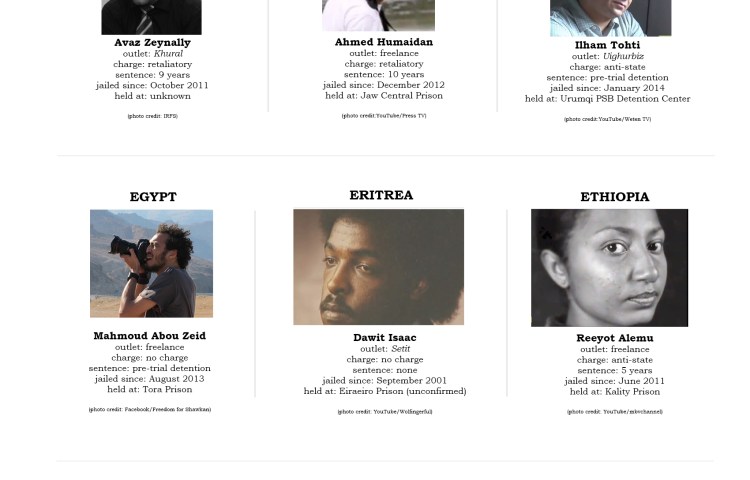
World Press Freedom Day campaign In the lead-up to World Press Freedom Day, CPJ has started a campaign highlighting 10 emblematic cases of journalists in prison and calling on authorities to release them and all other reporters being held in relation to their work. CPJ believes that no journalist should be imprisoned for doing their…
World Press Freedom Day: 10 Journalists to Free from Prison
Anti-state activity is the most used charge against journalists New York, April 29, 2014–As World Press Freedom Day approaches, journalists are languishing in prisons across the globe. Uzbek editor Muhammad Bekjanov has been in jail for 15 years–one of the longest imprisonments of journalists worldwide. Prominent Iranian journalist Siamak Ghaderi has been beaten and whipped…
Ten journalists to free from prison
On World Press Freedom Day, CPJ calls for the release of all jailed journalists By Shazdeh Omari/CPJ News Editor New York, April 29, 2014—Uzbek editor Muhammad Bekjanov has been in jail for 15 years, one of the longest imprisonments of journalists worldwide. Prominent Iranian journalist Siamak Ghaderi was imprisoned in 2010 and has been beaten…
Mountain of impunity looms over Kurdistan journalists
Iraqi Kurdistan may seem calm compared with much of the Middle East, but the media are vulnerable whenever internal political tensions flare. Amid impunity for anti-press attacks, including murder and arson, journalists say they must self-censor on topics like religion, social inequality, and corruption associated with powerful officials. A CPJ special report by Namo Abdulla
Confronting the suffering in Vietnam’s prisons
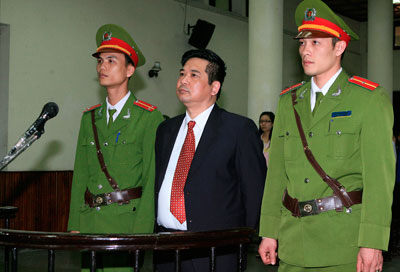
Dinh Dang Dinh, a former Vietnamese schoolteacher and blogger, died on April 3 from cancer of the stomach. Near death, he had been released from his six-year prison sentence on March 21, and allowed to return home to die in Dak Nong province in Vietnam’s Central Highlands. His crime, to which he had pled not…
Two Iraqi journalists killed in suicide bomb
New York, March 11, 2014–A suicide bombing targeting a police checkpoint in Iraq’s Babil province on Sunday killed dozens of Iraqis, including two journalists, according to news reports. Muthanna Abdel Hussein and Khaled Abdel Thamer were cameramen for the state-run Al-Iraqiya TV station.
Attacks on the Press: Surveillance poses global challenge for free flow of news
CPJ’s annual assessment of press freedom worldwide New York, February 12, 2014–Digital surveillance, the unchecked murder of journalists, and indirect commercial and political pressures on the media are three of the primary threats to press freedom highlighted in the Committee to Protect Journalists annual assessment, Attacks on the Press, released today.
Attacks on the Press in 2013: Ethiopia
A year after the death of Meles Zenawi, Prime Minister Hailemariam Desalegn succeeded in preserving the repressive climate in Ethiopia. Several journalists faced interrogation or prosecution for writing about the late leader, his policies, and even his widow. One journalist, Temesghen Desalegn, former chief editor of the critical weekly Feteh, was charged in February with…