Attacks on the Press in 2012: Tunisia
Two years after the revolution that overthrew Zine el-Abidine Ben Ali, press freedom in Tunisia slid backward. Since the newly elected government assumed office in January, the authorities took several worrying steps that included the appointment of government allies as new heads of state television, radio, and print outlets. In April, three journalists were beaten…
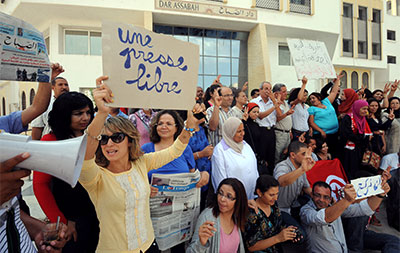
Receding hopes for press freedom in Tunisia
These days, press freedom in Tunisia feels ever more distant. Many journalists believed that media freedoms, which were virtually nonexistent under former President Zine el-Abidine Ben Ali, would grow after his ouster. During the aftermath of the December 2010 uprising, an independent press blossomed and special commissions were set up to reform the media sector.…
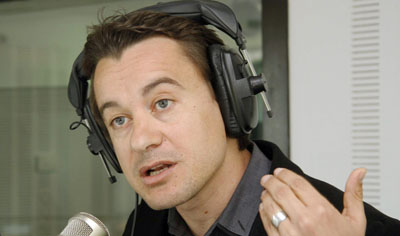
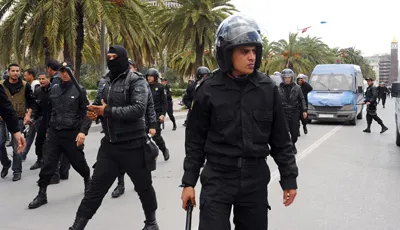
Police attack Tunisian journalists covering protest
New York, April 10, 2012–Tunisian authorities must immediately investigate attacks against journalists covering a Martyrs’ Day protest in the Tunisian capital on Monday, the first series of anti-press attacks that the Committee to Protect Journalists has documented in three months, CPJ said today.
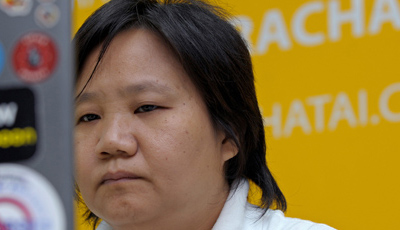
Attacks on the Press in 2011: Regulating the Internet
Legislation for Internet security can quickly turn into a weapon against the free press. Cybercrime laws are intended to extend existing penal codes to the online world, but they can easily be broadened to criminalize standard journalistic practices. By Danny O’Brien
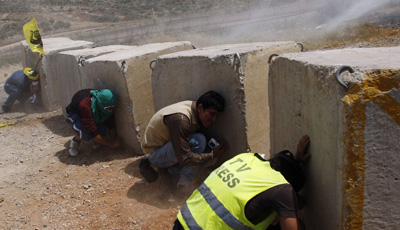
Attacks on the Press in 2011: Evolution in Journalist Security
The danger of covering violent street protests has become a significant risk for journalists, alongside combat and targeted killings. Sexual assault, organized crime, and digital vulnerability are also hazards. The security industry is struggling to keep up. By Frank Smyth
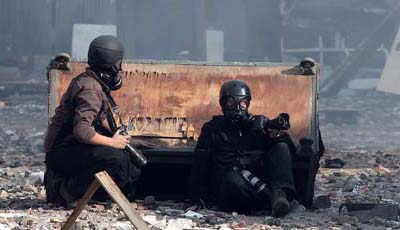
Attacks on the Press: From Uprisings, Trends to Watch
The Middle East’s political shifts changed conditions for journalists dramatically. The emerging trends favor free expression, but are filled with ambiguity and depend on the political configurations to emerge after the revolutionary dust has settled. By Mohamed Abdel Dayem