Bethlehem TV station destroyed by suspected PLO gunmen
New York, April 18, 2006—The Committee to Protect Journalists is alarmed by the destruction of the studios of a private Bethlehem television station critical of the Palestinian Authority. Masked gunmen believed to be from the Fatah faction of the Palestine Liberation Organization stormed the offices of Al-Roa television on the night of March 23 and…
Journalist shot two weeks ago in Diyarbakir riots dies
New York, April 17, 2006—Journalist Ilyas Aktas died on April 14 in an Ankara hospital two weeks after he was shot in the head during protests in the predominantly Kurdish city of Diyarbakir, in southeast Turkey, local and international media reported. The Committee to Protect Journalists is deeply troubled by the shooting and is still…
Charges dropped against 4 of 5 columnists
New York, April 11, 2006—The Committee to Protect Journalists welcomes a Turkish court ruling today to drop charges against four prominent newspaper columnists but deplores the decision to continue with the trial of a fifth. All five writers were charged over comments they made about an Istanbul conference last September on the killing of Armenians…
Iraq: Reuters inquiry finds U.S. shooting death of journalist “unlawful”
New York, April 10, 2006—Reuters news agency said today that an inquiry it commissioned into the shooting of one of its journalists by U.S. troops in Iraq found that the killing was “unlawful” and a violation of U.S. military rules of engagement. The Committee to Protect Journalists expressed concern at the findings. Reuters said the…
Acquitted after year-long detention, CBS cameraman released
New York, April 7, 2006—An Iraqi cameraman held for more than a year by U.S. forces in Iraq without due process was released on Thursday, CBS News has confirmed. Abdul Ameer Younis Hussein, who was working for CBS, was freed a day after an Iraqi criminal court, citing a lack of evidence, acquitted him of…
Saudi journalist detained for writings
New York, April 7, 2006—The Committee to Protect Journalists is deeply concerned about the ongoing detention of a Saudi journalist who has been held for five days in retaliation for his writings about religious extremism. Rabah al-Quwai’, who writes for the Saudi dailies Okaz and Shams and contributes to the Saudi-run Web sites Dar al-Nadwa…
UK court rules IDF shooting of filmmaker in Gaza was murder
New York, April 5, 2006—The Committee to Protect Journalists today renewed its call for Israel to properly investigate the killing of a British cameraman in the Gaza Strip after a London court found that his shooting by an Israeli officer was murder. James Miller, an award-winning filmmaker, was filming a documentary about Palestinian children caught…

Iraq: Detained CBS cameraman acquitted of charges
New York, April 5, 2006—The Committee to Protect Journalists welcomes the decision today by an Iraqi criminal court to acquit a CBS cameraman held in U.S. custody in Iraq for one year without due process. A three-judge panel from Iraq’s Central Criminal Court dismissed charges against Abdul Ameer Younis Hussein, an Iraqi cameraman working for…
Treatment of jailed Tunisian writer draws deep concern
New York, March 31, 2006—The Committee to Protect Journalists is deeply disturbed by the mistreatment and harassment of imprisoned Tunisian writer and human rights lawyer Muhamed Abbou. Abbou was so weak that he could not stand up during a brief visit with family members on Thursday, his wife, Samia, said in an interview with CPJ.…
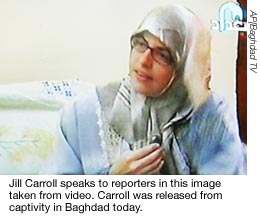
CPJ welcomes release of Jill Carroll
New York, March 30, 2006—The Committee to Protect Journalists welcomes today’s release of Jill Carroll, a freelance reporter on assignment for The Christian Science Monitor who had been held captive in Iraq for nearly three months. Carroll was freed at mid-day in Baghdad. She was reported in good health and told reporters that she was…