Slideshow: Journalists killed in 2014
In 2014, at least 60 journalists and 11 media workers were killed in relation to their work, according to CPJ research. Local and international journalists died covering conflicts, including in Syria, Iraq, and Ukraine, while many others were murdered reporting on corruption and organized crime in their own countries. Here, CPJ remembers some of the…

In Kenya, press curbed as government seeks to fight terrorism
The Kenyan press is being caught in the crossfire as authorities seek to strengthen defenses against terrorists. On December 19, Kenya’s president signed into law a security bill that has the power to stop the press covering terror attacks. The government has also recently criticized the media over allegations that special units are carrying out…
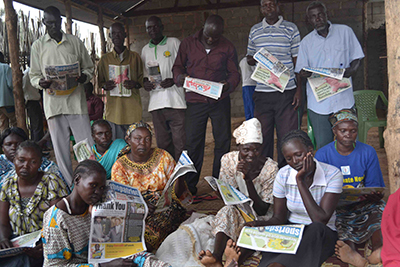
Mission Journal: As South Sudan conflict continues press still suffers
On December 15 last year, fighting that broke out between supporters of South Sudan’s President Salva Kiir and Riek Machar–who had been vice president until Kiir fired the entire Cabinet–escalated into a civil war that has increased pressure on an already fragile independent press.
Accounting for impunity is obligation for all states
This week, members of UNESCO’s International Programme for the Development of Communication will meet to discuss the director general’s biannual report, which examines the cases of nearly 600 journalists killed around the world from January 1, 2006 to December 31, 2013. The report, and lacklustre response from member states who had been asked to provide…

Mission Journal: In Zambia, Sata never fulfilled promise of greater transparency
“We’ll see for ourselves on Friday,” was a refrain on the lips of most journalists I met in Lusaka in mid-September, as they speculated on the health of President Michael Sata ahead of their country’s opening of parliament, where the leader was due to speak.
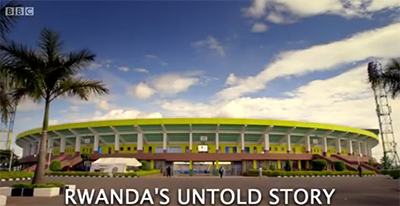
BBC’s Rwanda documentary leads to illogical, illegal suspension
When the BBC released in early October its televised documentary “Rwanda’s Untold Story,” which questioned official accounts of the 1994 genocide, a massive outcry inside and outside Rwanda’s borders ensued. Locals and foreigners alike protested the documentary’s findings, parliamentarians demanded a ban and legal action, and authorities summarily suspended BBC’s vernacular Kinyarwanda news service, the…
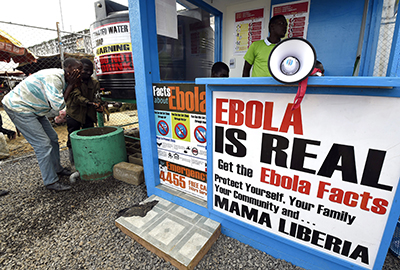
In Ebola-stricken countries, authorities and journalists should work together
The Ebola crisis in West Africa is unrelenting, and journalists on the frontline of reporting on the virus are caught between authorities wanting to control how the outbreak is reported, and falling victim to the disease themselves.
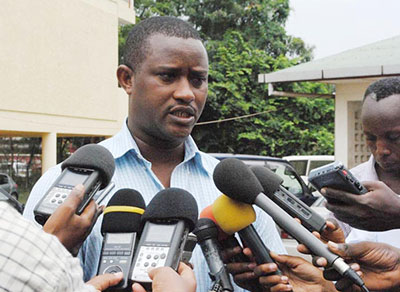
Burundi’s journalist union takes repressive press law to court
If the state decides that a journalist’s article in Burundi jeopardizes someone’s “moral integrity” under the country’s Media Law it can demand that the journalist reveals sources, and it can suspend the publication. “It’s a backwards, freedom-killing law,” said Alexandre Niyungeko, the founder and head of the 300-member Burundi Union of Journalists. Despite the press…
In attempts to contain Ebola, Liberia censors its press
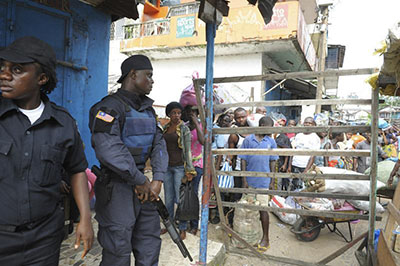
With the Ebola epidemic predicted to get worse, the Liberian government has taken action to silence news outlets critical of its handling of the health crisis which, according to Liberia’s Information Ministry, has claimed more than 1,000 lives in the country since March. Publishers have been harassed and forced to cease printing, and journalists were…
Back-to-back display killings of journalists unprecedented
The apparent back-to-back murders of two American freelance journalists by the same group are unprecedented in CPJ’s history. The beheadings on camera in a two-week period of first James Foley and then Steven Sotloff appear to be an acceleration of a pattern–dating at least to Daniel Pearl’s killing in 2002–of criminal and insurgent groups displaying…