On World Press Freedom Day and journalists’ safety
Last week, I met a Cameroonian journalist who worked in the Congo until he fled following a series of threats and an attack on his home by armed men who assaulted his sister. Elie Smith, a TV host who documented alleged abuses by police and was outspoken in his criticism of the government, said he…
One year after arrest Zone 9 bloggers remain imprisoned as trial drags on
It will be one year this weekend since six bloggers were arrested in Addis Ababa, just days after the group announced on Facebook that their Zone 9 blog would resume publishing after seven months of inactivity. As the anniversary of the arrests approaches on Saturday, Soleyana S. Gebremichale, one of the Zone 9 founders who…

Mission Journal: Fewer arrests but fear still lingers for Somaliland’s press
Conditions for the press in the semi-autonomous republic of Somaliland may, on the surface, appear to be improving. But without a functioning media law to lend protection, and pending legislative elections, journalists remain wary of state harassment.
In election year, Nigeria’s press feeling the pressure
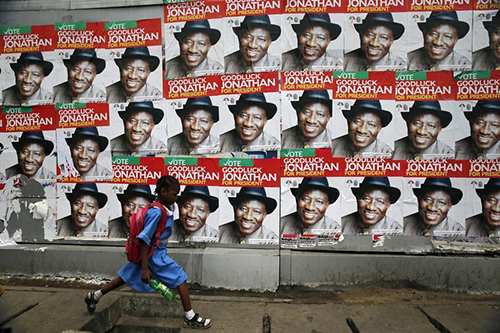
“Nobody is safe. Not the voter, not the journalist, not anybody!” The fears of Femi Adesina, president of the Nigerian Guild of Editors, is echoed by stakeholders and observers of Nigeria’s general election. Amid the tension in the run up to presidential and federal parliamentary elections on March 28, and governor and state parliamentary elections…
Acclaimed journalist Marques de Morais on trial for defamation in Angola
On Tuesday, less than a week after receiving an award for his journalism from the London-based freedom of expression group Index on Censorship, veteran journalist Rafael Marques de Morais will stand trial in Angola on charges of criminal defamation.

South African police repeatedly force journalists to delete photos
South Africa is synonymous with crime in the eyes of many–as evidenced by the recent mugging of a TV crew live on camera–but for the press, a more sinister threat to freedom lies in the growing number of cases where it is the police, in flagrant denial of their orders, who intimidate and threaten journalists,…

Press law debate and journalist’s release signal hope for Burundi’s media
Burundi journalists may have more space to report freely ahead of the country’s controversial elections this year after the legislative assembly pushed for amendments to a draconian press law and a radio director was released on bail.
Ban of India’s Daughter and other films silences debate on key issues
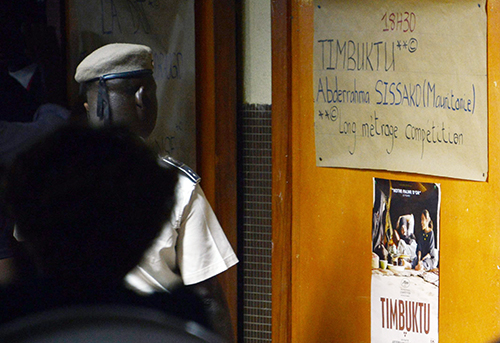
What do Delhi, Beijing, and Villiers-sur-Marne have in common, but Ouagadougou does not? The first three recently banned access to films their governments deemed inappropriate. But a film festival in the fourth, the capital of Burkina Faso in West Africa, is stepping up security to show an acclaimed but controversial movie about Islamic militancy in…

After Charlie Hebdo attack, vigils, protests and publishing bans
Protests against the French satirical weekly Charlie Hebdo were held in Afghanistan, Pakistan, the Middle East and parts of Africa over the weekend, as crowds demonstrated against the magazine’s portrayal of the Prophet Muhammad, according to news reports.

Mission Journal: Ethiopian journalists must choose between being locked up or locked out
A sharp increase in the number of Ethiopian journalists fleeing into exile has been recorded by the Committee to Protect Journalists in the past 12 months. More than 30–twice the number of exiles CPJ documented in 2012 and 2013 combined–were forced to leave after the government began a campaign of arrests. In October, Nicole Schilit…