
New charges against Ethiopian publications further diminish critical voices
Five independent magazines and a weekly newspaper have been charged by Ethiopia’s Justice Ministry, a move that may add to the long lists of shuttered publications and Ethiopian journalists in exile. In a press release issued August 4, the ministry accused the journals of publishing false information, inciting violence, and undermining public confidence in the…
Kenyan journalists, CPJ launch new initiative to improve security
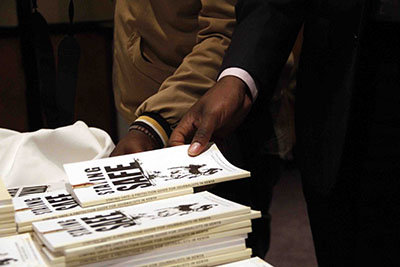
Today, the Committee to Protect Journalists in collaboration with local media organizations launched a journalist security guide and protocol designed specifically for the Kenyan press. The initiative stems from research conducted in 2013 by the same group of organizations, the Kenya Media Working Group, in light of acute and unique security challenges for the Kenyan…
As elections approach, fear of more attacks on Congolese press
Map by Rachael Levy. Sources: Congolese organizations, news reports, and CPJ research. Not all data has been independently verified by CPJ. Tensions are rising in the Democratic Republic of the Congo after a government official announced recently he would support a change in the constitution to allow President Joseph Kabila, who has been in power…

First US-Africa summit short on press freedom, other human rights
Top African and U.S. leaders are meeting next week in Washington in a first-of-its-kind summit focused on African development. But critics argue the summit is flawed in design, overlooking human rights such as freedom of expression and barring civil society actors from bilateral discussions.
No press freedom without Internet freedom
Four years ago, when CPJ launched its Internet Advocacy program, we were met with lots of encouragement, but also some skepticism. “Why do you need a program to defend the Internet?” one supporter asked. “You don’t have a special program to defend television, or radio, or newspapers.” But the Internet is different. Increasingly, when it…

CPJ calls on Ethiopian government to release imprisoned journalists
CPJ is among a group of more than 40 regional and international press freedom and civil society organizations that have signed a joint letter to Ethiopian Prime Minister Hailemariam Desalegn expressing concern over the recent imprisonment of Ethiopian journalists under the country’s far-reaching 2009 anti-terrorism law.
Twenty Ethiopia state journalists dismissed, in hiding
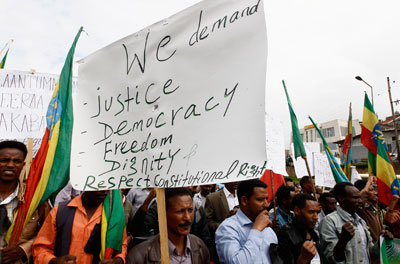
“If they cannot indoctrinate you into their thinking, they fire you,” said one former staff member of the state-run Oromia Radio and Television Organization (ORTO), who was dismissed from work last month after six years of service. “Now we are in hiding since we fear they will find excuses to arrest us soon,” the journalist,…
Zone 9 blogger urges world to call for freedom in Ethiopia
In April, the Ethiopian government imprisoned nine journalists, including six bloggers from Zone 9, in one of the worst crackdowns against free expression in the country. Ethiopia is the second worst jailer of journalists in Africa, trailing only Eritrea, according to CPJ research.