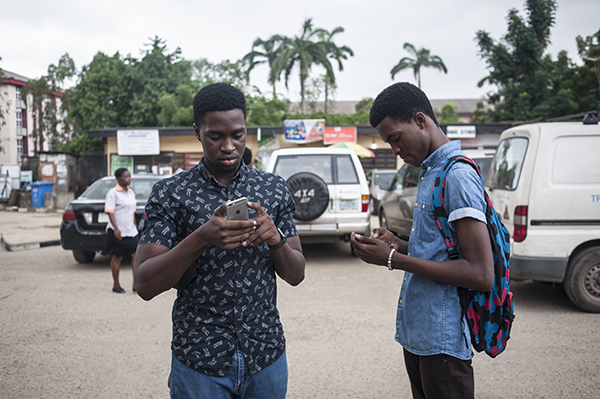
How Nigeria’s cybercrime law is being used to try to muzzle the press
Since Nigeria’s cybercrime act was voted into law in May 2015 authorities have used the accusation of cyber stalking to harass and press charges against at least five bloggers who criticized politicians and businessmen online and through social media.
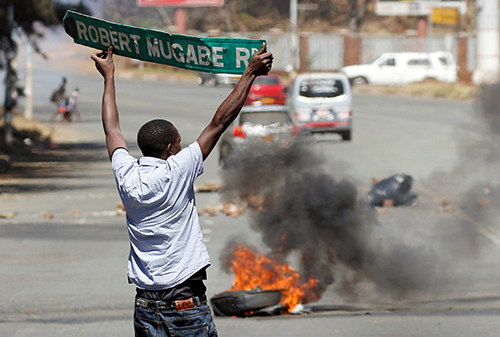
Journalists caught in crosshairs amid protests and unrest in Zimbabwe
A photograph of freelance journalist Lucy Yasini trying to ward off an attack by police while covering a protest in Harare was circulated on social media last week. A day later, a photograph was shared of two reporters, Obey Manayiti and Robert Tapfumaneyi, in the back of a police truck after their arrest. The incidents…

World Refugee Day: Fear of arrest drives journalists into exile
In August 2014 two journalists living more than 4,000 miles apart slipped across a border to find safety: one with his wife and three children, the other alone. Idrak Abbasov, from Azerbaijan, and Sanna Camara, from Gambia, faced imprisonment because of their reporting. Neither has been able to return home.
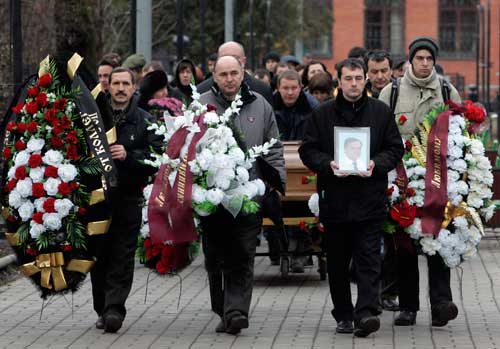
Global Magnitsky Act could be powerful weapon against impunity in journalist murders
Last week, the proposed Global Magnitsky Human Rights Accountability Act emerged from the U.S. House Foreign Affairs Committee with approval. The bill was passed by the Senate last year. If passed by the full House of Representatives and signed into law by the president, it has the potential to offer partial redress to one of…

Tanzania cuts live parliamentary coverage, ending vital news source for citizens
On April 19, the live coverage of proceedings in the Tanzanian parliament ended as a government decision to halt the service went into effect. The move, announced by Information Minister Nape Nnauye in January, has led to protests from the opposition party and journalists’ groups, who said they view the decision to stop live broadcasts…
CPJ joins call for World Bank to adopt human rights policy
The Committee to Protect Journalists has joined Social Justice Connection and other press freedom and human rights groups in calling on the World Bank to adopt a human rights policy at its annual spring meeting in Washington D.C. In a letter to the president of World Bank, Jim Yong Kim, the groups urged the bank…
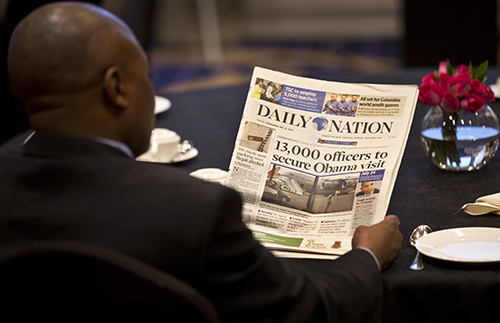
Gado blames government pressure as cartoonist’s contract at Kenya’s Nation ends
For 23 years Godfrey Mwampembwa has been a prominent and quick-witted observer of the political scene in East Africa. But all that changed last month when the cartoonist, known as Gado, was told his contract at Kenya’s biggest newspapers, the Nation, would not be renewed.
Gambia should free ailing, arbitrarily detained journalist
CPJ today joined with Amnesty International and Human Rights Watch to call on Gambia to free Alagie Abdoulie Ceesay, managing director of the independent radio station Teranga FM, who has been charged with sedition and “publication of false news.” Ceesay has been hospitalized twice since the beginning of 2016. Read the full statement here.

After disputed Uganda election, journalists fear prolonged crackdown
Twenty nine-year-old photographer Abubaker Lubowa was excited when he was assigned to cover the campaign of opposition leader Kizza Besigye. He told CPJ he did not anticipate that the assignment would mean he would make the news almost as often as he covered it.

Uganda elections approach amid hostile environment for media
Demonstrations against the government are a routine affair in the Ugandan capital Kampala, and Andrew Lwanga thought it would be just another day at work when he was assigned to cover a protest march by a few dozen unemployed youth on January 12, 2015.