Attacks on the Press 2001: Introduction
IN THE WAKE of September 11, 2001, journalists around the world faced a press freedom crisis that was truly global in scope. In the first days and weeks after the terrorist attacks on New York City and Washington, D.C., governments across the globe–in China, Benin, the Palestinian Authority Territories, and the United States–took actions to…
Attacks on the Press 2001: Middle East Analysis
Bucking a worldwide trend toward democracy in the post-Cold War era, the political landscape of the Middle East and North Africa remained dominated by an assortment of military-backed regimes, police states, autocracies, and oligarchies. A new, younger generation of leaders has emerged in some countries in recent years, inheriting power and bringing hope for political…
Attacks on the Press 2001: Turkey
In an effort to improve its chances to join the European Union, the Turkish Parliament in October approved more than 30 amendments to the country’s restrictive constitution, which was passed in 1982 after a military coup two years before. Lawmakers are currently considering a proposal that would bring some of the nation’s repressive laws used…
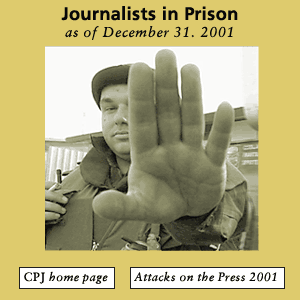
Attacks on the Press 2001: Journalists in Prison
There were 118 journalists in prison around the world at the end of 2001 who were jailed for practicing their profession. The number is up significantly from the previous year, when 81 journalists were in jail, and represents a return to the level of 1998, when 118 were also imprisoned.
Columnist on trial for “inciting hatred” Fehmi Koru Faces Up to Four Years in Prison for 1999 Commentary Aired on Turkish TV Station
Good evening respected viewers, The placard carried by a girl from Marmara University and bearing the words “Wasn’t 7.4 convincing enough?” caused many tempers to fray. A leaflet distributed at Ankara’s Kocatepe Mosque during a service to commemorate the death of Bediuzzaman Sait Nursi added further fuel to the flames. And when one of the…
Attacks on the Press 2000: Middle East and North Africa Analysis
ALTHOUGH RIGHTS TO FREE EXPRESSION AND PRESS FREEDOM are enshrined in national constitutions from Algeria to Yemen, governments found many practical ways to restrict these freedoms. State ownership of the media, censorship, legal harassment, intimidation, and imprisonment of journalists were again among the favored tools of repression and control. In Iraq, Libya, Saudi Arabia, Syria,…
Attacks on the Press 2000: Turkey
In December 1999, the European Union (EU) finally agreed to accept Turkey’s application for membership. Yet questions remained about the government’s committment to the human-rights reforms needed to actually join the EU. If press freedom is any indicator, Turkey has a long way to go. Government censorship, criminal prosecutions, physical attacks, and imprisonment were among…
Attacks on the Press in 2000: Journalists in Prison
EIGHTY-ONE JOURNALISTS WERE IN PRISON AROUND THE WORLD at the end of 2000, jailed for practicing their profession. The number is down slightly from the previous year, when 87 were in jail, and represents a significant decline from 1998, when 118 journalists were imprisoned. While jailing journalists can be an effective means of stifling bad…
Turkey: Reporter Faces 12 Years in Prison for Article on Alleged Judicial Improprieties
First, let us take another look at the chronology of this terrifying event: Interior Minister Saadettin Tantan tells Justice Minister Hikmet Sami Turk that Prosecutor Oktar Cakir is “involved in malfeasance.” The Justice Minister then conveys this information to the Supreme Council of Judges and Prosecutors, which will elect the new chief prosecutor of the…