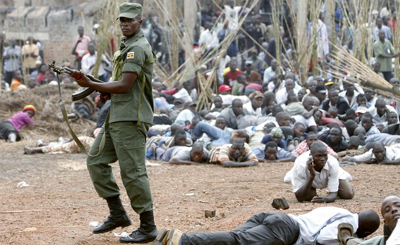
Ugandan photographers take heat after fire at royal tombs
It seemed like déjà vu. Another major protest erupts in Uganda and journalists face the wrath of authorities and the public alike. Tensions between the government and the traditional kingdom of the Baganda, the largest ethnic group based in central Uganda, flared again Tuesday evening after a fire of unknown origin ravaged the tombs of…
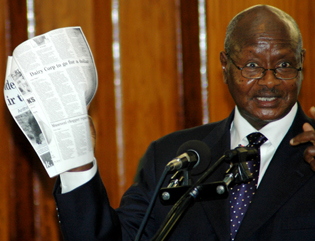
Ugandan plan would punish media for ‘economic sabotage’
Uganda’s anti-homosexuality bill has received considerable international attention, particularly concerning its harsh criminal sanctions, but another piece of repressive legislation threatens to criminalize the activities of another maligned group: the vibrant independent press in this East African nation at the confluence of Africa’s largest lake (Victoria) and the world’s longest river (Nile).
Attacks on the Press 2009: Uganda
Top Developments• Reporters attacked, harassed during Kampala unrest.• Criminal cases pile up as high court considers constitutional challenge. Key Statistic 22: Criminal cases pending against Andrew Mwenda, a top political editor.Violent protests broke out in Kampala in September when security forces blocked leaders of the traditional kingdom of the Baganda, Uganda’s largest ethnic group, from visiting…
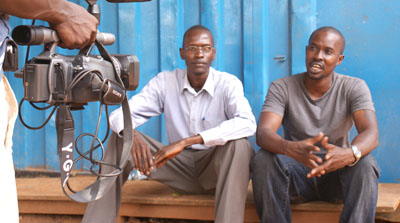
Freedom of information laws struggle to take hold in Africa
In Uganda, a ruling this week in a landmark case of two journalists seeking to compel their government’s disclosure of multinationals oil deals highlighted the challenges to public transparency just before media leaders, press freedom advocates, officials, and former U.S. President Jimmy Carter gather in Ghana next week at the African Regional Conference on the Right…
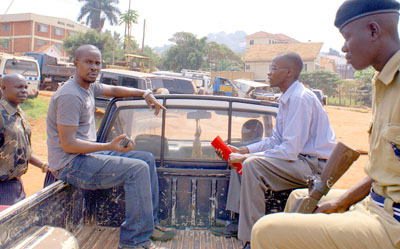
Museveni accuses two Ugandan journalists of libel
New York, February 3, 2010—An opinion column in Uganda’s leading independent newspaper suggesting parallels between President Yoweri Museveni and former Philippine leader Ferdinand Marcos led to criminal libel charges against two journalists today, according to local media reports.
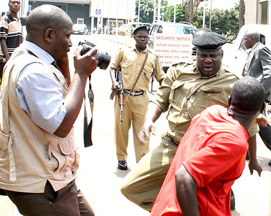
In Uganda, citizen journalists fill news gap during riots
Last week in Uganda, authorities reacted to violent anti-government demonstrations, at left, by yanking at least four radio stations off the air and banning political programming and some journalists from the airwaves. I have been covering the Ugandan blogosphere for Global Voices for more than two years. News of the violence first reached me on…
Ugandan radio stations shut; debate programs banned
New York, September 11, 2009–The government-run Uganda Broadcasting Council effectively shut down four radio stations today and Thursday, and ordered all radio stations to halt political debate programming in the wake of violent clashes in the capital, Kampala.
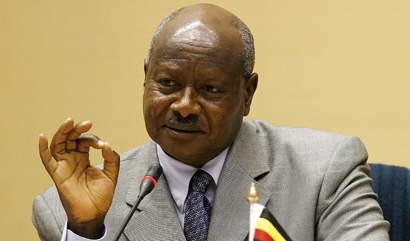
Uganda’s Museveni issues warning to news media
President Yoweri Museveni of Uganda lashed out at private broadcasters last week, accusing them of unethical reporting. The comments come in the midst of two important, ongoing developments: mounting public criticism of Museveni’s policies and the government’s criminal prosecutions of six journalists for their coverage.