International Day to End Impunity for Crimes Against Journalists 2025
The devastation of justice denied
Despite concerted efforts to tackle impunity, the lack of meaningful improvement in accountability for journalist killings in the past decades indicates more must be done to deliver justice. Amid stagnant progress, the Committee to Protect Journalists (CPJ) is reimagining its own approach to impunity.
On International Day to End Impunity for Crimes Against Journalists 2025, CPJ recognizes five emblematic cases to underscore how elusive the path to justice is for journalists, and the tragic impact of their killings.
When killers get away with taking journalists’ lives, they stoke fear that often silences other journalists, crushes families with grief, and robs the public of vital information on crime, corruption, and government abuses. Failure to hold perpetrators to account emboldens killers, sending a clear message that perpetrators can target journalists worldwide with impunity.
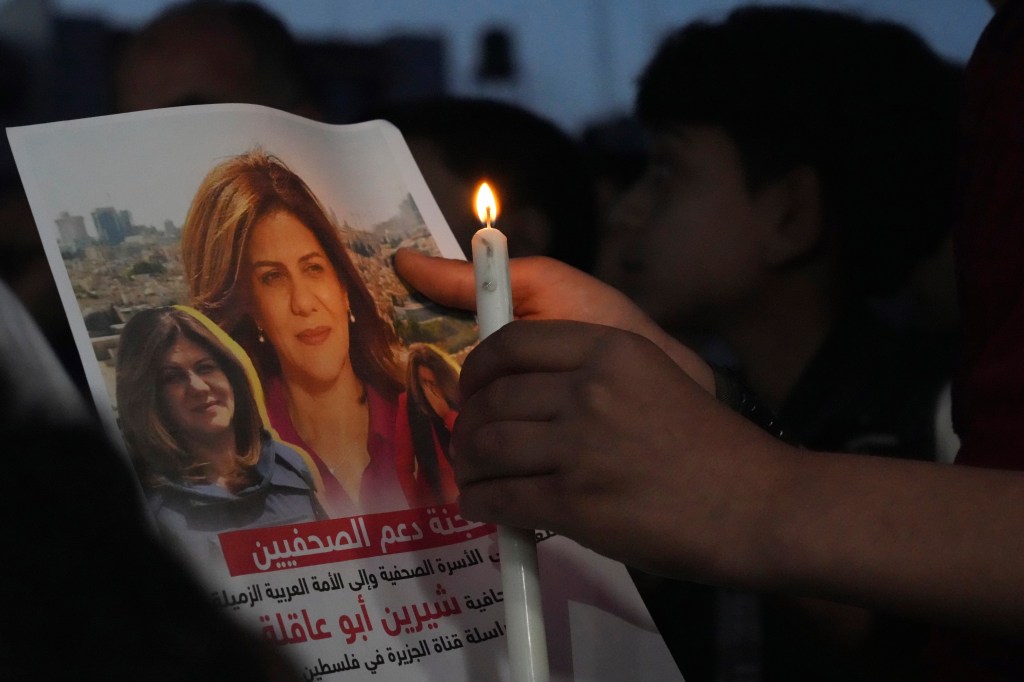
Shireen Abu Akleh
Palestinian-American
A prominent Al Jazeera journalist who reported on the Israeli-Palestinian conflict for more than two decades, Palestinian-American correspondent Abu Akleh was fatally shot in the head on May 11, 2022 by an Israeli soldier while wearing a “Press” vest as she covered an Israeli army operation in the West Bank town of Jenin. An investigation by Palestinian human rights organization Al-Haq and research agency Forensic Architecture determined she was directly targeted, despite repeated denials by Israeli authorities.
The broader implications
Her death made clear how deeply entrenched the Israeli government’s lack of accountability for killings is in Israel — even in the case of a high-profile journalist who was also an American citizen. It also prompted CPJ to investigate Israel’s killings of journalists over 22 years, culminating in its 2023 “Deadly Pattern” report, which found that from 2001-2022, the Israel Defense Forces (IDF) killed at least 20 journalists, with no accountability for any of the deaths.
Abu Akleh’s killing and CPJ’s report foreshadowed the dozens of targeted killings of journalists by Israel in Gaza, Lebanon, Iran, and Yemen over the past two years. Israel has now killed more journalists than any other country in the world since 1992, according to CPJ research. A 2025 documentary uncovered evidence that identified the Israeli soldier responsible for Abu Akleh’s death, but American and Israeli authorities have yet to deliver justice or accountability for her.
Over 200 journalists have been killed in Israel and the Occupied Palestinian Territory since 1992. Read more about Shireen Abu Akleh and attacks on journalists in Israel and the Occupied Palestinian Territory.
“I chose journalism to be close to the people. It might not be easy to change the reality, but at least I could bring their voice to the world.”
– Shireen Abu Akleh in a 2021 video marking Al Jazeera’s 25th anniversary
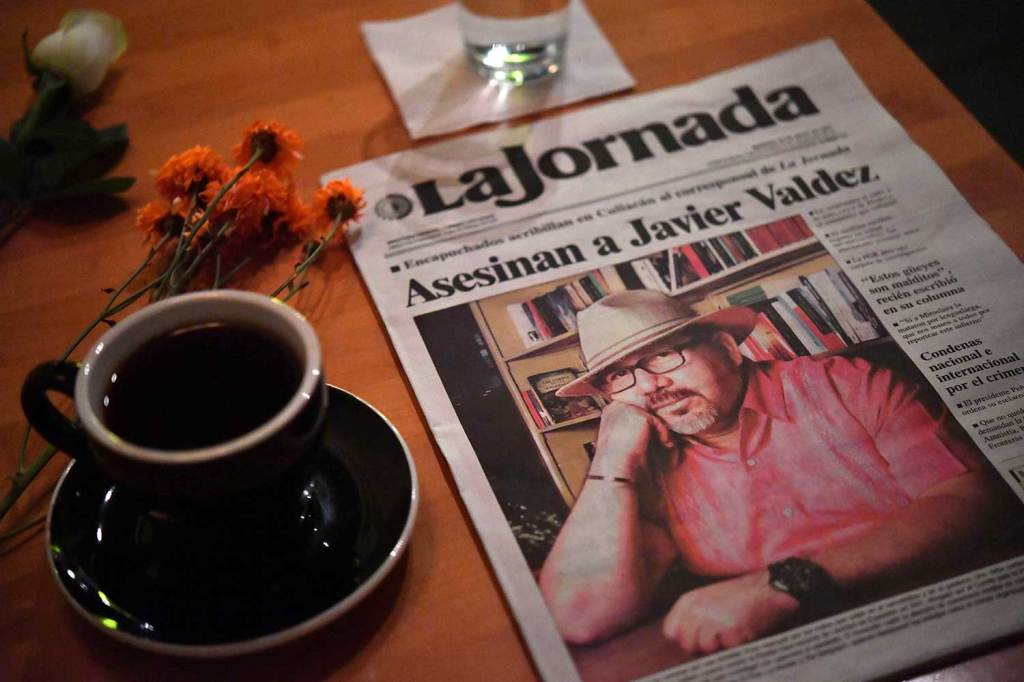
Javier Valdez Cárdenas
Mexican
A veteran investigative journalist and editor who reported on organized crime and corruption – despite threats and attacks against him and his colleagues – Cárdenas was shot at least 12 times on May 15, 2017, near the editorial offices of Riodoce, the weekly he co-founded in 2003 in the Mexican city of Culiacán. A Sinaloa drug cartel member ordered Valdez’s murder over his reporting on a cartel turf war, prosecutors said.
The broader implications
His killing is symptomatic of systematic violence in Mexico against journalists who report on criminal gangs, drug trafficking, and entrenched corruption in Mexico, one of the world’s most dangerous places to be a journalist outside of a war zone. In many cases, these murders have gone completely unsolved. Although two suspects in Valdez’s killing were convicted in 2020 and 2021, the cartel member who authorities say ordered the crime is in custody in the United States and has not been extradited to Mexico to stand trial.
While Valdez’s family has achieved some justice, the impact has still been severe. Valdez’s wife, journalist Griselda Triana, was targeted with spyware just days after his death. In a 2020 letter, she said that she, her daughter, and son “still haven’t found the peace that our heart needs” and that many victims of crime and corruption “lost their voices when he was killed.”
Over 150 journalists have been killed in Mexico since 1992. Read more about Javier Valdez Cárdenas and attacks on journalists in Mexico.
“Society as a whole suffers the amputations of ears and eyes and hands that criticize, denounce, investigate, and publish in the media. It’s not one more journalist, it’s a society that gets wounded by the death of each journalist.”
— Javier Valdez Cárdenas, from a speech he was preparing shortly before his murder
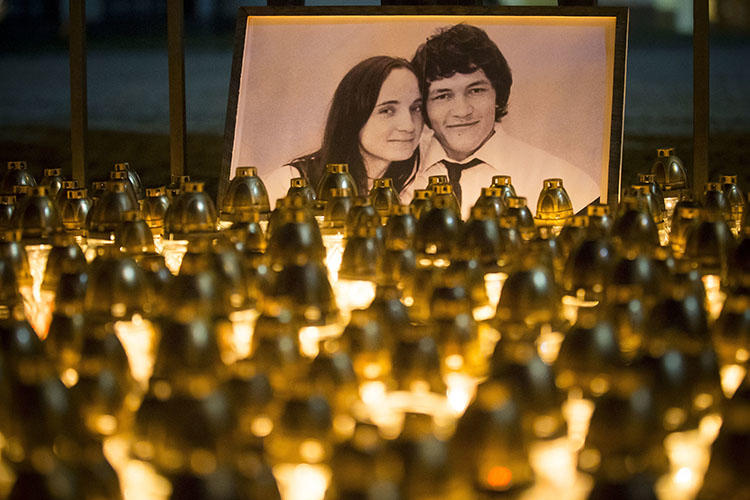
Ján Kuciak
Slovak
An investigative journalist who examined corruption and tax fraud, Kuciak and his fiancée, Martina Kušnírová, were shot and killed on February 21, 2018, at their house outside the capital, Bratislava. Police determined the killings were murders, “most likely” linked to the journalist’s work. Marián Kočner, a business executive that Kuciak had written about, and had threatened the journalist, was identified as a prime suspect. In October 2019, the Special Prosecutor’s Office indicted four people, including Kočner, in the killings.
The broader implications
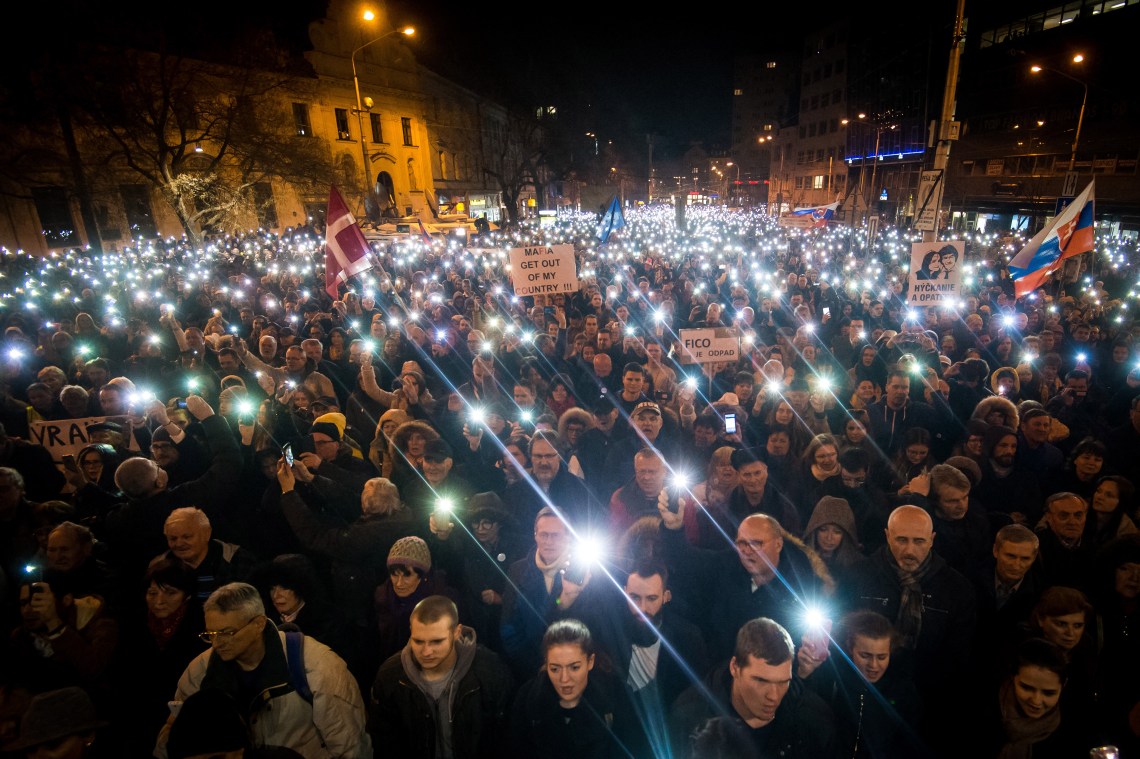
Many journalist killings are preceded by death threats — and often those threats are slow to be addressed and investigated. Even in nations where journalist killings are rare, threats against members of the press are of grave concern. Following the nationwide outcry that ensued after Kuciak’s killing, the Slovak prime minister was ousted.
The case also shows that justice can be just as elusive in the European Union as in authoritarian countries. In the years since Kuciak’s death, Kočner has been found not guilty twice. Following appeals, the Supreme Court in May 2025 canceled Kočner’s acquittal for a second time and ordered a retrial due to errors. Kočner is currently serving a prison sentence on other charges.
Kuciak is the only journalist to have been killed in Slovakia since 1992. Read more about Ján Kuciak and other attacks on the press in Slovakia.
“Already, 44 days have passed since I filed the criminal motion against [business executive Marián Kočner] for threatening me. And still, my case has probably not even been allocated [to a specific officer].”
— Ján Kuciak, 4 months before he was killed
Gerry Ortega
Philippine
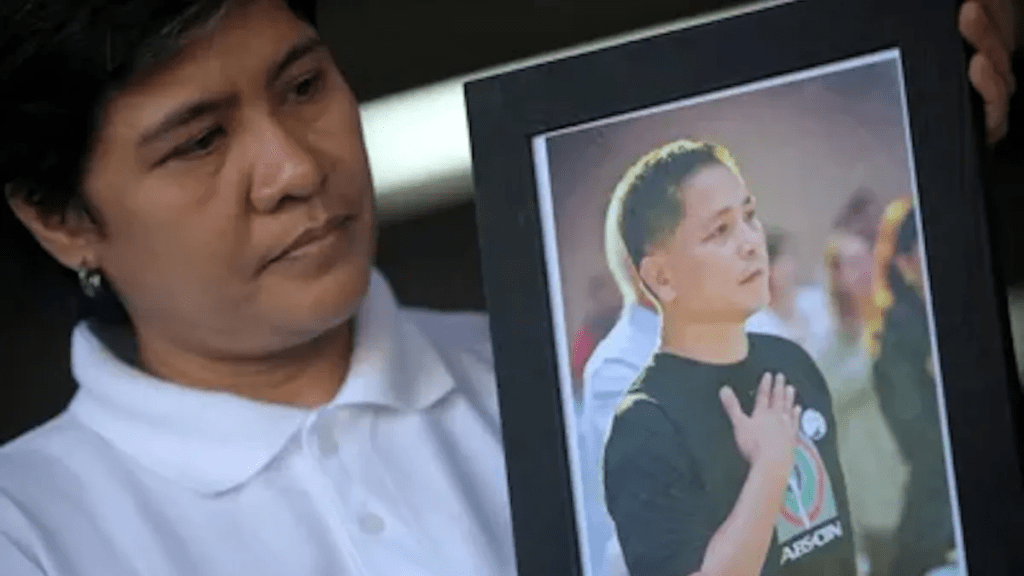
A well-known radio talk show host who used his broadcasts to report on corruption and environmental issues in the province of Palawan, Ortega was shot in the back of the head on January 24, 2011, as he was shopping in a store shortly after his morning broadcast. He received death threats before the broadcast, officials said. Rodolfo Edrad, the middleman in the hit team, later said ex-Palawan provincial governor Joel Reyes ordered the murder and that he received payment from the governor’s brother.
The broader implications
Ortega’s case is a prime example of how full accountability can remain out of reach for years, and highlights how masterminds behind journalist killings often escape justice. While the gunman and an accomplice were convicted quickly, ex-governor Joel Reyes – who is accused of ordering Ortega’s murder – evaded justice for 14 years.
Despite strong evidence against him – based on which he was arrested several times – Reyes still ran for elections before later going into hiding, showing the level of entrenched impunity even in a vibrant democracy like the Philippines. Following a joint investigation and years of advocacy by CPJ and partners, Reyes surrendered in September 2024. In 2025, he was sentenced to 110 years for corruption related to a government gas fund project that Ortega had criticised on his radio show. The ex-governor’s trial for Ortega’s killing is ongoing, but moving slowly.
Nearly 100 journalists have been killed in the Philippines since 1992. Read more about Gerry Ortega and attacks on journalists in the Philippines.
“I am like a lone flame of a candle in a big dark room. I can’t light the whole room, but I light a small corner, and that corner is worth fighting for.”
— Gerry Ortega, in a statement recalled by his daughter, Michaella
Samuel Wazizi
Cameroonian
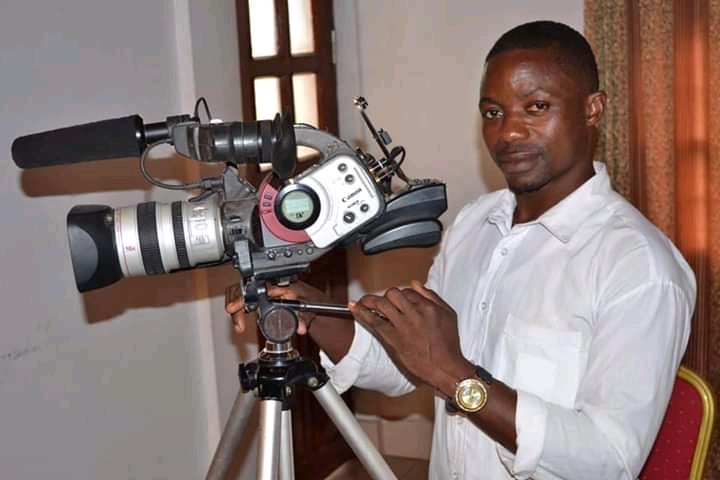
A frequent critic of the government’s handling of a separatist conflict in minority English-speaking regions of Cameroon, popular pidgin news anchor and camera operator Wazizi was arrested on August 2, 2019, after reporting on allegations of government killings in those regions. He died in government custody in the country’s capital, Yaoundé, two weeks later, according to the Cameroonian military. The circumstances and location of his death, which was not announced until 10 months later, are unknown. The government claimed Wazizi had died of “severe sepsis” and not from torture or abuse. It never released Wazizi’s body to his family and denied an autopsy by an independent forensic pathologist.
The broader implications
His death illustrates both the extreme risks journalists face and the extreme lengths governments go to in order to hide the circumstances surrounding their deaths. It also illustrates dangers faced by journalists covering conflict and laws that suppress dissent. Wazizi’s family denied official claims that he maintained close contact with them while in custody and that they were immediately informed of his death.
In a 2020 interview, Wazizi’s brother said the family was “traumatized and affected in all aspects” by his death, and that Wazizi was a father figure to his brothers and the “major breadwinner of the family.” No new information about his death has surfaced, despite a French ambassador saying in 2020 that Cameroon President Paul Biya had promised an investigation. In November 2024, a justice ministry official told the U.N. that Wazizi’s case was closed, and his file was classified.
Four journalists have been killed in Cameroon since 1992. Read more about Samuel Wazizi and attacks on journalists in Cameroon.
“Don’t let me die in here.”
— Samuel Wazizi, to a friend, after being arrested and taken into a police station in August 2019.
We can’t let them get away with it
Unprecedented crimes against journalists call for unprecedented actions
CPJ called on October 30 2025, for radical reform of the systems to investigate journalist killings and hold perpetrators to account after the deadliest three years for journalists and media workers since CPJ began keeping records.
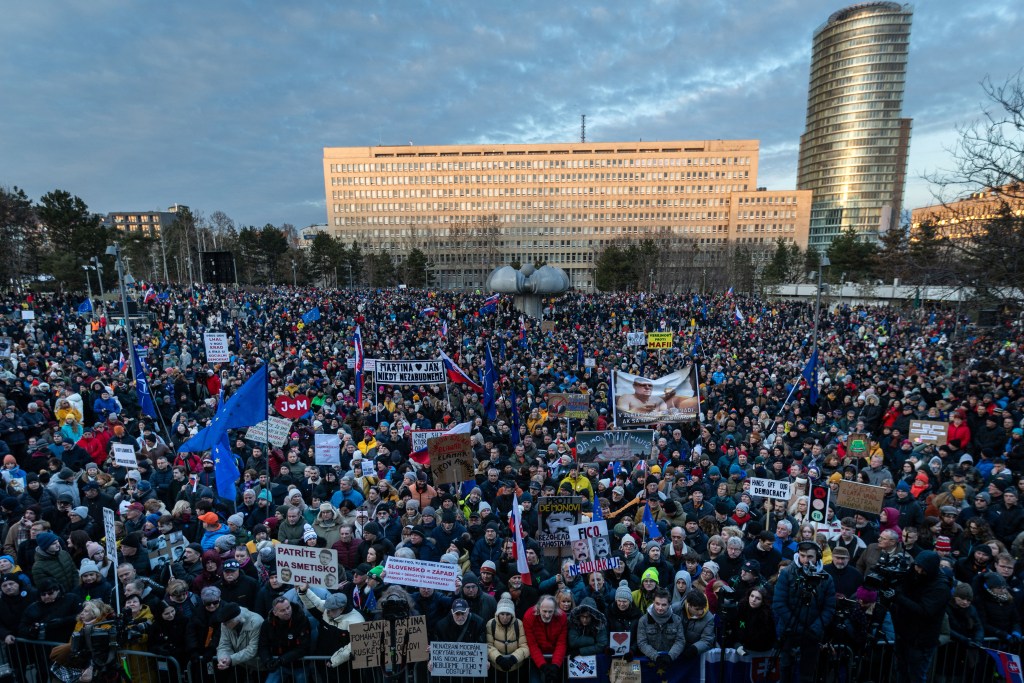
Featured photo: People attend a protest named “For a Decent Slovakia” on the first anniversary of the murder of journalist Jan Kuciak and his fiancee Martina Kusnirova on February 21, 2019 in Bratislava, Slovakia. The deaths plunged the country into crisis and sparked mass demonstrations. (Photo: AFP/Vladimir Simicek)