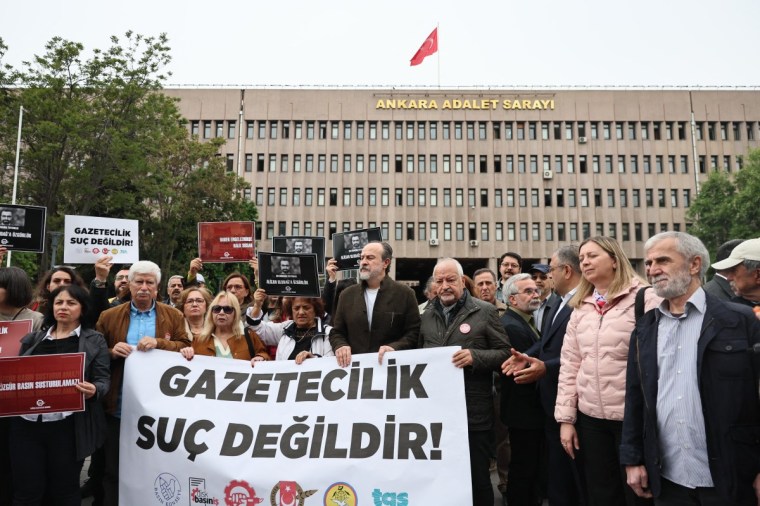
Istanbul, October 5, 2026—Turkish authorities have weaponized the country’s disinformation law to stifle independent reporting by repeatedly detaining and arresting journalists on charges of spreading false information based on the vague tenets of this poorly conceived legislation.
This tactic fits into a global pattern of using legal systems and institutions to criminalize legitimate journalism and silence reporting – a practice known as lawfare.
CPJ has called for the law – Article 217/A of the Turkish Penal Code – to be repealed and for all journalists arrested under its auspices to be released.
“The disinformation law was designed to be a one-size-fits-all tool to prosecute journalists for reporting information that the authorities would rather the public did not know. We have long seen Turkey’s authorities use anti-terrorism legislation and other laws to unjustly target journalists but this new disinformation legislation – which is broad and vaguely worded – allows them to do this on an even larger scale,” said Özgür Öğret, CPJ’s Turkish representative.
“As such, it fits into the global trend of authoritarian governments criminalizing news they dislike by labelling it ‘disinformation’ and prosecuting the journalists who report it,” he said.
As of September 4, CPJ had documented 16 arrests and detentions for publicly spreading disinformation this year alone; these cases involved 14 journalists – two were detained or arrested twice – and two journalists remained in jail as of mid-September.
Independent data journalism platform Veriler Ne Diyor estimated in April that at least 83 journalists had been charged 114 times over disinformation since the disinformation law came into effect on October 18, 2022.
What does the law say?
The law against publicly spreading disinformation is just one of a suite of legal measures used to target journalists, who can also face charges under other legislation that criminalizes “provoking the people into animosity and hatred”, “insulting the president,” and “degrading” the Turkish nation as well as charges based on certain articles of the anti-terrorism law.
Article 217/A of the penal code says: “Any person who publicly disseminates false information regarding the country’s internal and external security, public order, or general health – in a manner capable of disturbing public peace and with the sole intent of creating anxiety, fear, or panic among the public – shall be sentenced to imprisonment for a term of one to three years.”
The sentence can be increased by half for those who run anonymous social media accounts or act under the orders of criminal groups.
How is the disinformation law being used to target journalists?
Journalists are regularly detained under this law because of information they have disclosed in videos, articles or on social media – information that constitutes the normal work of journalism, but which authorities deem to be false or liable to disturb the peace. Often this reporting focuses on the actions of the government, leading many journalists to describe the disinformation legislation as “a censorship law.” None of the reporting by the detained or prosecuted journalists caused fear or panic among the public, according to CPJ’s monitoring.
Some journalists are released quickly, while others are arrested and taken to prison as investigations continue or pending trial. Those arrested can spend months in pre-trial detention but even if they are released pending trial, they may wait months for their trial to begin, leaving them stuck in legal limbo. If they appeal the eventual judgment, they could have to wait months for a final ruling as the case ping pongs between local and appeal courts.
Even if cases are dropped during investigation or end in acquittal, the targeted journalists will have experienced months of worry and fear.
Several prominent journalists have been repeatedly detained for allegedly flouting this law, locking them into drawn-out legal processes that stop them from doing their jobs while discouraging others from reporting freely.
This crackdown is happening against the background of a marked decline in press freedom, with a sharp escalation of political pressure, judicial harassment and censorship targeting the press. Journalists also continue to face assault, threats, and intimidation.
And although the number of jailed journalists has fallen from a peak of 84 in 2016 to 14 in September 2026, this figure does not capture the fact that many journalists are moving in and out of jail or spending months in pre-trial detention.
What does the government say?
When the legislation was first proposed in April 2022, there were already concerns that the vagueness of language around what constituted false information could be used against journalists.
The ruling AK Party dismissed these concerns, saying disinformation could destabilise society.
In a speech in May 2022, President Recep Tayyip Erdoğan said “digital fascism” was a threat preventing people from accessing accurate and unbiased news.
“In particular, social media platforms, devoid of any self-regulation, oversight, rules, and ethical values pose serious risks to all societies,” he said.
The bill’s authors wrote in the introduction to the bill that the change to the penal code was designed to protect Turkish citizens’ rights online while combating “disinformation” and “illegal content” produced by “false names and accounts;” they argued that this action fell in line with regulations in the United States and European countries, including Germany, France, and the United Kingdom.
The day after the bill passed, on October 14, Hakan Çavuşoğlu, chair of parliament’s Committee on Human Rights Inquiry met with press freedom groups, including CPJ, and said the disinformation law would improve freedom of speech because people would be basing their opinions on verified facts. He said no journalists would be imprisoned under the law.
What do journalists say?
Journalists, politicians, academics and lawyers have all criticised the law, saying that in practice it means that all information that does not come straight from the government can be labelled false.
The writing was on the wall in 2022.
After that meeting with Çavuşoğlu on October 14, 2022, press freedom groups said: “The fact that (the law) will be implemented by the politicized Turkish judiciary will expose journalists, as well as millions of internet users, to the risk of criminal sanctions, playing a major role in increasing censorship and self-censorship in the country’s already damaged media landscape.”
In the intervening years, these fears have played out.
İsmail Arı, a reporter for the leftist daily BirGün, spent two and a half months in pretrial detention in 2026 on suspicion of spreading disinformation. He was eventually released in early June, pending the outcome of his trial.
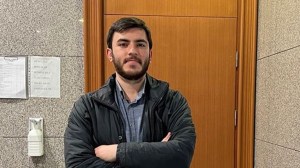
Arı said authorities were using the disinformation law to pursue journalists instead of resorting to the narrower charge of “insulting the president” – punishable by up to four years in jail under Article 299 of the Turkish penal code – or the charge of “provoking the people into animosity and hatred” as defined under Article 216 of the penal code and punishable by one to three years in jail.
At his trial in June, Arı challenged the accusation that his reporting had caused “anxiety, fear, or panic,” as specified in the text of the law.
“I never saw any chaos erupting nor people succumbing to fear, panic, or anxiety regarding the news stories of myself or anyone else arrested and prosecuted due to this accusation,” he told CPJ.
He said the disinformation law particularly targeted journalists active on social media, who tend to be less pro-government than traditional media, often identifying themselves as pro-opposition.
“I believe that (the authorities) wanted to rupture this opposition influence in social media and either punish or intimidate the influential names and journalists with this law,” he said.
Veteran parliamentary deputy and former journalist Utku Çakırözer, the deputy chair responsible for media in the opposition New Party, says the law is being “enforced maliciously,” as evidenced by the number of journalists prosecuted despite the lack of proof that their reporting has caused panic or distress.
“What is disinformation? What does it mean to publicly spread it? According to who? These were all abstract concepts as discussed before the law was passed,” he told CPJ.
The government is “taking steps aiming to suppress, intimidate and censor criticism at every chance,” said Çakırözer.
He said other clauses in the Turkish Penal Code can be used to combat disinformation and while he thinks the disinformation law should be repealed, any reform should prioritize “lawfulness, temperance, press freedom and the people’s right to be informed.”
What do lawyers say?
Elif Ergin, a lawyer for the Journalists’ Union of Turkey (TGS), told CPJ the disinformation law was vague, unconstitutional and designed as a tool to interfere with the press.
“The law against spreading disinformation, in fact, violates the people’s constitutional right to be informed” by making it easier to prosecute journalists for doing their jobs, she said.
Even journalists who are not arrested have been obstructed; some have spent time in police detention, others have been given foreign travel bans while others still have been placed under judicial control, requiring them to regularly present themselves at police stations, she said.
“Unfortunately, today we see that in our country actions are no longer guided by legal certainty or written law, and there is a departure from legal principles,” she said. “And it should be said that the journalists suffer the most due to the judiciary being run like this.”
Çakırözer has presented a bill to Turkey’s parliament to repeal the law, and he expects this to be put to a vote by the end of the next parliamentary year, which began on October 1.
“Then we’ll see the attitude of both the government and the opposition on this matter. I believe the opposition parties will act in unity to dissolve this law.”
Recommendations:
CPJ calls on Turkey to:
- Release all journalists arrested under Article 217/A.
- Drop all pending charges against journalists arising from their reporting or commentary.
- Repeal Article 217/A in its entirety.
- Bring all legislation regulating freedom of expression into conformity with Turkey’s international obligations.