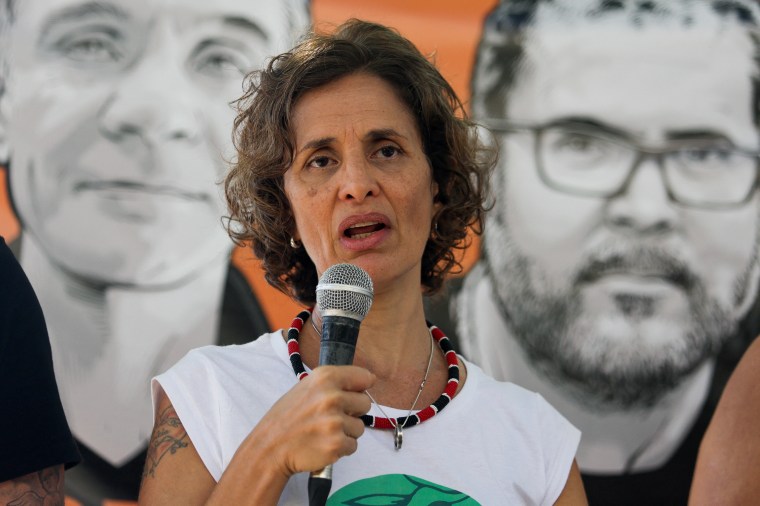
After British climate journalist Dom Phillips was found dead in Amazonas’ state Javary Valley region on June 15, 2022, his widow, Alessandra Sampaio, set out to finish his most important work, compiled in the new book “How to Save the Amazon.” Now she is helping prepare a new generation of Indigenous leaders to continue their fight to defend the rainforest and have quality Indigenous education in the territory.
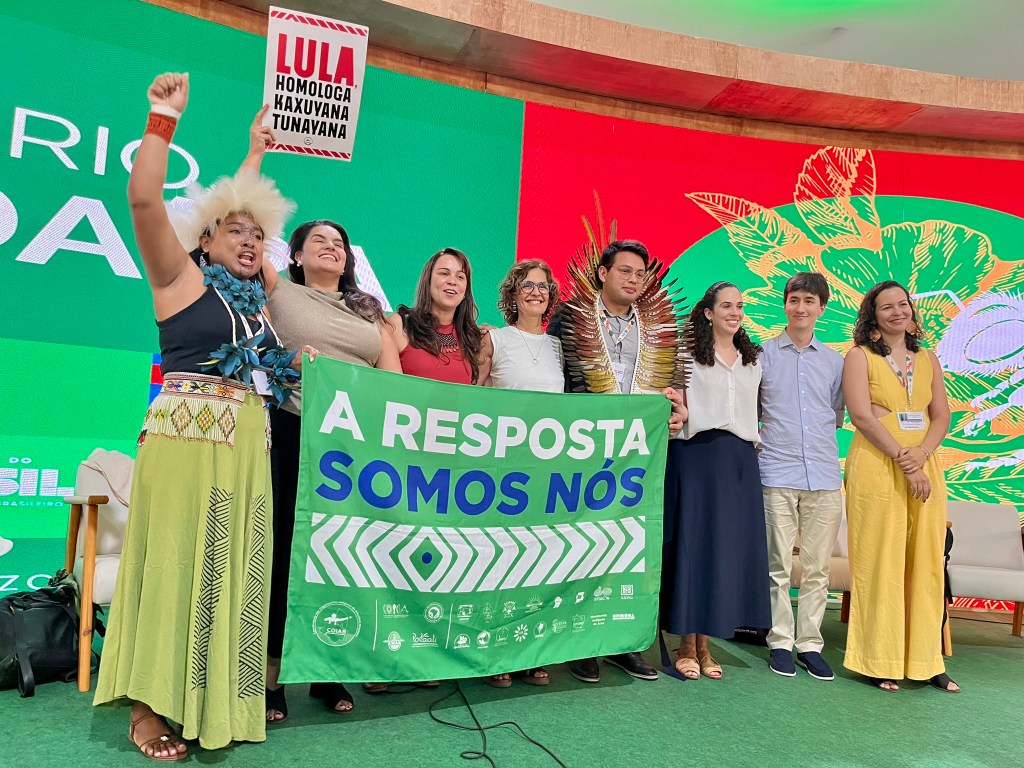
“I had never experienced such a devastating loss,” Sampaio, 54, told CPJ, sitting outside amid a buzz of people coming and going in the sweltering heat during COP30 at the Parque da Cidade in Belém, Brazil. A former fashion designer who taught sewing classes to African and Venezuelan refugees using sustainable materials, Sampaio participated in a panel at the COP’s green zone about isolated and recently contacted Indigenous peoples, environmental journalism and Phillips’ case. Her husband was on a work trip to the Javary Valley where he was murdered along with Indigenous expert Bruno Pereira.
The Committee to Protect Journalists and other press freedom organizations are advocating for this crime to be duly prosecuted, underscoring that almost 80% of crimes against journalists globally remain unsolved. They are also urging the Brazil government to guarantee safe and unrestricted conditions for journalistic work, especially in high-risk regions like the Javary Valley.
“It’s sad not to have Dom around, because we had a very strong connection,” said Sampaio.
At the Dom Phillips Institute, where Sampaio serves as president, that connection lives on in empowering young Indigenous leaders through education — a mission she said has been crucial to her “healing process.” She added, “I don’t dwell on the murder, though I want justice.” Here, Sampaio discusses grieving Phillips’ death, holding his killers accountable, and the importance of placing Indigenous peoples at the center of the Amazon’s journalistic climate activism.
The following interview, translated from Portuguese, has been edited for length and clarity.
Three years after your husband Dom Phillips was murdered, has there been any change in terms of protection and security for Indigenous leaders in the Javari Valley region?
I have heard reports that they still feel threatened, as it cannot be assumed that a criminal network can be easily dismantled. I do not believe that the murder of Dom and Bruno [Pereira] was an isolated incident, but rather the result of a criminal system that operates in the triple border region [between Brazil, Peru, and Colombia].
Beatriz [Matos], anthropologist and [Pereira’s] widow, who has become a great friend and sister to me, tells me about the efforts to protect the territory’s defenders through the Ministry of Indigenous Peoples [where she works as director of the Department of Isolated and Recently Contacted Indigenous Peoples]. I know that the Ministry of Human Rights and Citizenship is also involved, as is the Ministry of Foreign Affairs [in the joint committee for the application of the precautionary measures of the Inter-American Commission on Human Rights regarding the case]. It is a process that began with this tragedy, because it is unacceptable for it to happen again.
How is the fight progressing to bring Dom and Bruno’s killers to justice?
The killers and the mastermind have been arrested, but the trial date has not been set. The families are waiting for justice. I often say that the families’ timeline is never the same as the justice system’s timeline. If it is proven that they participated in the crime, they must pay for it. Holding them accountable would bring security, especially because there are people in the territory — people from Univaja [Union of Indigenous Peoples of the Javari Valley] who are my friends, an extended family — who continue to be threatened. These threats make me feel bad because they make me revisit Dom’s loss.
What did you do to take care of your mental and physical health after the trauma of Dom’s death?
I intensified the therapy I was already under. The two therapists who treat me are wonderful and help me keep going. I need to be in a healthy state of mind and body to be able to continue, because there is a lot of work to be done.
In launching the Dom Phillips Institute last year, what has been the institute’s approach to engaging and educating young Indigenous leaders?
When we first arrived in the territory, we tried to understand the demands. We talked to the older leaders, who expressed their concern about young people preparing to join the Indigenous movement. We talked to the young people and understood the importance of providing them with educational training sessions in order to contribute to their empowerment. They are young communicators who bring information from the world to the forest communities, as well as young university students who fight for quality Indigenous education in the territory. They are very forward-thinking, with a focus on the future. They want to know more about COP30, the climate crisis, and the responsibilities of FUNAI [National Indigenous Peoples Foundation]. They are very tuned in; they don’t need to be patronized but rather recognized as protagonists. The institute collaborates with the leadership role they already have and does so online, given the issue of security in the territory.
How would you say your relationship with the Indigenous community has changed since creating the institute?
I have no doubt that it is part of the healing process and a commitment that came about naturally. By calling me “relative,” the indigenous peoples of the Javari Valley have given me an unimaginable welcome, as well as a very great responsibility. We are one big family fighting for the protection of the Amazon and its indigenous peoples.
What was the process to finish Dom’s work on the book and to finally publish it?
It was an achievement when the book was released this year, as there was a risk that it would not be finished. Dom wrote the introduction and the first four chapters. At least six chapters still needed to be written, which made me anxious. When Dom and Bruno disappeared, my focus was on finding their bodies. After that happened, I thought, “This book has to be finished.” It was really cool because journalists and close friends were thinking similarly. We put together a team and got to work. We chose journalists who either knew a lot about Amazon or understood the book’s proposal very well. It was a brilliant effort, led by Jonathan Watts and Rebecca Carter, Dom’s literary agent. We launched it in the United Kingdom, the United States, and Brazil.
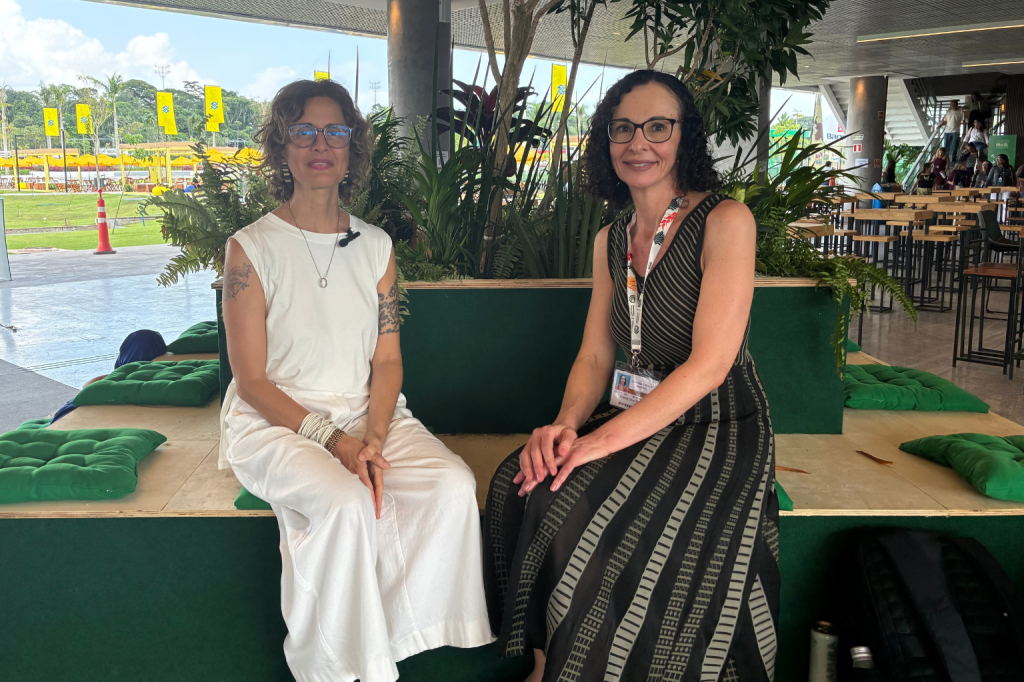
What would you say to young journalists, especially young Indigenous journalists, who wish to report on climate and environmental challenges?
I heard, [at COP30], a lecture by Indigenous influencers that featured several names, including Txai Suruí [columnist for Folha de S.Paulo]. They said that you don’t need to think too much and imagine that you will be producing something of the highest quality, you just need to get started. Young Indigenous people already know what to say. They acquire the technique with experience, time, and life lessons. Because they are very connected to their elders, they have ancestral wisdom. It is important that they have the opportunity to speak.
What message do you think Dom would want people to take away from his work bringing awareness to protecting the Amazon?
It is the message of hope that the book itself conveys. Indigenous peoples and traditional communities must be at the center of the discussion about the Amazon and environmental protection, [and] to engage in protecting the Amazon, we need to consume quality information. This allows us to create an emotional connection with the forest, its peoples, and understand the importance of the environment and the people who are there protecting an asset for all of humanity.
Without forests, we will not survive. There will be climate chaos, with extreme events and rising food prices as agricultural production will be greatly affected, as will access to water and electricity generation. We need to understand that we are a part of a living system. We are nature; we are not separate. If we do nothing, we cannot expect politicians alone to act. Everyone must get involved, because it affects everyone. We are here on a single planet.
Waiting for justice in an increasingly complex case
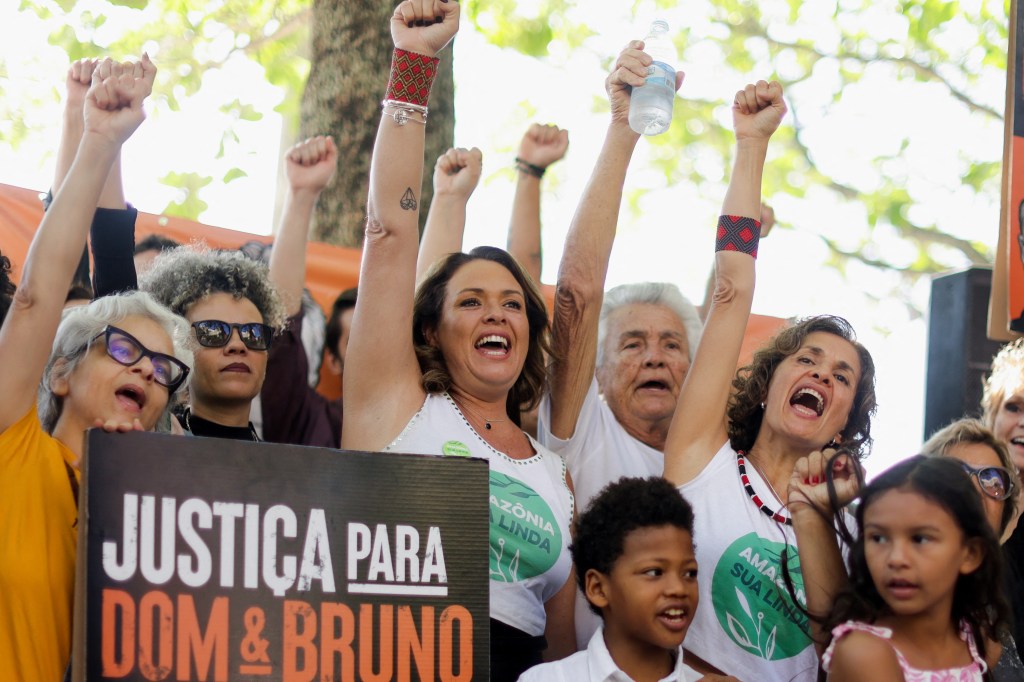
The families of British journalist Dom Phillips and Indigenous expert Bruno Pereira are still waiting for justice following an investigation that has resulted in four criminal cases against several people charged in connection with their deaths and hiding their bodies. Colombian Rubén Dario da Silva Villar, known as Colombia, who had been in custody since July 2022, was indicted in November 2024 on murder charges in connection with Phillips and Pereira’s deaths. In June 2025, he was charged as the alleged criminal mastermind and became a defendant in the case. If convicted, he can face up to 30 years in prison. “A hearing is scheduled for February,” said Rafael Fagundes, assistant prosecutor and lawyer for Dom Phillips’ family, in an interview with CPJ. The federal court also confirmed that fishermen Amarildo da Costa Oliveira, known as Pelado, and Jefferson da Silva Lima will face a jury trial in connection with the crime, though no date has been set. A third defendant, Oseney da Costa Oliveira, also a fisherman and Amarildo’s brother, had his case transferred to the Supreme Court of Justice due to an appeal by the Public Prosecutor’s Office against the federal court’s September 2024 decision to drop the charges against him. A judge combined all cases, except Villar’s, into a single case to be heard in a jury trial of an unknown date. Additionally, the Public Prosecutor’s Office requested the case to be transferred to Manaus. “As a small town, Tabatinga does not have the infrastructure to conduct this trial, and the jury may feel intimidated,” Fagundes explained. On November 17, 2025, the judge in Tabatinga accepted the request and referred it to the 1st Region Federal Regional Court, which will decide whether the trial will be transferred to Manaus or another federal court.
Editor’s note: The title of this story has been adjusted.