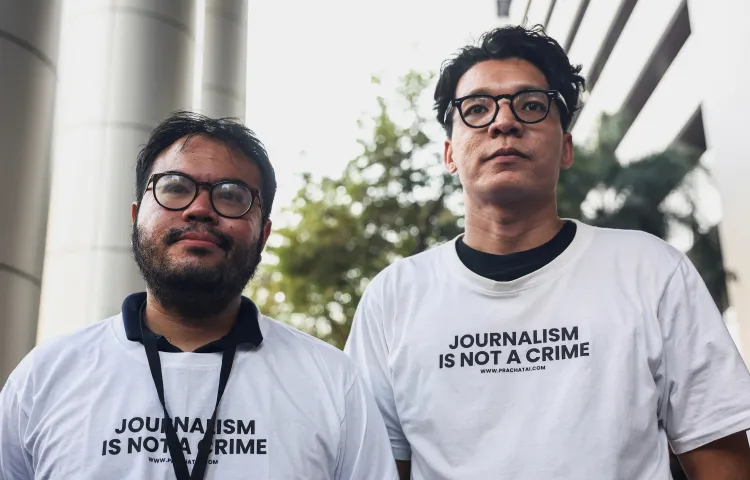
Thailand charges 2 journalists for reporting on anti-royal vandalism
Bangkok, February 14, 2023—Thai authorities should drop all charges pending against journalist Nutthaphol Meksobhon and photographer Natthapon Phanphongsanon and stop harassing the press for reporting on issues related to the nation’s monarchy, the Committee to Protect Journalists said on Wednesday. Nutthaphol, a reporter with the local independent Prachatai news website, and Natthapon, a freelance photographer,…
Obama should address media rights in Southeast Asia
Dear President Obama: We are pleased that you will begin your second term as U.S. president with a trip to Southeast Asia. As you visit Burma, Cambodia, and Thailand from November 17 through 20 while attending the 21st Association of Southeast Asian Nations Summit and related meetings in Phnom Penh, we hope that your commitment to human rights and the fundamental right to free expression remains an important aspect of your agenda.
Computer crime laws belie Thai claim to modern society
At online discussion sites all over the world, comments are posted on the Web as soon as they are written. People argue, inform, express anger, and voice fears. Some say things in the heat of the moment that they might go on to regret. Others are elliptical and obscure. The enabling of such conversations is…

Thai webmaster conviction chills press freedom online
San Francisco, May 30, 2012–The Committee to Protect Journalists condemns today’s conviction of Chiranuch Premchaiporn, webmaster of the Prachatai discussion board, under Thailand’s Computer Crimes Act. The court’s decision, which affirms that website operators can be criminally liable for the content of user comments, chills online press freedom in the country, and leaves Thai news…
Verdict postponed in landmark Thai Internet freedom case
Earlier today, press and human rights groups from around the world heard that the decision in the case of Chiranuch “Jiew” Premchaiporn, the manager of Thai online news site Prachatai, was being delayed yet another month. Chiranuch is charged under Thailand’s Computer Crime Act for 10 counts of not deleting apparently anti-monarchy comments on Prachatai’s…

Attacks on the Press in 2011: Regulating the Internet
Legislation for Internet security can quickly turn into a weapon against the free press. Cybercrime laws are intended to extend existing penal codes to the online world, but they can easily be broadened to criminalize standard journalistic practices. By Danny O’Brien
Holding intermediaries liable for users’ content
Earlier this month, I spoke as an expert witness in the ongoing trial of Chiranuch Premchaiporn, the editor of Thailand’s Prachatai.com website, who is being criminally prosecuted under that country’s Computer Crime Act and Lesé Majesté laws. The crime involves online posts allegedly disrespectful to Thailand’s monarchy, but Chiranuch herself is not accused of originating…