By Tom Rhodes
High numbers of local journalists have fled several African countries in recent years after being assaulted, threatened, or imprisoned, leaving a deep void in professional reporting. The starkest examples are in the Horn of Africa nations of Somalia, Ethiopia, and Eritrea, where dozens of journalists have been forced into exile. Zimbabwe, Rwanda, and the Gambia have also lost large segments of the local press corps in the face of intimidation and violence.
ATTACKS ON
THE PRESS: 2009
• Main Index
AFRICA
Regional Analysis:
• In African hot spots,
journalists forced into exile
Country Summaries
• DRC
• Ethiopia
• Gambia
• Madagascar
• Niger
• Nigeria
• Somalia
• Uganda
• Zambia
• Zimbabwe
• Other developments
Those who flee their native countries pay a high price: Facing cultural, language, and legal obstacles, they struggle to find work in their profession. CPJ research shows that only one in three is able to continue working as a journalist. But the public also pays dearly for the exodus of professional, local reporters from these countries, all of which have had internal strife with international implications. Not only had domestic audiences relied upon these front-line journalists, so too had international reporters, who used local coverage as a base of information and depended on local reporters for the sort of sources and knowledge only a native can have.
Yet it is not simply a shortage of reliable information that has resulted, journalists say. Perversely, in some instances, the exodus of professional journalists has enabled governments or political factions to exert editorial control over once-independent news outlets. “The high exile rates of journalists have not brought a lack of information so much as misinformation,” said Abdiaziz Hassan, a local correspondent for Reuters in Somalia. “It incites the conflict further.”
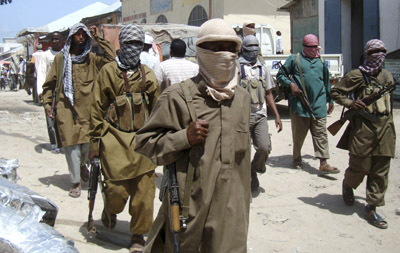
Among the hardest hit has been Radio Shabelle, a Somali station that had earned a reputation for independent reporting. Situated in Mogadishu’s Bakara Market—home to a number of media outlets, but also a base of operations for the militant insurgent group Al-Shabaab—the station has seen five of its journalists killed, numerous staffers threatened, and several forced into exile. Without sufficient management on site, the station has been susceptible to pressure from Al-Shabaab to censor its coverage and even broadcast the group’s propaganda, according to Mohamed Amin, a former Shabelle deputy director now in exile.
In all, CPJ has documented the cases of 30 Somali journalists who have gone into exile this decade, the fourth-highest tally worldwide during the period. CPJ’s data on exiled journalists include only those journalists who fled due to work-related persecution, who remained in exile for at least three months, and whose whereabouts and activities are known. Local organizations using different criteria report higher numbers. The Union of Exiled Somali Journalists, for example, counts as many as 80 exiled reporters. Most of these exiles have fled in the face of astonishing violence: Twenty-one Somali journalists have been killed in direct connection to their work since 2005, some at the hands of government forces, many at the hands of militant groups such as Al-Shabaab.
Here’s another common thread: Most of the exiled Somali journalists speak English. That’s no coincidence, noted former Shabelle reporter Ahmednor Mohamed, who said insurgents have targeted English-speaking journalists in Mogadishu as “spies.” That, in turn, has a domino effect on international reporting.
Among international news outlets, only the satellite channels Al-Jazeera and Al-Arabiya maintained an ongoing presence in the country in late year. Paul Salopek, a Pulitzer Prize-winning reporter who has covered the continent for many years, noted that few international journalists even venture into Somalia, particularly Mogadishu, because of the severe risks. International correspondents are forced instead to report by phone from Nairobi, Kenya. “That’s how isolated we’ve become from the story on the ground,” said Salopek, who called war and drought conditions in Somalia “one of the worst humanitarian crises in the world.” Without reliable local reporters to provide baseline information, the task of telling the Somali story to the world has become extraordinarily difficult.
“There’s little question that the decimation of Somali journalists—by assassination or through exile—has reduced the quantity and quality of news coming out of that country,” Salopek said. “They were the first responders, if you will, to breaking news in Somalia. And most of them are gone.”
In Ethiopia and Eritrea, mass imprisonments of journalists early in the decade have been followed by years of steady repression. The threat of jail has led at least 41 Ethiopian journalists and 24 Eritreans into exile, CPJ data show, although local groups suggest the figures may be much higher.
Ethiopian authorities have regularly used the law as leverage against the press, enacting two pieces of legislation in 2009 that further repress news coverage. An antiterrorism measure sets prison terms of up to 20 years for anyone who “writes, edits, prints, publishes, publicizes, or disseminates” statements that the government vaguely describes as advancing terrorist interests. The deceptively named Mass Media and Freedom of Information Proclamation stiffens penalties for libel and grants government prosecutors authority to censor publications on national security grounds.
For an Ethiopian press corps that saw 13 of its colleagues jailed in a massive 2005 crackdown, the passage of new, restrictive legislation sent a clear message: The government of Prime Minister Meles Zenawi was again ready to imprison critical reporters and editors. “Everything became illegal,” said Wondrad Debretsion, an Ethiopian editor who recently went into exile. “Even state-sponsored reporters have started fleeing the country.” The continuing exodus has weakened the independence of the remaining Ethiopian press. The Awramba Times, a once critical publication, has taken a newly sympathetic stance toward the government, said Debretsion, who served as the paper’s deputy director before leaving the country in July.
No government has decimated the press corps as thoroughly as that of Eritrea, where in 2001 the administration of President Isaias Afewerki rounded up 18 critical editors and reporters, jailed them without trial, and held them in secret locations. The crackdown pushed other independent reporters into exile, and effectively shuttered the independent press. The government’s heavy-handed repression has also forced out state-employed journalists, one of whom, Paulos Kidane, died while trying to flee the country on foot for Sudan in 2007.
Gambian authorities have also used intimidation tactics: Seven editors and reporters were jailed for a month in 2009 on trumped-up charges of sedition; journalist “Chief” Ebrima Manneh was believed to be held in a secret government jail; and the government continued to show little interest in solving the 2004 murder of editor Deyda Hydara. Such tactics have prompted at least 13 journalists to flee since 2007, according to the Gambia Press Union. That number becomes eye-opening when one considers that the Gambia has just two independent newspapers and a population of 1.7 million. The journalists who remain often censor their work or simply avoid sensitive topics.
“There is no incentive for in-depth reporting or investigative journalism anymore as it can land one in trouble with authorities,” said Musa Saidykhan, a Gambian journalist who fled after being tortured by state security agents in 2008.
Government harassment has also played a role in Rwanda, where at least 10 independent journalists have fled. Half of those journalists had contributed reporting to foreign media outlets, CPJ research shows. Robert Mukombozi, a Rwandan whose work as a correspondent for the Ugandan daily The Monitor had offended authorities, was ordered out of the country in 2009 on fabricated charges that he lacked citizenship. Lucie Umukundwa, a correspondent for the U.S. government-funded Voice of America, left in 2006 after unidentified men attacked her brother in reprisal for her reporting.
“I was used to arrests and intimidations,” Umukundwa told CPJ, “but this was the first time my family was attacked.”
Only two independent weeklies remain in Rwanda’s capital, Kigali. The director of one of those papers, Charles Kabonero, said the loss of his colleagues has not only lowered professional standards, it has left remaining journalists feeling isolated and less interested in pursuing independent stances. The private weekly Rushashya, which had been known as a critical news source, publicly announced in 2009 that it would take a more pro-government editorial stance.
Many exiled African journalists face great challenges and continuing risk. The Union of Exiled Somali Journalists said about half of its members eke out a precarious existence on the dangerous streets of Kenya’s capital, Nairobi. Most fled so precipitously that they took few belongings or identification papers. The exile union, along with the National Union of Somali Journalists, both said they had received reports that Somali exiles have faced arbitrary harassment and detention at the hands of Kenyan police.
The Rwandan Mukombozi told CPJ that members of his family had been assaulted twice in Kigali after he was forced into exile. “All that psychological pressure more than triples when such incidents happen,” he said by e-mail, “and the restricted communication between the exiled journalist and his/her family makes the harm on both sides enormous.”
Gambian journalists seeking refuge typically move to Dakar, Senegal, but they are rarely at ease because of the suspected presence of Gambian security agents, said Demba Jawo, former head of the Gambian Press Union. “Sometimes exiled Gambian journalists feel compelled to move periodically to avoid detection from these security agents,” he said.
Even those in safe circumstances face enormous professional challenges. At least 48 Zimbabwean journalists have been forced into exile since 2000, most of them in the early half of the decade during sustained harassment by President Robert Mugabe’s government, according to CPJ research. In interviews with CPJ, many of these Zimbabwean journalists have said that it took years for them to re-establish themselves professionally and secure sound economic footings for their families. Many had to abandon journalism as a career.
Yet some who revived their careers also created a vibrant diaspora news media. Gerry Jackson, an exiled Zimbabwean journalist, launched the London-based SW Radio in 2001. The station broadcasts programming into Zimbabwe in English and in the Shona and Ndebele languages. Wilf Mbanga, another exile, started The Zimbabwean newspaper in 2005. Based in his new home in England, Mbanga produces a weekly that circulates in the United Kingdom, South Africa—and Zimbabwe. Abel Mutasakani, who left for South Africa in 2004, joined with other colleagues to start the Web publication ZimOnline.
Ethiopian and Eritrean exiles have similarly launched Web sites, typically focusing on events back home. While limited in what they can report firsthand, these sites receive and report leaked documents, interview disaffected government sources, and offer critical political commentary.
The irony that exiled journalists are getting independent news and views into their native countries is not lost on people such as the Zimbabwean Geoff Hill. “Since nationalizing the press in 1981, Mugabe has done his best to control the flow of information, but now there are so many leaks in the bucket, it is more like a watering can,” said Hill, himself an exiled journalist who still reports on the country. “Much of the credit for this must go to the hard breed of Zimbabwean journalists—both at home and in exile—who refuse to surrender.”
Tom Rhodes is CPJ’s Africa program coordinator.