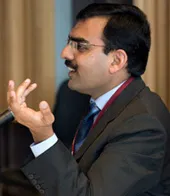
At Attacks launch: What if governments are perpetrators?
When we launched the new edition of Attacks on the Press at the United Nations today, I was hit with questions about Sri Lanka and Pakistan. Both dealt with what amounts to the same problem: What do you do when you’re asking a government to investigate a crime in which it might have been the…
Attacks on the Press 2010: Asia Analysis
Partisan Journalism and the Cycle of Repression by Bob Dietz and Shawn W. Crispin Lal Wickramatunga’s family and publishing house, Leader Publications, have paid dearly in Sri Lanka’s highly charged political climate. While Leader’s newspapers, including the weekly Sunday Leader, are widely known for tough, independent reporting, they have been caught up in a partisan…

As Uganda election nears, fear among reporters
As Ugandan journalists prepare to cover presidential elections on February 18 amid political tensions and security concerns, uncertainty and fear are on the minds of reporters. That’s particularly so after a year in which 52 press freedom abuses–ranging from physical and verbal intimidation to state censorship and murder–were recorded, according reports by Ugandan press freedom…
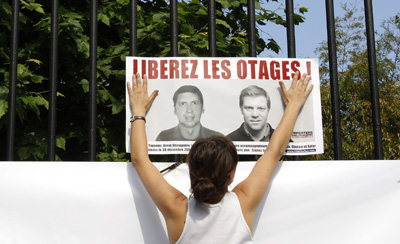
Cautious optimism for French reporters held in Afghanistan
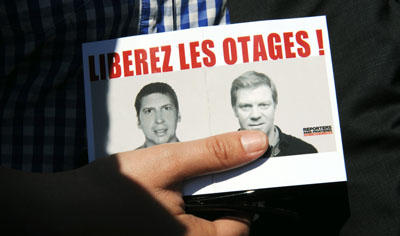
On December 29, 2009, Stéphane Taponier and Hervé Ghesquière, two seasoned reporters with the French public service TV channel France 3, and their three Afghan assistants, were taken hostage in Afghanistan. One year later, a sense of cautious optimism seems to prevail in Paris. On December 20, French authorities announced that they had received a…

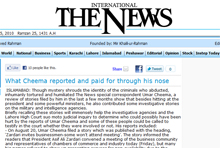
Movement in Umar Cheema’s case ‘frustratingly slow’
On Wednesday, we identified Pakistan as the country where the most journalists–eight–have been killed for their work in the past year. Six of them were on the job when they were killed in crossfire or a suicide bombing. Two others were assassinated.I’ve been posting reports on one journalist–Umar Cheema–who wasn’t killed, but whose case represents…
Naming names in a Pakistan abduction case
CPJ has always been careful to avoid making accusations when journalists are abducted or killed in Pakistan. Our tactic is to call for full investigations either by the police, the courts or special investigative bodies. In many such cases, the local journalists’ community blames government security agencies, including the powerful Inter Services Intelligence group (ISI),…
Journalists in Pakistan remain under threat
New York, October 25, 2010–Pakistan must take immediate steps to rein in police and government agencies that threaten reporters. Two cases in recent days–those of journalists Hafiz Imran and Umar Cheema–demonstrate how reporting on stories that are critical of the authorities can bring officials’ wrath down on reporters.
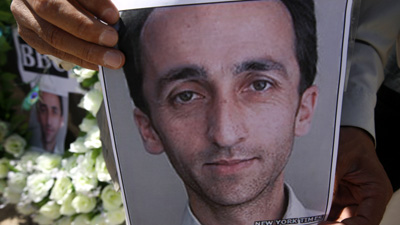
As with Norgrove, a need to probe Munadi death
This morning, Prime Minister David Cameron announced that British aid worker Linda Norgrove, who died in a rescue attempt after she was taken hostage in Afghanistan, may have been killed by a U.S. grenade rather than by her Taliban captors, as originally reported.