Killed

1909 results arranged by date

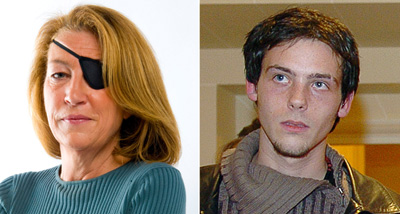
Colvin and Ochlik. (AFP)

CPJ condemns killings of Colvin, Ochlik in Syria

New York, February 22, 2012–The Committee to Protect Journalists condemns the killings in Syria of international journalists Marie Colvin and Rémi Ochlik, who died this morning during shelling of the besieged city of Homs.

Read More ›

Indian journalist and his family found dead

New York, February 21, 2012–The Committee to Protect Journalists is outraged by the murder of a senior journalist in India and calls on authorities to conduct an immediate and thorough investigation into his death.

Read More ›

Attacks on the Press in 2011: Fighting Impunity

The global rate of unpunished murders remains stubbornly high at just below 90 percent. Senior officials in the most dangerous countries are finally acknowledging the problem — the first step in what will be a long, hard battle. By Elisabeth Witchel

Read More ›

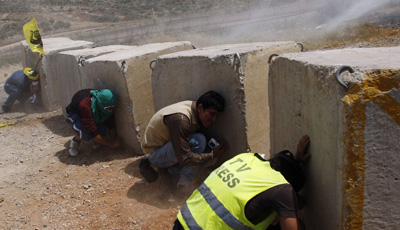
A journalist crouches behind a cement block during clashes between Israeli forces and Palestinian protesters in the West Bank. (Reuters/Mohamad Torokman)

Attacks on the Press in 2011: Evolution in Journalist Security

The danger of covering violent street protests has become a significant risk for journalists, alongside combat and targeted killings. Sexual assault, organized crime, and digital vulnerability are also hazards. The security industry is struggling to keep up. By Frank Smyth
Read More ›

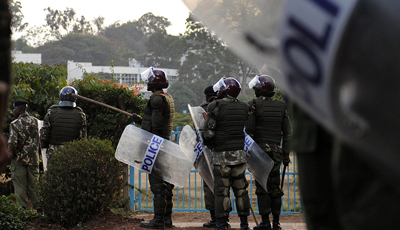
Kenyan police are accused of widespread extrajudicial killings, including the murder of reporter Francis Nyaruri. (AFP/Tony Karumba)

Attacks on the Press in 2011: Killing, Coverup in Kenya

It is not too late for justice for Francis Nyaruri, who was killed in 2009 after he wrote a story on police corruption. The murder comes against a backdrop of widespread extrajudicial killing. By Tom Rhodes with reporting from Clifford Derrick

Read More ›

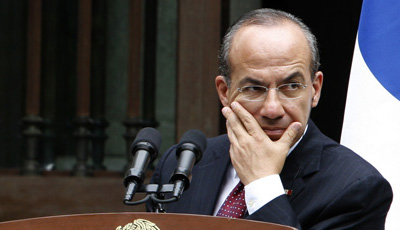
Mexican President Felipe Calderón Hinojosa pledged action to deter anti-press attacks, but his government has accomplished little. (AP/Marco Ugarte)

Attacks on the Press in 2011: In Mexico, Silence or Death Remains the Choice

The Mexican president promised to protect a besieged press corps with a federal protection program, a special prosecutor and new legislation making anti-press violence a federal crime. But Felipe Calderón Hinojosa has failed at nearly every turn. By Mike O’Connor
Read More ›

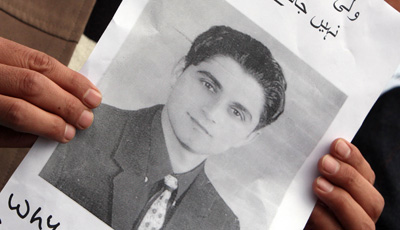
A demonstrator holds a poster with the photo of slain Pakistani journalist Wali Khan Babar and the question, 'Why?' (AP/Mohammad Sajjad)

Attacks on the Press in 2011: Pakistani Media Look Inward

As journalists continue to be targeted, the government of Asif Ali Zardari has shown itself unable and unwilling to stand up for a free press. Whatever solutions exist will have to be found by people in the profession. By Bob Dietz

Read More ›

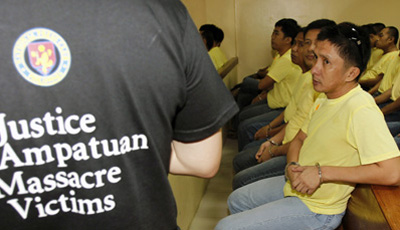
An advocate for the Maguindanao massacre victims appears at a court hearing near several police officers charged in the killings. (Reuters/Romeo Ranoco)

Attacks on the Press: Will Philippines Fail on Maguindanao?

Nearly two years since 32 journalists were murdered, the fight for justice has both intensified in rhetoric and bogged down in technicalities. Without a greater commitment of resources, the litmus test is one the Philippines could fail. By Shawn W. Crispin
Read More ›

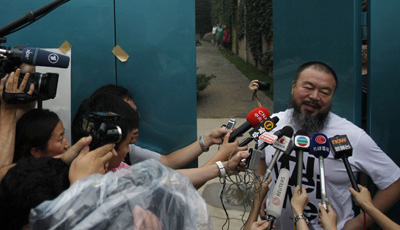
Ai Weiwei speaks to journalists at his home in Beijing after the government held him incommunicado for nearly three months. (AP/Ng Han Guan)

Attacks on the Press: China Holds Fast to Information Control

Internet users posed ever-bigger challenges to Beijing’s media controls, boosting debate on public safety and censorship. But ahead of a 2012 leadership transition, the Chinese Communist Party looks likely to fiercely suppress dissent. By Madeline Earp
Read More ›

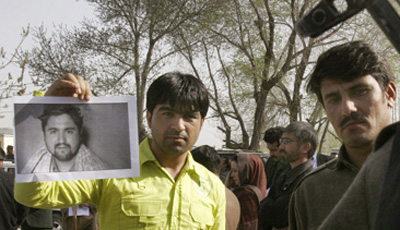
At a demonstration in Kabul, a photo of the slain Afghan journalist Ajmal Naqshbandi. (AP/Musadeq Sadeq)

Attacks on the Press in 2011: Fixers on Front Lines

Local “fixers” have been essential to foreign reporters covering the Afghan war. While they often do the same work as their international counterparts, they run greater risk and face a far more uncertain future. By Monica Campbell

Read More ›