Attacks on the Press in 2011: Ukraine
The government failed to deliver on President Viktor Yanukovych’s promises to investigate official harassment of news media and ensure justice in the 2000 murder of online journalist Georgy Gongadze. Prosecutors indicted former President Leonid Kuchma on abuse-of-office charges in connection with the Gongadze slaying, alleging that he had ordered subordinates to silence the journalist. But…
Attacks on the Press in 2011: Kazakhstan
The convictions of three men in the 2009 murder in Almaty of prominent Kyrgyz journalist Gennady Pavlyuk was a bright spot in Kazakhstan’s otherwise grim press freedom record. The government had yet to reform its media laws in line with international standards, despite its promises to the Organization for Security and Co-operation in Europe, or…
Attacks on the Press in 2011: Azerbaijan
Four years after Eynulla Fatullayev was imprisoned on a series of fabricated charges, and more than a year after the European Court of Human Rights ordered his immediate release, the editor finally walked free. In an interview with CPJ, Fatullayev praised the international community for its sustained support. Attacks against domestic journalists covering sensitive subjects…
Attacks on the Press in 2011: Mexico
Criminal groups exerted extraordinary pressure on the press as they extended their control over virtually every sector of society. Journalists were killed or disappeared, media outlets were bombed and threatened. Pervasive self-censorship was a devastating consequence of this environment. In an information vacuum, journalists and citizens increasingly used social media to inform their communities. The…
Attacks on the Press in 2011: Nepal
Anti-media attacks and harassment flourished in a power vacuum left by the ruling coalition’s political struggles. Baburam Bhattarai of the Unified Communist Party of Nepal (Maoist) became prime minister in August, securing support with his proposal to offer amnesty for war crimes, including journalist murders. Four assailants were convicted in two separate journalist slayings, but…
Attacks on the Press in 2011: Afghanistan
As NATO and Afghan military forces faced off with militant groups, the news media worked in a hostile and uncertain environment. Two journalists were killed for their work, both during major insurgent attacks. Accusations of widespread fraud marred the second post-Taliban parliamentary elections, which were resolved only by a presidential decree that ousted several apparent…
Attacks on the Press in 2011: France
France’s press freedom record continued a downward slide, in large part because authorities attempted to violate the confidentiality of journalists’ sources and interfere with editorial decisions. Most of the recent cases stemmed from the “Bettencourt affair,” the alleged illegal financing of the presidential party by the billionaire Liliane Bettencourt. In 2010, President Nicolas Sarkozy’s office…
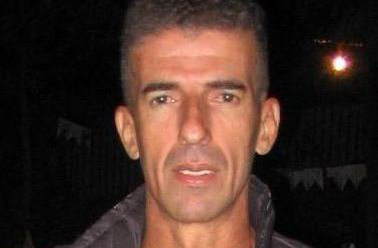
Journalist who covered corruption murdered in Brazil
New York, February 10, 2012–The body of Brazilian journalist Mario Randolfo Marques Lopes was found on Thursday in the city of Barra do Piraí in Rio de Janeiro state, according to news reports. Randolfo reported on local corruption and had survived at least one attempt on his life in recent years, news reports said.

Rousseff quiet as Cuban blogger denied travel to Brazil
The response from Cuban officials did not take anyone by surprise. Prominent Cuban blogger Yoani Sánchez had been, once again, denied permission to leave her country after she was granted a visa by the Brazilian Embassy in January to attend a film festival. “I feel like a hostage kidnapped by someone who doesn’t listen nor…
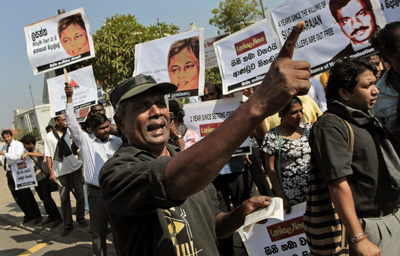
Black January? A foreign plot, says Sri Lankan government
On Monday, I wrote about two demonstrations scheduled for Sri Lanka this week. Both were meant to commemorate the ugly string of anti-press attacks in recent Januaries, which has included journalists killed and abducted, television stations bombed, websites attacked, and media offices torched. But Wednesday’s Black January effort, publicized by the Free Media Movement (FMM)…