ATR

2841 results

Kyrgyzstan must drop charges against journalist

New York, February 29, 2012–The Committee to Protect Journalists calls on authorities in Kyrgyzstan to drop politically motivated extremism charges against independent journalist Vladimir Farafonov.

Read More ›

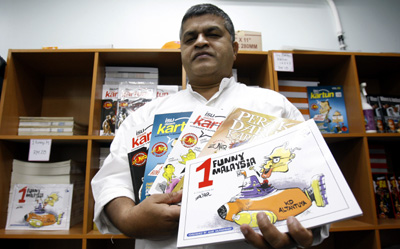
Zunar with copies of banned cartoon collections. (AP/Lai Seng Sin)

No joke: Malaysian cartoonist stands up to government

Tuesday marks the next step in a legal faceoff between Malaysian authorities and the well-known political cartoonist Zulkiflee Anwar Haque, also known as Zunar. Hearings will resume in civil lawsuit filed by Zunar that challenges the legality of his arrest and detention in September 2010. Malaysian police arrested him hours ahead of the scheduled launch…

Read More ›

Recalling Marie Colvin, the ‘greatest of our generation’

In her final hours, Marie Colvin gave this damning report to CNN’s Anderson Cooper. Bravery, generosity, and commitment: These are the three characteristics of Marie Colvin that have surfaced, again and again, in the many tributes spoken and published since the veteran Sunday Times reporter was killed Wednesday in the besieged city of Homs by…
Read More ›

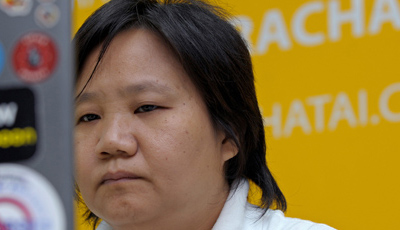
Thai website editor Chiranuch Premchaiporn faces criminal charges. (AFP/Pornchai Kittiwongsakul)

Attacks on the Press in 2011: Regulating the Internet

Legislation for Internet security can quickly turn into a weapon against the free press. Cybercrime laws are intended to extend existing penal codes to the online world, but they can easily be broadened to criminalize standard journalistic practices. By Danny O’Brien
Read More ›

Attacks on the Press in 2011: Fighting Impunity

The global rate of unpunished murders remains stubbornly high at just below 90 percent. Senior officials in the most dangerous countries are finally acknowledging the problem — the first step in what will be a long, hard battle. By Elisabeth Witchel

Read More ›

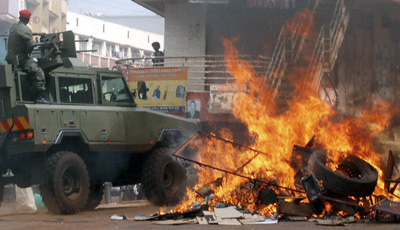
Civil unrest grips downtown Kampala. Ugandan President Yoweri Museveni said journalists who covered the protests were 'enemies' of the country's development. (AP/Stephen Wandera)

Attacks on the Press: Development Trumps Freedom

Many African leaders continue to offer a false choice between stability and press freedom. Taking a cue from China, a key investor and model, they stress social stability and development over openness and reform. By Mohamed Keita

Read More ›

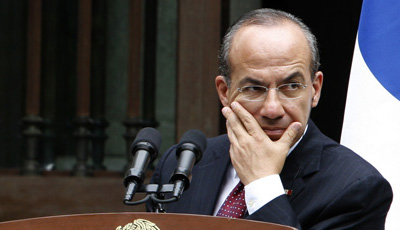
Mexican President Felipe Calderón Hinojosa pledged action to deter anti-press attacks, but his government has accomplished little. (AP/Marco Ugarte)

Attacks on the Press in 2011: In Mexico, Silence or Death Remains the Choice

The Mexican president promised to protect a besieged press corps with a federal protection program, a special prosecutor and new legislation making anti-press violence a federal crime. But Felipe Calderón Hinojosa has failed at nearly every turn. By Mike O’Connor
Read More ›

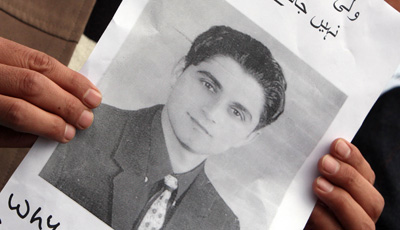
A demonstrator holds a poster with the photo of slain Pakistani journalist Wali Khan Babar and the question, 'Why?' (AP/Mohammad Sajjad)

Attacks on the Press in 2011: Pakistani Media Look Inward

As journalists continue to be targeted, the government of Asif Ali Zardari has shown itself unable and unwilling to stand up for a free press. Whatever solutions exist will have to be found by people in the profession. By Bob Dietz

Read More ›

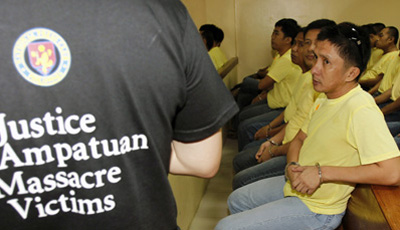
An advocate for the Maguindanao massacre victims appears at a court hearing near several police officers charged in the killings. (Reuters/Romeo Ranoco)

Attacks on the Press: Will Philippines Fail on Maguindanao?

Nearly two years since 32 journalists were murdered, the fight for justice has both intensified in rhetoric and bogged down in technicalities. Without a greater commitment of resources, the litmus test is one the Philippines could fail. By Shawn W. Crispin
Read More ›

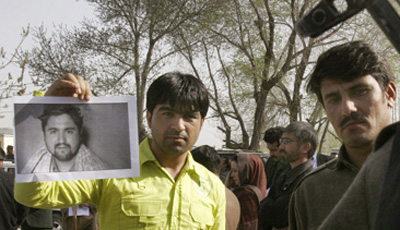
At a demonstration in Kabul, a photo of the slain Afghan journalist Ajmal Naqshbandi. (AP/Musadeq Sadeq)

Attacks on the Press in 2011: Fixers on Front Lines

Local “fixers” have been essential to foreign reporters covering the Afghan war. While they often do the same work as their international counterparts, they run greater risk and face a far more uncertain future. By Monica Campbell

Read More ›