
What should journalists know about BlackBerry fights?
The discussions between Research In Motion, maker of the BlackBerry, and governments such as the United Arab Emirates, Saudi Arabia, and India continue to hit the headlines. In each case, disagreements center on providing customer communications to security and law enforcement services. The rumblings from these nations over monitoring powers aren’t just limited to RIM:…

U.S. Senate passes ‘libel tourism’ bill
This week, the U.S. Senate unanimously passed a bill shielding journalists and publishers from “libel tourism.” The vote on Monday slipped past the Washington press corps largely unnoticed. Maybe it was the title that strove chunkily for a memorable acronym: the Securing the Protection of our Enduring and Established Constitutional Heritage (SPEECH) Act. Journalists and…
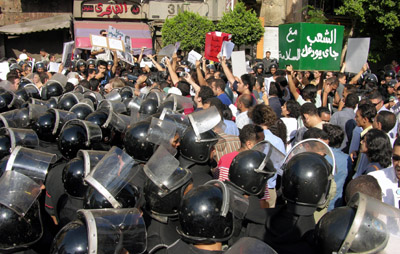
Human rights coverage spreads, despite government pushback
By Mohamed Abdel Dayem and Robert Mahoney The media in the Middle East loved the Intifada. Every detail of Israel’s violations of human rights in the late 1980s in the West Bank and Gaza appeared in the Arabic and Farsi press. The governments that owned or controlled these media outlets loved it, too. When pan-Arab…
Attacks on the Press 2009: Middle East and North Africa Developments
ATTACKS ON THE PRESS: 2009 • Main Index MIDDLE EAST and NORTH AFRICA • Regional Analysis:Human rights coverage spreads despite government pushback Country Summaries • Bahrain • Egypt • Iran • Iraq • Israel, Occupied Palestinian Territories • Libya • Morocco • Sudan • Tunisia • Yemen • Other developments ALGERIA Police confiscated a manuscript…
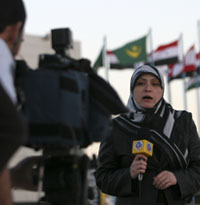
Saudi operator Arabsat takes Iran’s Al-Alam network off air
New York, February 3, 2010—The Committee to Protect Journalists called for Saudi-run satellite operator Arabsat to return to air the Iranian-owned Arabic-language satellite channel Al-Alam, which stopped broadcasting January 27 without prior notice, according to international news reports. In a statement published on its Web site, Al-Alam said that “Arabsat, in continuation of its censorship…
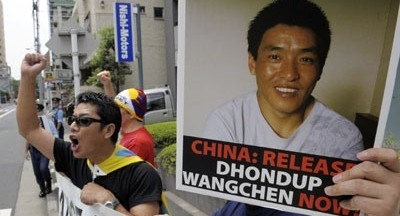
CPJ’s 2009 prison census: Freelance journalists under fire
New York, December 8, 2009—Freelancers now make up nearly 45 percent of all journalists jailed worldwide, a dramatic recent increase that reflects the evolution of the global news business, the Committee to Protect Journalists said today. In its annual census of imprisoned journalists, CPJ found a total of 136 reporters, editors, and photojournalists behind bars…
Free Speech Protection Act could slow ‘libel tourism’
Free press advocates in Britain are looking to a bill stuck in the U.S. Congress for moral support in the fight to reform England’s draconian defamation laws. The U.S. bill, the Free Speech Protection Act 2009, is itself the product of those laws, which have made London the capital of “libel tourism.”

Audio Report: Middle East Bloggers
In our special report “Middle East Bloggers: The Street Leads Online,” CPJ’s Mohamed Abdel Dayem says blogging has become a crucial front in the region’s struggle for freedom of expression. Here, Abdel Dayem describes how two regional trends–booming Internet audiences and repression of traditional media–have made blogging a vibrant news alternative. Listen to the mp3…