CPJ mourns devastating plane crash
New York, December 6, 2005—The Committee to Protect Journalists is shocked and saddened by the crash today of an Iranian military plane that claimed the lives of more than 100 people, mostly journalists. An Iranian C-130 military transport plane crashed into a Tehran apartment building, killing its 10 person crew and all 84 passengers, who…
Kurdish editor sentenced to one year in jail
New York, October 19, 2005—The Committee to Protect Journalists condemns the one-year prison sentence given to Kurdish journalist and human rights activist Mohammad Sadiq Kabudvand by an Iranian court. The court declared Kabudvand, managing editor of the bilingual Kurdish and Farsi Payam Mardom Kordestan, guilty of “inciting the population to rebel against the central state,”…
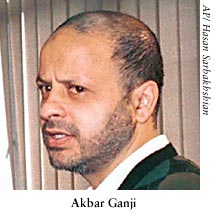
Immediate release is sought
New York, July 18, 2005—The Committee to Protect Journalists expressed deep concern today about the health of jailed Iranian journalist Akbar Ganji, who was reported hospitalized during his more than month-long hunger strike. Massoumeh Shafii, Ganji’s wife, told Reuters that Ganji had been taken to Tehran’s Milad Hospital, the news agency reported today. She said…
Penn’s video camera briefly seized
New York, June 13, 2005—Iranian authorities briefly seized the video camera of actor-turned-journalist Sean Penn as he was recording a demonstration in Tehran on Sunday, The Washington Post reported. Penn, accredited as a reporter for the San Francisco Chronicle, is providing coverage of the Iranian presidential election for the newspaper. “While this incident was not…
Journalist released from prison
New York, May 31, 2005—Iranian authorities temporarily released imprisoned journalist Akbar Ganji. Ganji was released for medical leave on Sunday, according to press reports. Judicial authorities had previously refused Ganji’s request to be released on medical leave, prompting him to start a hunger strike on April 18. Ganji ended the strike after his release. Ganji’s…
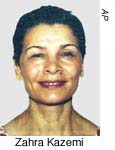
Doctor says journalist in Iranian custody was tortured and raped before her death
New York, April 1, 2005—Canadian-Iranian photojournalist Zahra Kazemi was tortured and raped during her detention in Iran, claims a former Iranian army doctor. The doctor, Shahram Azam, says that he was the first to examine Kazemi in a Tehran hospital before her death on July 10, 2003. His allegations were presented yesterday at a press…
Attacks on the Press in 2004: Facts
When U.S.-led forces waged an offensive in Fallujah in November and a state of emergency was declared, the Iraqi interim government’s Higher Media Commission directed the media to “set aside space in your news coverage to make the position of the Iraqi government, which expresses the aspirations of most Iraqis, clear.” Those that didn’t comply…
Attacks on the Press in 2004: Preface by Tom Brokaw
Remember 1989? The collapse of the Soviet Union and the rise of democracy and democratic institutions in the old Communist bloc, including Mother Russia, inspired a new generation of journalists in places where a free press had been a state crime. Other journalists in other places, such as Central and South America, Southeast Asia, and…
Attacks on the Press in 2004: Introduction
by Ann CooperWith its myriad dangers and devastating death toll, Iraq remained the worst place to practice journalism throughout 2004, and one of the most dangerous media assignments in recent history. Twenty-three journalists and 16 media support workers were killed on the job in Iraq during the year. An insurgent kidnapping campaign also posed severe…