Travel leave for Belarusian reporter no change of heart
In an unexpected development reported in the press today, Belarusian authorities temporarily lifted a travel ban on Irina Khalip, prominent journalist and reporter for the Moscow-based independent newspaper Novaya Gazeta. The restriction, which includes a weekly check-in with district police and a requirement to spend every night in her Minsk apartment, was part of a…
Harsh punishment would not fix Russian impunity
Every second crime committed in Russia goes unsolved, President Vladimir Putin said Friday, addressing a conference of the nation’s high-ranking Interior Ministry officials. “The low crime-detection rate and impunity for the criminals do not serve justice but undermine public trust in law enforcement agencies, as well as the state per se,” Putin said, according to…

In Russia, brazen murder of Chernovik founder is unsolved
Gadzhimurad Kamalov, founder of the independent daily Chernovik, was murdered in Makhachkala, capital of Russia’s southern republic of Dagestan, on December 15, 2011. The slaying was brazen, coming on the national Day of Remembrance for journalists killed in the course of their work. The late-evening assault took place outside Chernovik’s newsroom, located on Makhachkala’s Magomed…
Red flags in the European Union press freedom debate
The European Union enjoys waving the banner of press freedom overseas. However, it is sometimes at a loss when it has to define its approach to press freedom among its own member states. Last year, the EU tried and failed to convince the Hungarian government to radically amend its highly controversial media law. The conservative…

In Syria, the quandary of freelance news coverage
Forces on all sides of the Syrian conflict that have tried to censor news coverage through violence have won a round. By sharply increasing the risk for reporters covering the civil war they have forced news organizations to think twice before sending their staff to the battlefields. In a worrying development they even have led…
Setback in O’Hagan murder must not mean case closed
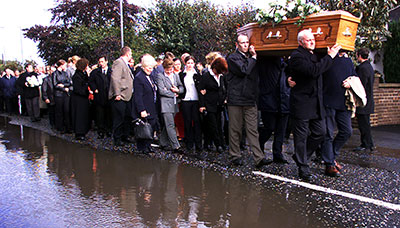
More than 11 years have passed since investigative journalist Martin O’Hagan was murdered near his home in Lurgan, Northern Ireland, and the case has not been solved. Last week Northern Ireland’s public prosecutor announced a major setback to the case that has colleagues worried it never will be.
An information void in Mali as journalists are obstructed
Three weeks after France’s military intervention in Mali, the war remains largely “without images and without facts,” as described by Jean-Paul Mari, special envoy for the newsweekly Le Nouvel Observateur. Although journalists have been allowed to follow French and Malian forces into the towns that have been recovered from armed Islamist groups, the real battlefields…

Conflating critics with terrorists in Turkey
The government of Prime Minister Recep Tayyip Erdoğan is quick to brand critics as “terrorists,” and that’s one of the main reasons that Turkey was the world’s worst jailer of the press when CPJ conducted its recent census of imprisoned journalists. This week, the prime minister and two pro-government newspapers applied the label once again…
Tajikistan blames censorship on complaints by citizens
In the last year, CPJ has documented a disturbing trend of attacks against the press in Tajikistan: the frequent blocking orders that the State Communications Agency has issued to local Internet service providers. Delivered in most instances via text message, the orders urge the ISPs to block nationwide access to local and international news websites…