
In Guinea, media hopeful with democratic transition
Guinea’s historic presidential elections and new constitution are changing the media landscape in the West African country. Since last month, the military-led Transitional National Council has passed two new laws decriminalizing defamation and created a new media regulatory body.

Press fuels democracy in Cameroon, across continent
On January 1, 1960, during the proclamation of independence of the French speaking part of Cameroon, I was forced, with comrades from Leclerc high school in Yaoundé, to take part in the big parade organized by President Ahmadou Ahidjo. At that time, I would occasionally write articles for the school magazine, but also for Les…
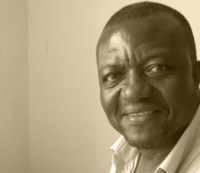
Remembering Pius: The devastation of his death
It’s 7:50 a.m. I’m up early—lots of work to finish today. I check my e-mail. There’s a message from CPJ’s Lauren Wolfe, who I don’t know. The opening line reads: “I’m not sure if you heard that Pius Njawé was killed in a car crash yesterday in Virginia. Anne Nelson told us you worked closely with him when he was chosen…
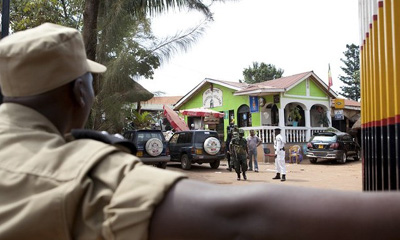
Journalist among dead in Uganda terror attacks
Since the beginning of Somalia’s Islamist extremist insurgency, the Al-Shabaab militia has targeted journalists and others that it considers opposed to its goals. Al-Shabaab is now reaching beyond Somalia’s borders, as the group claimed responsibility for two bomb attacks Sunday evening that rocked Uganda’s capital, Kampala, and left an estimated 74 people dead, including radio…
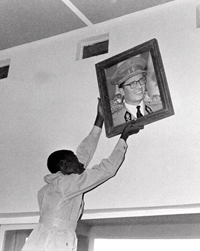
50 years on, Francophone Africa strives for media freedom
CPJ has joined with African press freedom groups to urge African leaders to end repression of the media as they celebrate 50 years since the end of colonial rule. We will publish a series of blogs this week by African journalists reflecting on the checkered history of press freedom over that period.This year is the 50th anniversary of…
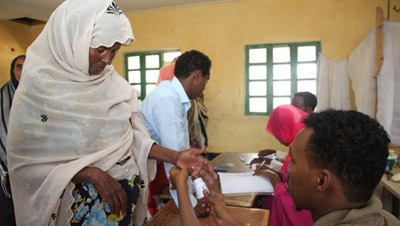
Somaliland elections and coverage surprisingly…normal
Critical voices in the East African media—whether in Ethiopia, Rwanda, Burundi, or Uganda—have been intimidated, banned, blocked, and beaten prior to elections in recent years. Somalia is so embroiled in conflict that even the concept of having elections remains a faraway dream. But in late June, the semi-autonomous region of Somaliland in northern Somalia managed to hold relatively peaceful and free elections with decent media…

View from a Somali photojournalist’s blood-stained lens
On Tuesday, several journalists were wounded when missiles were fired on a press conference in the battlefield of Somalia’s capital, Mogadishu. When the National Union of Somali Journalists broke news of the attack, I immediately checked in with local reporters. I obtained the phone number of photojournalist Ilyas Ahmed Abukar, expecting to speak to a frantic or traumatized man, but to…
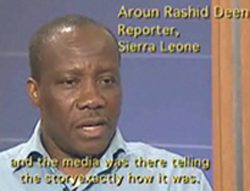
Finding success in exile from Sierra Leone
It was just days ago that my daughter had her 11th birthday. She was excited about this birthday as never before, but I understood why. A couple of days prior, she was accepted to the Frederick Douglass Academy in Manhattan for middle school starting next fall. The school is regarded as one of the best…
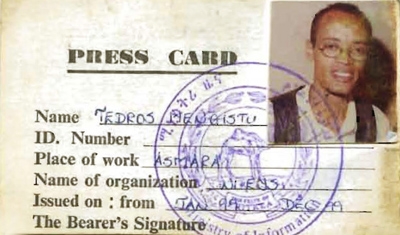
For Eritrean expatriate press, intimidation in exile
For the better part of the last 20 years, Tedros Menghistu has been a refugee, forced to flee his Red Sea homeland of Eritrea not once, but twice—first as a young man displaced by war in the early 1990s, and then as a professional journalist escaping political censorship and military conscription a decade later. Menghistu is also…

UNESCO’s dictator prize put on hold
Irina Bokova, UNESCO’s director-general, delivered a firm message on Tuesday to representatives from UNESCO’s 58-member executive board assembled at the organization’s Paris headquarters: Bestowing the Obiang International Prize for Research in the Life Sciences, named for and financed by one of the most repressive leaders in Africa, would do grave damage to the organization.