
Amid tensions ahead of Kenyan vote, journalists face violence and threats
When a fight broke out during a political rally for Kenya’s Orange Democratic Movement in Kakamega county on May 4, Shaban Makokha was taking pictures for his newspaper, the Daily Nation. Makokha told CPJ that when police arrived to break up the fight, they demanded that he stop taking pictures, even after he identified himself…

Q&A: Somali editor says efforts to make media law less restrictive don’t go far enough
On July 13, Somalia’s Cabinet approved proposed changes to the country’s national media law as part of a review to overhaul the regulatory framework under which journalists currently work. But Somali journalists and local media rights groups have criticized the government for not doing enough to provide journalists with a less restrictive environment.

For Zambia’s press, election year brings assaults and shut down orders
Zambia’s press has come under sustained assault in this election year, with station licenses suspended, journalists harassed or arrested for critical coverage, and one of the country’s largest privately owned papers, The Post, being provisionally liquidated in a move that its editors say is politically motivated.
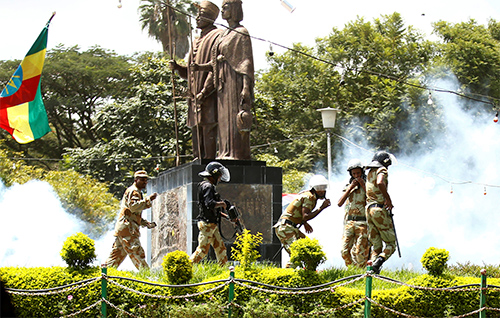
Ethiopia’s state of emergency cuts lines of communication and puts bloggers at risk of arrest
On October 4, I heard that my friend Natnael Feleke had not returned home even though it was approaching midnight in Ethiopia. Family and friends were discussing where to search for the blogger, who had only been released 11 months earlier from the notorious Kilinto prison, where he was held for 16 months over his…
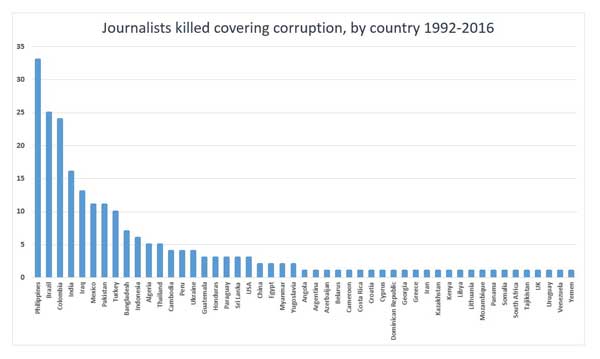
Protecting journalists who cover corruption is good for the bottom line
Corruption is one of the most dangerous beats for journalists, and one of the most important for holding those in power to account. There is growing international recognition that corruption is also one of the biggest impediments to poverty reduction and good governance. This is why journalists on this beat must be protected, including by…
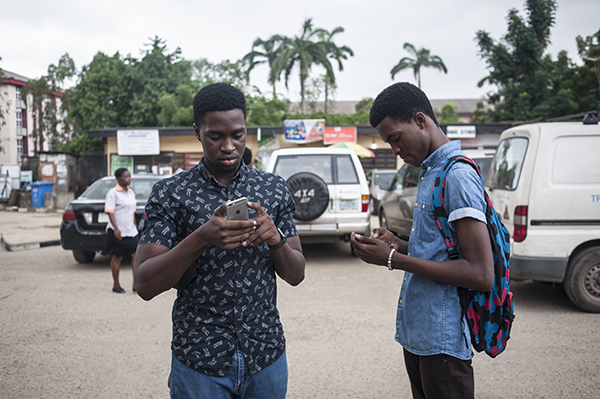
How Nigeria’s cybercrime law is being used to try to muzzle the press
Since Nigeria’s cybercrime act was voted into law in May 2015 authorities have used the accusation of cyber stalking to harass and press charges against at least five bloggers who criticized politicians and businessmen online and through social media.
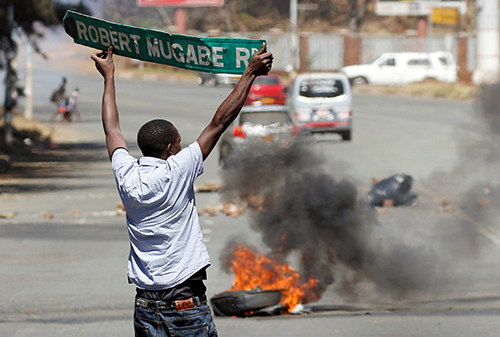
Journalists caught in crosshairs amid protests and unrest in Zimbabwe
A photograph of freelance journalist Lucy Yasini trying to ward off an attack by police while covering a protest in Harare was circulated on social media last week. A day later, a photograph was shared of two reporters, Obey Manayiti and Robert Tapfumaneyi, in the back of a police truck after their arrest. The incidents…

World Refugee Day: Fear of arrest drives journalists into exile
In August 2014 two journalists living more than 4,000 miles apart slipped across a border to find safety: one with his wife and three children, the other alone. Idrak Abbasov, from Azerbaijan, and Sanna Camara, from Gambia, faced imprisonment because of their reporting. Neither has been able to return home.
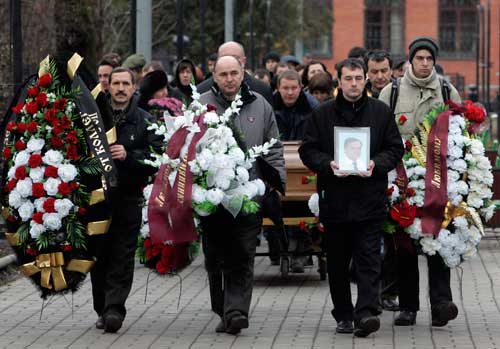
Global Magnitsky Act could be powerful weapon against impunity in journalist murders
Last week, the proposed Global Magnitsky Human Rights Accountability Act emerged from the U.S. House Foreign Affairs Committee with approval. The bill was passed by the Senate last year. If passed by the full House of Representatives and signed into law by the president, it has the potential to offer partial redress to one of…