John Emerson
Attacks on the Press 1999: Africa Analysis
By Claudia McElroyAll over Africa, conflict continued to be the single biggest threat to journalists and to press freedom itself. Both civil and cross-border wars were effectively used as an excuse by governments (and rebel forces) to harass, intimidate, and censor the press–often in the name of “national security”–and in some cases to kill journalists…
Attacks on the Press 1999: Americas Analysis
By Marylene SmeetsGovernments in several Latin American countries took steps to bring their media laws up to international standards. But as the Latin American press continued to expose wrongdoing, its very strength rendered it vulnerable to a new kind of harassment: defamation campaigns.
Attacks on the Press 1999: Asia Analysis
By Kavita Menon and A. Lin NeumannMuch of Asia remained hostile to a free, independent media, despite the growing consensus that Asian political and economic stability depends in great measure on governments’ willingness to improve transparency and lift restrictions on the press. In China, Burma, Vietnam, and even Malaysia, government suppression of the media is…
Attacks on the Press 1999: Europe & Central Asia Analysis
By Chrystyna Lapychak Wars in Yugoslavia and Chechnya dominated regional and international headlines in 1999. The conflicts raised the journalists’ death toll in the region and prompted crackdowns, as governments blocked access to war zones and engaged in propaganda campaigns.
Attacks on the Press 1999: Middle East Analysis
By Joel CampagnaRoyal succession and rubber-stamp elections set the tone for a year in which Middle Eastern and North African governments continued to restrict press freedoms through a combination of censorship, intimidation, and media monopoly. Ballots in Egypt, Syria, Tunisia, and Yemen produced few surprises as longtime rulers stayed in power and maintained formidable obstacles…
Attacks on the Press 1999: Enemies of the Press
Each year on World Press Freedom Day (May 3), CPJ announces its list of the ten worst enemies of the press. Those who made the list this year, as in the past, earned the dubious distinction by exhibiting particular zeal in the ruthless suppression of press freedom. They were singled out for their unrelenting and…
Attacks on the Press 1999: 1999 Death Toll: Listed by Country
[Click here for full list of documented cases] At its most fundamental level, the job of a journalist is to bear witness. In 1999, journalists in Sierra Leone witnessed rebels’ atrocities against civilians in the streets of Freetown. In the Balkans, journalists watched ethnic Albanians fleeing the deadly menace of Serbian police and paramilitaries. In…
Attacks on the Press 1999: Speaking Out
Speaking Out in Guatemala and l SalvadorBy Marylene SmeetsLast April, a mysterious program called “Hoy por Hoy” (“Right Now”) appeared on Guatemalan radio. The format consisted of gossip and political chitchat, and the hosts seemed to have it in for journalists. One of them often described Dina Fern‡ndez, a columnist and editor at Guatemala’s biggest…
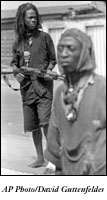
Attacks on the Press 1999: The Trauma of Sierra Leone
Introduction On January 6, 1999, rebel forces entered Freetown and launched a campaign of terror. Revolutionary United Front (RUF) fighters systematically murdered, mutilated, and raped thousands of civilians. During the three weeks that it took for Nigerian-led West African peacekeeping troops to expel the rebels from Freetown, Sierra Leone officially became the most dangerous country…
Attacks on the Press 1999: Afghanistan
Afghanistan’s ruling Taliban militia continues to maintain a hostile attitude toward journalists and journalism. There are no independent local media, because of the Taliban’s famous intolerance and because resources are scarce in this war-ravaged country. Although several news agencies–including the BBC, The Associated Press, and Agence France-Presse–maintain bureaus in Kabul, visas to foreign correspondents are…