Malaysia: Political pressure behind shakeup at The Sun, sources say
Your Excellency: The Committee to Protect Journalists (CPJ) is deeply concerned that political pressure may have prompted the recent wave of resignations, suspensions, and lay-offs at The Sun newspaper. Local journalists have told CPJ that the radical retrenchment of the daily’s staff is part of an effort to rein in its political coverage, which had been more independent and aggressive than that of any other mainstream news outlet in Malaysia.
Attacks on the Press 2000: Asia Analysis
DESPITE PRESS FREEDOM ADVANCES ACROSS ASIA IN RECENT YEARS, totalitarian regimes in Burma, China, North Korea, Vietnam, and Laos maintained their stranglehold on the media. Even democratic Asian governments sometimes used authoritarian tactics to control the press, particularly when faced with internal conflict. Sri Lanka, for instance, imposed harsh censorship regulations during the year in…
Attacks on the Press 2000: Malaysia
USING INTERNAL SECURITY LAWS AND THE PRINTING PRESSES and Publications Act of 1984, which requires annual relicensing of all publications, Prime Minister Mahathir Mohamad’s deeply entrenched ruling party and its allies maintained a stranglehold on the press. Virtually all mainstream newspapers in Malaysia are owned or controlled by parties allied with the ruling Barisan National…
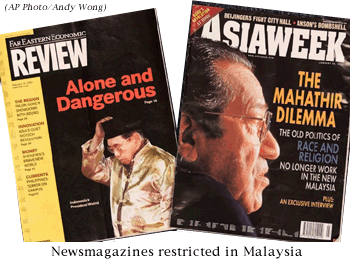
Government blocks international newsmagazines
New York, March 7, 2001 — The Committee to Protect Journalists (CPJ) is troubled by the Malaysian government’s decision to block distribution of the international newsmagazines Asiaweek and the Far Eastern Economic Review, both published weekly from Hong Kong. “The Malaysian government has a history of using bureaucratic restrictions to control the media,” said CPJ…
IPF Awards 2000 – Announcement
New York — The Committee to Protect Journalists (CPJ) presented its International Press Freedom Awards for the year 2000 to four journalists–from Bosnia-Herzegovina, the Democratic Republic of Congo, Malaysia, and Iran–for their courage and independence in reporting the news. These honorees endured jail, had their lives threatened and, in one case, survived a car-bomb attack,…

