
Haiti’s only Creole newspaper is out of business
Haiti’s sole newspaper published exclusively in Creole has disappeared under the rubble of the January 12 earthquake. The Port-au-Prince offices of the monthly Bon Nouvel (Good News) were destroyed, as were the facilities of its La Phalange printing unit, which specialized in the production of Creole-language books and documents.
Mexican reporter shot to death in Guerrero
New York, March 15, 2010—Mexican reporter Evaristo Pacheco Solís was found shot to death on Friday in the city of Chilpancingo, in the crime-ravaged state of Guerrero, news reports said. Authorities must fully investigate the murder and bring those responsible to justice, the Committee to Protect Journalists said today.

For Haitian media, a big story amid big demands
In the aftermath of the January 12 earthquake, Kerby Joseph stays on the job. He helps gather news for Amikal FM, a radio station that now broadcasts from a tent in the devastated Haitian town of Leogane, where most of the buildings have been damaged or destroyed. But the radio station lacks the money to…
Honduran radio reporter gunned down
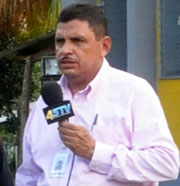
New York, March 12, 2010—Unidentified gunmen killed radio journalist David Meza Montesinos on Thursday as he was driving in the Honduran city of La Ceiba, local press reports said. The Committee to Protect Journalists urged authorities today to fully investigate Meza’s killing and bring those responsible to justice.
Drug-related violence endangers media in Reynosa
New York, March 11, 2010—The Committee to Protect Journalists is alarmed by a wave of drug-related violence in the Mexican city of Reynosa, near the Texas border, which is endangering the news media and causing widespread self-censorship. In the past two weeks, several journalists have been abducted and one reporter has died in unclear circumstances,…
Eight journalists abducted in Mexico
We issued the following statement in response to a report published today in the Dallas Morning News about the alleged abduction of eight Mexican journalists in the border area of Reynosa, near McAllen, Texas. One reporter died after a severe beating, two were released, and the rest are missing, according to the report…
Journalists fleeing Haiti in aftermath of quake
Thousands of Haitians, including many journalists, have fled the country since the January 12 earthquake. Ronald Leon, a veteran journalist who worked with Haiti’s National Television station, Radio Caraibes and Tropic FM, has now settled in Florida, leaving behind his family and his journalism training school, Ameritech, which was destroyed in the earthquake. Its last class had 15 students.

Journalist killed, another wounded in Honduras shooting
New York, March 5, 2010—Honduran authorities must investigate a shooting of two journalists on Monday, the Committee to Protect Journalists said today. Unidentified gunmen in the capital, Tegucigalpa, killed a reporter and seriously wounded a colleague, according to local reports.Joseph Hernández Ochoa, who hosted an entertainment program on TV station Channel 51, was driving his colleague…
French weekly gives issue over to Haitian journalists
The French weekly Courrier International opened its columns on February 4 to Haitian print media journalists in a special edition being circulated worldwide. The paper’s managers did it to express solidarity with Haitian journalists following the earthquake, which completely paralyzed the publication of the country’s dailies. The two dailies in Haiti’s capital, Port-au-Prince, Le Nouvelliste and Le Matin, were honored in the special edition. Haiti Liberté,…
CPJ holds Cuba responsible for welfare of jailed journalists
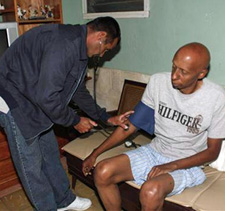
New York, March 4, 2010—A week after the death of jailed Cuban dissident Orlando Zapata Tamayo, a journalist on a hunger strike is seriously ill while health conditions of imprisoned reporters remain dire. As the seventh anniversary of the massive crackdown on dissidents approaches on March 18, the Committee to Protect Journalists renews its call for the Cuban…