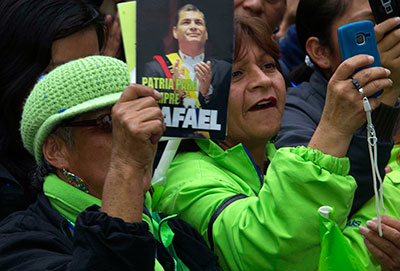
Electoral law dulls reporting as Correa nears re-election
It’s by far the dullest space in the newspaper: Every day in El Universo, Ecuador’s leading daily, readers can find eight small photos and news blurbs summing up the activities of the eight presidential candidates. The articles are the same size and blocked together in a layout that resembles a tic-tac-toe game, minus the ninth…
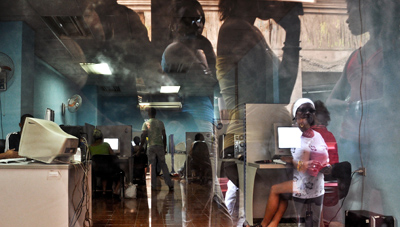
Eating a cable: Internet access still elusive in Cuba
There is a popular expression in Cuba that is synonymous with difficulty and crisis. When you want to indicate that someone is doing badly economically, it is sufficient to say that he is “eating a cable.” Street humor has identified the act of chewing and swallowing a bundle of wires with scarcity and material want.…
Drawing lessons from Chinese attacks on US media
Not every media company is as tempting a target for hackers as The New York Times, The Washington Post, or The Wall Street Journal. Not every company can afford high-priced computer security consultants, either. Is there anything that everyday reporters and their editors can learn about protecting themselves, based on the revelatory details the Times…
Peruvian journalist shot after reporting on corruption
Bogota, Colombia, February 6, 2013–A provincial radio journalist in southern Peru who has reported on local government corruption was shot in the leg while riding his motorcycle to work today, according to local press reports and the regional press group Instituto Prensa y Sociedad (IPYS).
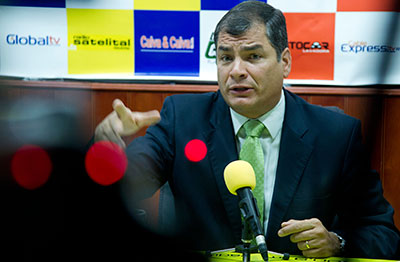
In Correa’s Ecuador, a bulletin on breakfast is routine
On September 11, 2012, the Ecuadoran government interrupted a morning newscast on the Teleamazonas TV station for an official bulletin. What could be so urgent? A coup d’etat? An earthquake? A cholera outbreak? It turned out the government sought to clarify what President Rafael Correa had for breakfast.
Colombian journalists flee homes after receiving threats
Bogotá, February 1, 2013–Authorities in Colombia should ensure the safety of two journalists who have fled the northern city of Montería after being threatened for their reporting on criminal groups, the Committee to Protect Journalists said today.
NYT reports Chinese hacking: one battle in large war
The New York Times reported Thursday that, after four months, it has expelled what it believes to be China-based hackers from its computer system and has, so far, kept them from breaking back in. The paper said a group had been “infiltrating its computer systems and getting passwords for its reporters and other employees.” The…
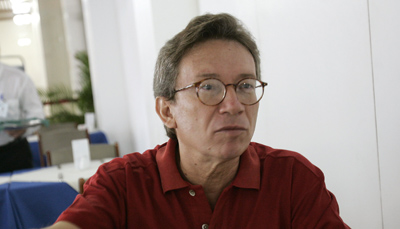
Brazilian journalist ordered to pay damages in libel case
New York, January 31, 2013–Appellate courts in Brazil should overturn a decision ordering journalist Lúcio Flavio Pinto to pay more than $200,000 in damages in connection with a libel suit, the Committee to Protect Journalists said today. The journalist, who was initially found liable in late 2012, lost an appeal in a ruling publicized on…
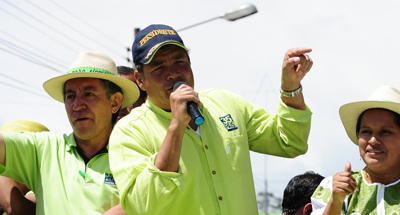
Repression deepens as Correa heads to new term
One result of President Rafael Correa’s high-profile campaign to demonize the country’s private media can be seen on the desk of José Velásquez, news manager at Teleamazonas, a private Quito television station often critical of the government. Among the documents piled high on his desk are lawsuits, which used to be a rare thing. Encouraged by…