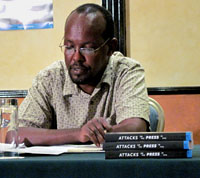
African journalists face increasing risk for foreign outlets
“I didn’t wear the bulletproof jacket and helmet that Reuters gave me,” explained veteran Somali journalist Sahal Abdulle to a packed crowd at Nairobi’s Serena Hotel for CPJ’s launch of Attacks on the Press. “It didn’t seem right when my colleagues, local journalists, were risking their lives trying to cover the same event.” Abdulle, like…
CPJ urges Ethiopia’s Zenawi to pursue press reforms
Mr. Prime Minister: We are writing to draw your attention to conditions that undermine press freedom as guaranteed in Article 29 of the Ethiopian Constitution. We would welcome your leadership in furthering reform by working for the repeal of draconian provisions in recent antiterrorism and media legislation.
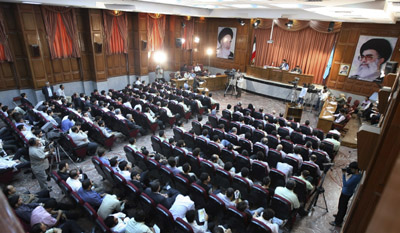
Attacks on the Press 2009: Preface
By Fareed Zakaria Toward the end of his 118-day ordeal inside Tehran’s Evin prison, Newsweek reporter Maziar Bahari had a bizarre exchange with his interrogator. Bahari had been held in solitary confinement since his arrest after Iran’s disputed presidential election in June; he had been subjected to near-daily beatings and interrogation sessions that stretched for…
Attacks on the Press 2009: Introduction
By Joel Simon Does “name and shame” still work in the Internet age? After all, the massacre of 31 journalists and media workers in the Philippines pushed the 2009 media death toll to the highest level ever recorded by CPJ. The number of journalists in prison also rose, fueled by the fierce crackdown in Iran.
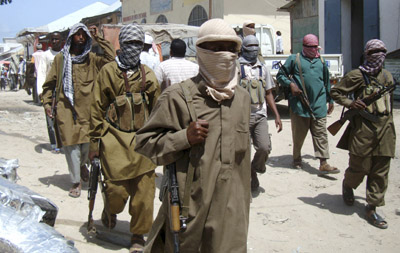
In African hot spots, journalists forced into exile
By Tom Rhodes High numbers of local journalists have fled several African countries in recent years after being assaulted, threatened, or imprisoned, leaving a deep void in professional reporting. The starkest examples are in the Horn of Africa nations of Somalia, Ethiopia, and Eritrea, where dozens of journalists have been forced into exile. Zimbabwe, Rwanda,…
Attacks on the Press 2009: Democratic Republic of the Congo
Top Developments • RFI removed from FM frequencies; other stations censored.• Hundreds march in nine provinces to protest ongoing threats, violence. Key Statistic 3: Female journalists threatened with “a bullet to the head” after focusing their work on women’s issues. Authorities censored coverage of armed conflict and human rights violations in the mineral-rich eastern Kivu…
Attacks on the Press 2009: Ethiopia
Top Developments• Terrorism law criminalizes coverage of sensitive topics.• Broadcasting Authority serves as government censor. Key Statistic 4: Journalists jailed as of December 1, 2009. Ahead of national elections scheduled for May 2010, the ruling Ethiopian Peoples’ Revolutionary Democratic Front (EPRDF) further curtailed the limited freedom of the country’s small number of independent newspapers. The government enacted…
Attacks on the Press 2009: Gambia
Top Developments• Hydara murder unsolved; secrecy surrounds Manneh detention.• Domestic, international pressure prompts Jammeh to halt crackdown. Key Statistic 6: Journalists jailed for sedition after saying president’s remarks on Hydara case were insensitive. Authorities jailed six journalists after their publications said President Yahya Jammeh had been insensitive in televised remarks about the unsolved 2004 murder of prominent…
Attacks on the Press 2009: Madagascar
Top Developments• Rival leaders use media empires to pursue political goals.• Partisan attacks target journalists, news outlets. Key Statistic 1: Journalist killed in 2009, the first Malagasy media fatality ever recorded by CPJ. Malagasy journalists faced censorship, threats, and arrest as former president Marc Ravalomanana and new head of state Andry Rajoelina used their partisan…