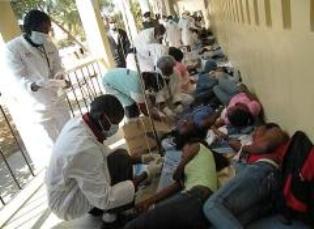
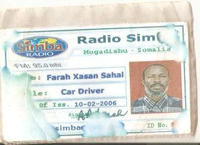
Radio Simba staffer shot outside his studio in Somalia
New York, August 5, 2011–The logistics manager and driver for Radio Simba, Farah Hassan Sahal, died from bullet wounds early Thursday evening just outside the station’s compound in the restive Bakara Market in the capital, Mogadishu, Radio Simba Director Abdullahi Ali Farah told CPJ. Hassan was helping the station move damaged radio equipment when a…
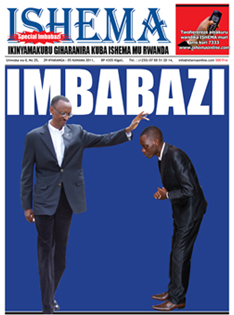
Rwandan paper calls president a ‘sociopath’, apologizes
Sometimes when a paper produces a defamatory piece, an apology will be published on page two in the next edition along with the day’s news. In Rwanda, it would appear, a paper will use an entire edition to apologize–if the insults were directed at the president. The latest issue of Ishema, at left, is perhaps a…
Ivory Coast censors paper for column on Obama meeting
New York, August 4, 2011–The government of Ivory Coast President Alassane Ouattara, who pledged to uphold democracy in a Friday meeting with U.S. President Barack Obama, has suspended a newspaper over a reprinted opinion column criticizing the White House meeting, the Committee to Protect Journalists said today.
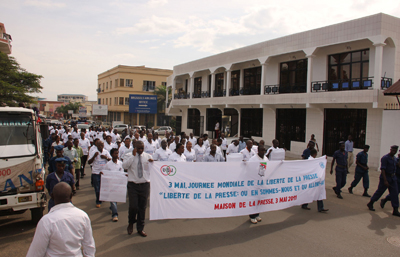
Burundi government harassing independent broadcasters
New York, August 3, 2011–The government of Burundi President Pierre Nkurunziza is attempting to silence critical press coverage of his administration with incessant judicial harassment of two of the country’s leading independent broadcasters, the Committee to Protect Journalists said today.
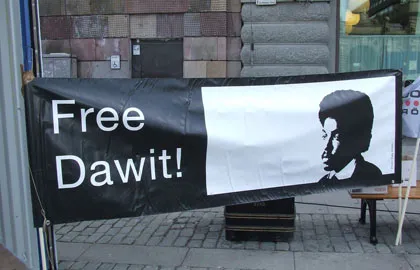
Habeas corpus writ seeks Dawit Isaac, jailed for 3,600 days
Journalist Dawit Isaac, co-founder of Eritrea’s now-defunct leading newspaper Setit, has spent nearly 10 years in one of the reclusive Red Sea nation’s secret prisons with no charges ever placed against him. Isaac’s location and health status are currently unknown, as are those of at least 16 other journalists who CPJ believes are also being…
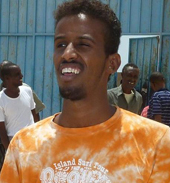
Puntland frees jailed Somali journalist
New York, August 1, 2011–The Committee to Protect Journalists welcomes the decision by authorities in Puntland, Somalia’s northeastern semiautonomous region, to set free reporter Faysal Mohamed Hassan on Sunday. Mohamed, who wrote for the private news site Hiiraan Online, was serving a prison sentence over a story claiming that two murdered men belonged to Puntland’s…

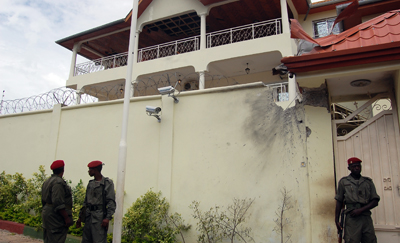
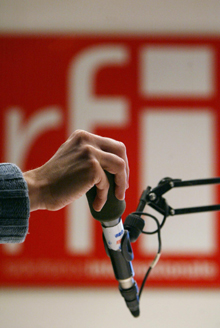
Guinea’s censorship order puts RFI in difficult spot
On Monday, Guinea’s state-controlled media regulatory agency imposed a “temporary” ban on media coverage of the July 19 attack on the private residence of President Alpha Condé, silencing private radio and television talk programs in which critical questions were being raised about the episode. In such circumstances, Guinean listeners turn to foreign media outlets such…