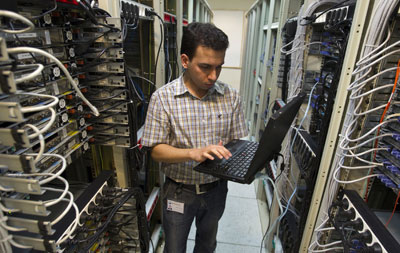
Most censored nations each distort the Net in own way
One big reason for the Internet’s success is its role as a universal standard, interoperable across the world. The data packets that leave your computer in Botswana are the same as those which arrive in Barbados. The same is increasingly true of modern mobile networks. Standards are converging: You can use your phone, access an…
Video: 10 Most Censored Countries
CPJ Deputy Director Robert Mahoney counts down the 10 countries where the press is most tightly restricted. How do leaders in these nations silence the media? And which country is the worst of all? (4:03) Read CPJ’s report on the 10 Most Censored countries for more detail on how censorship works, and which countries were…
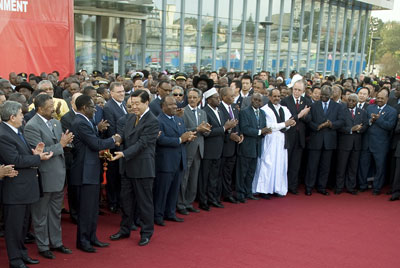
China not most censored, but may be most ambitious
China didn’t make the cut for our 10 most censored countries. While the Chinese Communist Party’s censorship apparatus is notorious, journalists and Internet users work hard to overcome the restrictions. Nations like Eritrea and North Korea lack that dynamism.

Safer mobile use is key issue for journalists
As the Internet and mobile communications become more integrated into reporters’ work, the digital threats to journalists’ work and safety have increased as well. While many press reports have documented Internet surveillance and censorship–and the efforts to combat them–mobile communications are the new frontline for journalist security.
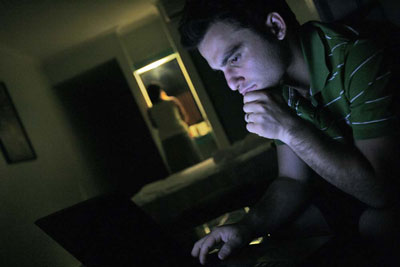
Assisting journalists forced to flee censorship
CPJ’s Journalist Assistance Program supports journalists who cannot be helped by advocacy alone. In 2011, we assisted 171 journalists worldwide. Almost a fourth came from countries that made CPJ’s Most Censored list. Eight journalists from Eritrea, five from Syria, six from Cuba, and a whopping 20 from Iran sought our help after being forced to…
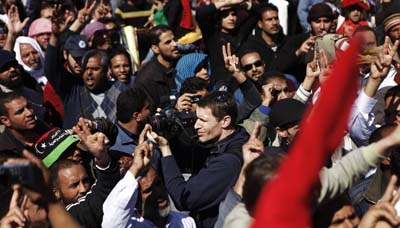
For conflict journalists, a need for first-aid training
Stop the bleeding. It’s a critical and fundamental step in aiding a journalist or anyone wounded in conflict. Hemorrhage is the number one preventable death on the battlefield. And yet large numbers of journalists covering wars and political unrest all across the world are untrained in this life-saving skill. It doesn’t need to be that…
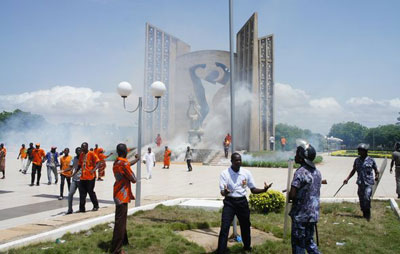
In Togo, police assault journalists, confiscate equipment
New York, April 30, 2012–Togolese police attacked and confiscated the equipment of two journalists filming an anti-government march in the capital, Lomé, on Friday. Civil society activists and human rights advocates had gathered for the demonstration on the occasion of Togo’s 52nd Independence Day, local journalists said.

Liberian journalist Mae Azango on cold threats, hot stories
Mae Azango was not surprised when the Liberian police failed to help when she began receiving threats of violence in response to an article she had written about female genital cutting that was published on in FrontPage Africa on March 8. She had previously reported critically on the police, including a case of police brutality…
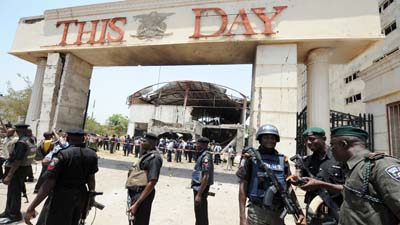
CPJ condemns attacks on newspaper offices in Nigeria
New York, April 26, 2012–The Committee to Protect Journalists condemns bombings today targeting two of the offices of ThisDay newspaper in Nigeria. At least nine people were killed and more than a dozen wounded in the attacks, for which the Islamist militant sect Boko Haram claimed responsibility, according to news reports.