
Amid Ebola outbreak, West African governments try to isolate media
On the first Saturday of November 2014, when media owner and broadcaster David Tam Baryoh switched on the mic for his weekly “Monologue” show on independent Citizen FM in Freetown, Sierra Leone, he had no idea that criticizing the government’s handling of Ebola would mean 11 days in jail.
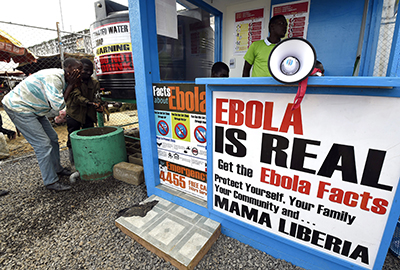
In Ebola-stricken countries, authorities and journalists should work together
The Ebola crisis in West Africa is unrelenting, and journalists on the frontline of reporting on the virus are caught between authorities wanting to control how the outbreak is reported, and falling victim to the disease themselves.
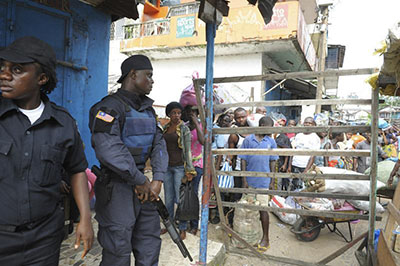
In attempts to contain Ebola, Liberia censors its press
With the Ebola epidemic predicted to get worse, the Liberian government has taken action to silence news outlets critical of its handling of the health crisis which, according to Liberia’s Information Ministry, has claimed more than 1,000 lives in the country since March. Publishers have been harassed and forced to cease printing, and journalists were…
Liberian police beat journalist covering ebola protest
Liberian police on August 11, 2014, assaulted Henry Karmo, a journalist with the independent FrontPageAfrica newspaper, while he was photographing protesters in the capital, Monrovia, demonstrating against the imposition of a 90-day state of emergency by President Ellen Johnson Sirleaf, according to news reports. The directive was aimed at controlling the spread of the deadly…
Press freedom deteriorates in Cyberspace, Egypt, Russia
Risk List underlines mass surveillance, fatalities, and censorship New York, February 6, 2014–Mass surveillance programs by the U.S. and U.K., as well as restrictive Internet legislation by various governments and a wave of cyberattacks globally, are among the disturbing developments that have landed cyberspace on the Committee to Protect Journalists’ Risk List, released today.
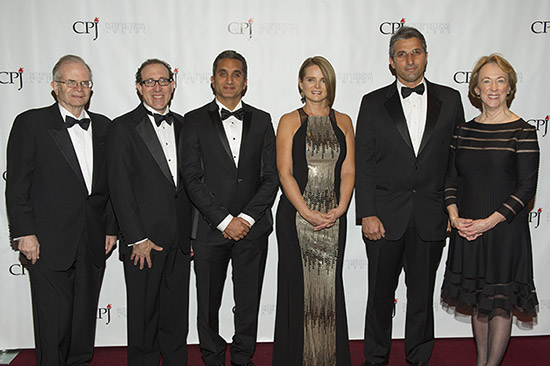
News from the Committee to Protect Journalists, November 2013
Photo credit, Barbara Nitke (CPJ) Journalists honored at CPJ’s annual award ceremony Egyptian satirist Bassem Youssef was among four journalists who received CPJ’s 2013 International Press Freedom Award on November 26. Youssef has used humor to report on and criticize government failures to improve the economy and public services, and its efforts to suppress opinion.…
Liberian publisher Sieh freed, news outlet reopened
A court in the capital Monrovia on November 18, 2013, officially ordered the release from prison of FrontPageAfrica publisher Rodney Sieh and the reopening of the offices of the private daily newspaper, according to news reports. The newspaper will resume its daily publication on November 25, 2013, Sieh told CPJ.
CPJ welcomes release of Liberian journalist Rodney Sieh
New York, October 8, 2013–The Committee to Protect Journalists welcomes Monday’s decision by Liberia’s Ministry of Justice to grant Rodney Sieh–the publisher of FrontPageAfrica who has been jailed since August for not paying libel damages–“compassionate release” for 30 days. The conditions behind Sieh’s release were not clear, but the journalist’s health had deteriorated in prison.…