In Eskinder case, politicized verdict undermines Ethiopia
New York, May 2, 2013—In response to today’s ruling by Ethiopia’s Supreme Court to uphold an 18-year prison sentence imposed on award-winning journalist Eskinder Nega and reject his appeal, the Committee to Protect Journalists issued the following statement: “This ruling trivializes the serious crime of terrorism, upholds a politically motivated travesty of justice, and lessens…
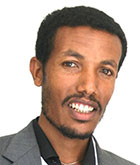
Ethiopia transfers editor Woubshet Taye to remote prison
New York, April 22, 2013–The Committee to Protect Journalists protests Ethiopian authorities’ transfer of independent newspaper editor Woubshet Taye to a remote prison several hours away from his family’s home. Woubshet has been imprisoned since June 2011 on vague terrorism charges that CPJ has determined to be unsubstantiated.
Ethiopia threatens journalist with solitary confinement
Dear Minister Birhan Hailu: We are writing to bring to your attention the case of Ethiopian journalist and teacher Reeyot Alemu, whose health has deteriorated since her imprisonment in June 2011 on terrorism charges and who is now being threatened with solitary confinement. The Ethiopian Ministry of Justice has publicly subscribed to a vision in which “human and democratic rights are respected,” yet Reeyot’s full human rights are being denied to her in Kality Prison.
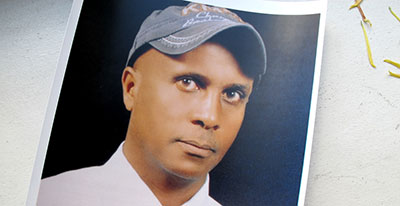
UN panel: Eskinder Nega jailing violates international law
Authorities in Ethiopia describe Eskinder Nega, a prominent columnist and government critic jailed since September 2011 on vague terrorism charges, as a dangerous individual bent on violent revolution. However, in an opinion handed down in 2012–publicized only this week by Washington, D.C.-based legal advocacy group Freedom Now–a United Nations panel of five independent experts ruled…
Attacks on the Press in 2012: CPJ Risk List Video
CPJ’s Robert Mahoney identifies the 10 countries where press freedom suffered the most in 2012. They include Syria, the world’s deadliest country for the press; Russia, where repressive laws took effect; Brazil, where journalist murders soared; and Ethiopia, where terror laws are used to silence the press. (3:26)
Attacks on the Press in 2012: Ethiopia
The death of Prime Minister Meles Zenawi in August in a Belgian hospital brought an end to a 21-year rule characterized by repression of dissent and iron-fisted control of the independent press. His fatal illness was shrouded in secrecy. After Meles disappeared from public view in June, the government played down rumors of his illness…