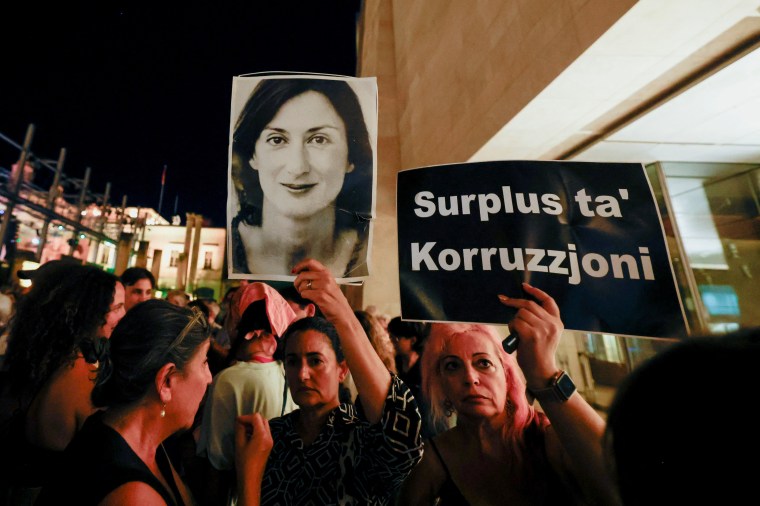
VALLETTA, September 3, 2026—Almost nine years after investigative journalist Daphne Caruana Galizia was assassinated in a car bomb, Malta has still not convicted the person or people who orchestrated her horrific murder, setting a terrible precedent that will resonate across Europe.
On Wednesday, following an emotional trial that lasted 55 days and gripped the nation, a jury acquitted businessman Yorgen Fenech, who had been accused of masterminding Caruana Galizia’s murder in October 2017, on two counts of complicity and criminal association. When the verdict was read, many people gasped, while others burst into tears. Fenech, who had pleaded not guilty, left the courtroom after the ruling.
While the prosecution is expected to appeal, the verdict was devastating for Caruana Galizia’s family, whose long campaign for justice had already exposed failings by the Maltese state, with a public inquiry concluding that the assassination was both predictable and preventable.
“Yesterday’s verdict means that almost nine years after Daphne Caruana Galizia’s assassination sent shockwaves through Europe, Malta has still not convicted the person who orchestrated the crime. It is heartbreaking for her family, who have campaigned tirelessly for justice. And it is also devastating for all journalists who seek to hold the powerful to account, in Malta and right across the continent, ” said CPJ’s deputy director of advocacy Tom Gibson, who was in the Maltese capital Valletta for the verdict.
“Malta has made many promises about journalism safety and upholding the rule of law in the years since her murder but has yet to deliver on most of them. That is unacceptable. We will continue to campaign for reform, and to stand by Daphne Caruana Galizia’s family until justice is served.”
After the ruling, Caruana Galizia’s family said Daphne had been denied the justice she deserved.
“Today should have belonged to Daphne. Her dreams and ours were shattered when she was killed outside her family home, aged just 53,” the family said in a statement. “During Fenech’s months-long trial, we have heard many people speak, but we will never see or hear Daphne again. Accountability is now overdue for all those who enabled, facilitated, or protected her murderers.”
‘We cannot give up’
Before her murder, Caruana Galizia, who reported extensively on corruption, money laundering, organized crime, and political misconduct in Malta, was subjected to an orchestrated campaign of harassment and vilification by the Maltese government, including legal intimidation, to silence her reporting.
For Herman Grech, editor-in-chief of the Times of Malta, which covered the trial extensively, the fundamental question remains unanswered.
“Someone ordered a journalist to be killed, and nobody has been convicted of doing so. This is devastating for press freedom and sends a chilling message to journalists who confront powerful interests. But we cannot give up. We will not give up,” he told CPJ.
Setback on long road to justice
The Fenech trial represented a major milestone in the years-long search for justice.
In 2019, a suspected facilitator of Caruana Galizia’s murder received a presidential pardon in exchange for naming those responsible. Since then, five people have been found guilty and jailed for orchestrating or carrying out the murder.
After pressure from the Caruana Galizia family and international institutions, the Maltese authorities set up a separate public inquiry in 2019 to independently examine the circumstances of the murder. Its report said the Maltese state had created an atmosphere of impunity, failed to recognise the risks to Caruana Galizia’s life and did not take measures to protect her. The Maltese authorities have still not implemented most of the inquiry’s recommendations and have not undertaken meaningful press freedom reforms.
The Daphne Caruana Galizia Foundation has said that the failure of Maltese authorities to address the corruption and abuse of power that Caruana Galizia exposed, and that other Maltese journalists continue to investigate, contributes to an environment of insecurity and uncertainty for journalists.
In October 2025, CPJ and other press freedom groups called on Malta to set up a national action plan on media freedom and journalist safety and provided a broad set of recommendations as part of a public consultation set up by the Maltese government.
Wednesday’s verdict does not represent an end point in the fight for accountability and justice. CPJ will continue to stand by Caruana Galizia’s family as they push for justice and will continue to demand that the Maltese authorities deliver on promises to guarantee journalists’ safety and uphold the rule of law.
Watch Tom Gibson’s reflections from Valletta here.