2000
Attacks on the Press 1999: Enemies of the Press
Each year on World Press Freedom Day (May 3), CPJ announces its list of the ten worst enemies of the press. Those who made the list this year, as in the past, earned the dubious distinction by exhibiting particular zeal in the ruthless suppression of press freedom. They were singled out for their unrelenting and…
Attacks on the Press 1999: 1999 Death Toll: Listed by Country
[Click here for full list of documented cases] At its most fundamental level, the job of a journalist is to bear witness. In 1999, journalists in Sierra Leone witnessed rebels’ atrocities against civilians in the streets of Freetown. In the Balkans, journalists watched ethnic Albanians fleeing the deadly menace of Serbian police and paramilitaries. In…
Attacks on the Press 1999: Speaking Out
Speaking Out in Guatemala and l SalvadorBy Marylene SmeetsLast April, a mysterious program called “Hoy por Hoy” (“Right Now”) appeared on Guatemalan radio. The format consisted of gossip and political chitchat, and the hosts seemed to have it in for journalists. One of them often described Dina Fern‡ndez, a columnist and editor at Guatemala’s biggest…
Attacks on the Press 1999: The Trauma of Sierra Leone
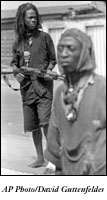
Introduction On January 6, 1999, rebel forces entered Freetown and launched a campaign of terror. Revolutionary United Front (RUF) fighters systematically murdered, mutilated, and raped thousands of civilians. During the three weeks that it took for Nigerian-led West African peacekeeping troops to expel the rebels from Freetown, Sierra Leone officially became the most dangerous country…
Attacks on the Press 1999: Afghanistan
Afghanistan’s ruling Taliban militia continues to maintain a hostile attitude toward journalists and journalism. There are no independent local media, because of the Taliban’s famous intolerance and because resources are scarce in this war-ravaged country. Although several news agencies–including the BBC, The Associated Press, and Agence France-Presse–maintain bureaus in Kabul, visas to foreign correspondents are…
Attacks on the Press 1999: Albania
While Albania is still far from having free and functioning media, there were no direct state attacks on independent journalists during 1999. This marked a vast improvement over just a few years ago, when journalists were routinely imprisoned or attacked for critical reporting on government activities. CPJ documented only one violent attack on an Albanian…
Attacks on the Press 1999: Algeria
Since his controversial, unopposed April 15 election, President Abdelaziz Bouteflika has raised public hopes of ending the brutal civil strife that has plagued this North African nation for eight years. Buoyed by the president’s efforts to promote national reconciliation, Algerians eagerly sought to resume their normal lives after years of bloodshed. For the country’s press,…
Attacks on the Press 1999: Antigua and Barbuda
Prime Minister Lester B. Bird was reelected on March 9, but critics say the victory was achieved through widespread vote buying and total control over broadcast media in the tiny three-island nation. In the days preceding the vote, many opposition political ads were pulled off the air. The Bird family and its Antigua Labour Party…
Attacks on the Press 1999: Angola
In late 1998, the breakdown of the 1994 Lusaka peace accords led to the resumption of a brutal civil war that has killed more than half a million Angolans and devastated the country’s economy. Since then there has been a marked increase in the frequency and seriousness of reported press freedom violations in Angola. At…
Attacks on the Press 1999: Argentina
During his decade in office, former president Carlos Menem used a flurry of lawsuits to stifle independent reporting in Argentina. His best efforts failed. When Menem stepped down on December 10, he left behind a vital and independent Argentine press. Journalists, particularly those in the provinces, continue to worry about their physical safety. The May…